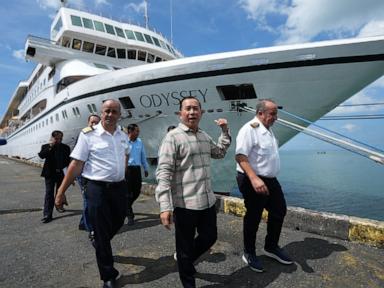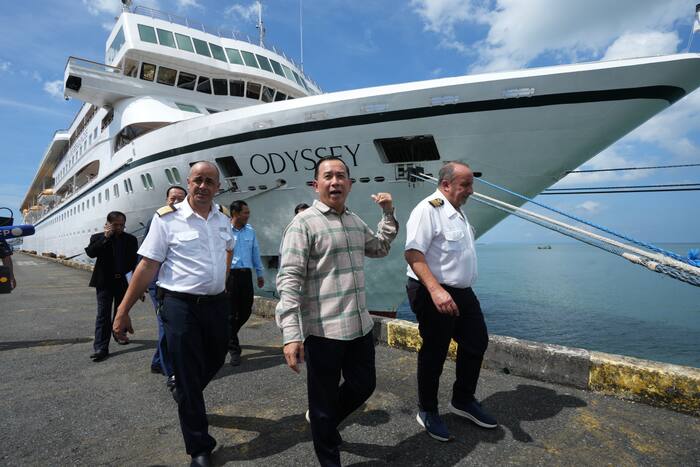
Mainstream travel media loves a good maritime disaster. When the Villa Vie Odyssey finally slipped out of Sihanoukville, Cambodia, without a single paying passenger on board, the headlines practically wrote themselves. Pundits pointed and laughed. They called it a failure of logistics, a PR nightmare, and proof that the dream of living at sea is a floating fantasy destined to sink under the weight of bureaucratic red tape.
They are completely missing the point.
Leaving Cambodia with an empty manifest wasn't a sign of collapse. It was the smartest operational move the company could have made under the circumstances, and it exposes a massive blind spot in how we judge startup infrastructure.
If you look at the Odyssey saga through the lens of traditional luxury cruising—like Royal Caribbean or Carnival—then yes, departing a port without guests looks like a catastrophic loss of revenue. You burn bunker fuel, pay crew wages, and collect zero bar tabs.
But Villa Vie Residences isn't selling seven-day Caribbean booze cruises. They are selling fractional and full-ownership real estate that happens to float. When you shift the business model from hospitality to maritime real estate, the entire rulebook changes.
The Lazy Consensus Around Maritime Delays
Let’s look at what actually happened in Sihanoukville. The ship, a 30-year-old vessel formerly known as the Braemar, had already endured months of dry-dock delays in Belfast before making its way to Southeast Asia. When it arrived in Cambodia, local port authorities held it up over paperwork and regulatory clearances. The passengers—many of whom had sold their homes to live on the ship full-time—were stuck in hotels, waiting.
Then, the ship left without them.
The lazy consensus in the press is that the company abandoned its customers to save face or dodge further port fees. That narrative makes for great clickbait, but it ignores basic maritime law and vessel positioning economics.
In commercial shipping, a stationary ship is a dying asset. When a vessel sits at anchor or tied to a pier in a foreign port with unresolved administrative friction, the daily burn rate doesn't just stay flat; it compounds. Port tariffs escalate. Hull fouling accelerates in warm tropical waters, which degrades hydrodynamic efficiency and burns more fuel later. Crew morale craters when a ship isn't moving.
By pulling anchor and sailing out of Cambodian waters empty, the operators did two things: they broke the administrative deadlock with local port authorities, and they positioned the asset where it needed to be to actually onboard passengers safely at a subsequent hub. Moving an empty ship to reset a broken itinerary isn't an admission of defeat. It is standard damage control in global logistics, just usually hidden behind the corporate curtain of massive conglomerates.
Why 30-Year-Old Hulls Are the Only Way This Math Works
Critics love to dunk on the fact that residential cruise startups buy older, mid-sized vessels rather than commissioning shiny new megaships. They point to the mechanical hiccups in Belfast and the delays in Cambodia as proof that buying secondhand tonnage is a fatal mistake.
Let’s do the actual math.
Commissioning a new cruise ship today costs upwards of $1 billion and takes four to five years from keel-laying to delivery. A startup selling cabins for $100,000 to $300,000 cannot service a billion-dollar debt load. The unit economics simply do not exist.
To make residential cruising affordable for upper-middle-class retirees—rather than just centi-millionaires on vessels like The World—you have to acquire depreciated assets. You buy a 1990s hull like the Braemar for a fraction of its replacement cost, gut the interior, upgrade the navigation and safety systems to meet modern SOLAS (Safety of Life at Sea) standards, and absorb the inevitable mechanical surprises during the shakedown phase.
I have watched hospitality groups blow tens of millions of dollars trying to build bespoke, ground-up floating communities, only to go bankrupt before the steel was even cut. The messy, public, duct-tape-and-grit reality of refitting an older ship is the only viable path to market for this sector. The delays in Belfast and Cambodia weren't anomalies; they were the exact tuition fees required to bring a depreciated maritime asset back into global service.
You Are Asking the Wrong Question About Residential Cruising
When people read about the Odyssey leaving Cambodia empty, they immediately ask: "Is residential cruising a scam?" or "How do I protect myself from cruise delays?"
Those are the wrong questions. If you are looking at a perpetual world cruise and asking about itinerary guarantees, you fundamentally misunderstand the product.
Traditional cruising is a service. You buy a ticket, and the operator owes you a predictable schedule, specific ports, and sanitized entertainment. If they miss a port, you get onboard credit.
Residential cruising is pioneering. You are buying into an operational startup that happens to be a sovereign-flagged vessel navigating 140 different national jurisdictions.
Let’s be brutally honest about the downsides of this model, because the brochures certainly won't tell you. If you buy a cabin on a residential ship:
- Your itinerary is a suggestion, not a contract. Geopolitics, port strikes, and bureaucratic incompetence will rewrite your calendar constantly.
- Maintenance never stops. Living on a 30-year-old ship means living in a permanent state of dry-dock maintenance. Pipes will burst. Air conditioning will fail in the tropics.
- Liquidity is terrible. Reselling a cabin on a niche residential vessel is nothing like selling a condo in Florida. You are locked into a tiny, illiquid secondary market.
If you need predictability, buy a house in Boca Raton and book two weeks on Cunard every winter. Do not sell your earthly possessions and wire six figures to a maritime startup.
The Hidden Stress Test That Actually Saved the Voyage
Imagine a scenario where the Odyssey had forced the issue in Cambodia. Suppose management had caved to public pressure, kept the ship tied to the pier in Sihanoukville for another three weeks while fighting local bureaucracy, and loaded hundreds of elderly passengers onto a vessel that hadn't fully cleared its regional operational hurdles.
You would have had hundreds of residents trapped on a stationary ship in a commercial port, burning through provisions, taxing the wastewater systems, and escalating PR complaints from inside the hull.
Instead, sailing out empty acted as an involuntary, high-stakes sea trial.
In maritime operations, there is a massive difference between a ship passing inspection in a cold northern European shipyard and a ship operating continuously in the heat, humidity, and regulatory chaos of Southeast Asia. Running the vessel between ports without passengers allowed the captain and engineering crew to stress-test the propulsion, desalination, and HVAC systems under real-world tropical conditions without a single guest complaining about lukewarm shower water.
Heavy hitters in the maritime classification world—organizations like DNV and Lloyd’s Register—care about one thing: structural and mechanical compliance. They do not care about your press coverage. By removing the passenger variable during a bureaucratic standoff, the Odyssey’s leadership prioritized vessel readiness over short-term optics.
How to Actually Vet a Floating Residence
If you are still crazy enough to want to live at sea—and frankly, for the right type of person, it remains one of the most compelling lifestyle arbitrage plays on earth—stop reading travel blogs and start analyzing these companies like a maritime insurer.
Forget the renderings of the infinity pools and the wine-tasting lounges. Look at three metrics:
- Flag State and Classification Society: Who regulates the ship? You want to see Tier-1 flag states (like the Bahamas, Malta, or Marshall Islands) and top-tier classification societies. If a residential cruise line is shopping around for obscure flags of convenience to bypass safety inspections, run.
- Escrow Mechanics: How is your capital protected before the ship actually sails? Never wire funds directly into an operating account used to pay for shipyard fuel and crew salaries. Your purchase price must sit in a legally ring-fenced escrow account tied to specific, verifiable maritime milestones—not marketing promises.
- The Dry-Dock Reserve: Ask to see the capital expenditure budget for the next five-year special survey. Every ship must come out of the water twice every five years for hull inspections. If the operator hasn't baked millions of dollars of dry-dock maintenance into the monthly HOA fees, your assessments are going to skyrocket within 36 months.
The Odyssey leaving Cambodia with an empty deck wasn't the death rattle of residential cruising. It was the inevitable growing pain of an industry trying to democratize a lifestyle that used to belong exclusively to billionaires. The tourists saw a failure because they expected a vacation. The operators saw a necessary repositioning because they are building a floating city.
If you can't handle watching your house sail away without you while the lawyers sort out the paperwork, stay on dry land.