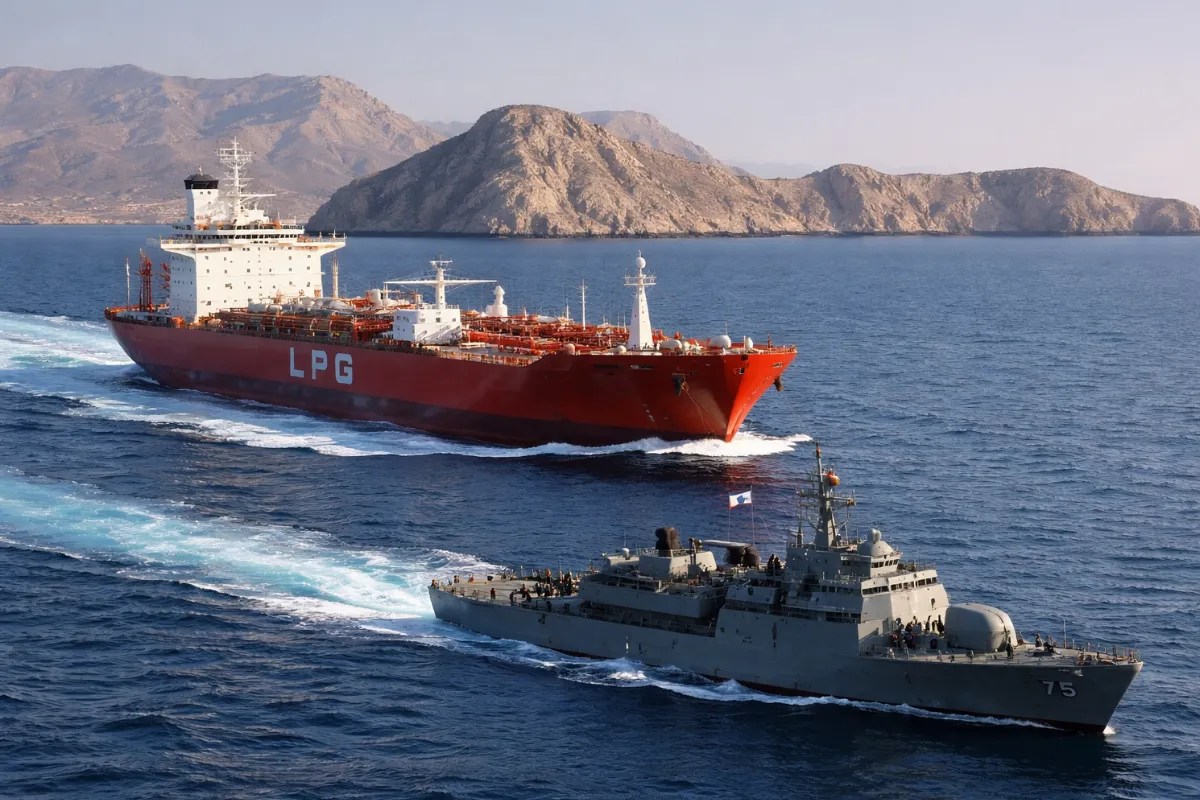
The proposal of a transit toll on the Strait of Hormuz by Tehran is not merely a regional geopolitical maneuver; it is a direct challenge to the established hierarchy of the United Nations Convention on the Law of the Sea (UNCLOS). To evaluate the feasibility of such a toll, one must look past the political rhetoric and analyze the three structural layers of maritime sovereignty: the legal definition of "Transit Passage," the physical geography of the shipping lanes, and the economic enforcement mechanisms required to extract value from international waters.
The Legal Architecture of the Strait
The Strait of Hormuz functions as a "Strait Used for International Navigation." Under the 1982 UNCLOS, specifically Part III, vessels in such straits enjoy the right of Transit Passage. This is a more permissive standard than the "Innocent Passage" found in territorial seas.
Transit passage dictates that ships and aircraft have the freedom of navigation and overflight solely for the purpose of continuous and expeditious transit. While Iran has signed UNCLOS, it has not ratified it. Instead, Tehran maintains that the 1958 Convention on the Territorial Sea and the Contiguous Zone applies, or that transit rights are a matter of reciprocal treaty rather than customary international law.
The core friction exists between two competing legal interpretations:
- The Globalist Interpretation: The right of transit passage is customary international law, meaning it applies to all states regardless of treaty ratification. Under this view, no coastal state can hamper, suspend, or tax passage.
- The Territorialist Interpretation: Iran asserts that since it has not ratified UNCLOS 1982, it is not bound by the "Transit Passage" provision. It argues that "Innocent Passage" applies, which allows a coastal state to suspend transit if it deems the passage prejudicial to its peace, good order, or security.
Taxation or tolling is explicitly prohibited under Article 26 of UNCLOS, which states that no charge may be levied upon foreign ships by reason only of their passage through the territorial sea. Charges can only be levied for specific services rendered to the ship, such as pilotage or salvage operations.
The Geography of Enforcement
The Strait of Hormuz is approximately 21 miles wide at its narrowest point. However, the width of the navigable shipping lanes is much narrower. The Traffic Separation Scheme (TSS) consists of two-mile-wide inbound and outbound lanes, separated by a two-mile-wide buffer zone.
The critical tactical reality is that these shipping lanes fall within the territorial waters of both Iran and Oman. For Tehran to "collect a toll," it would require a physical or electronic enforcement net across these specific coordinates.
The logistical burden of enforcement creates a diminishing return on the projected revenue. A tolling system requires:
- Registry Identification: Identifying every VLCC (Very Large Crude Carrier) and LNG tanker via AIS (Automatic Identification System).
- Communication Protocols: Establishing a mandatory reporting frequency.
- Physical Interdiction Capability: The credible threat of boarding or seizing vessels that refuse to pay.
This third requirement is where the strategy shifts from a fiscal policy to an act of kinetic friction. If a vessel refuses an electronic toll, the enforcing state must either allow the "leakage" (rendering the toll toothless) or use force (triggering an international security response).
The Economic Cost Function of Maritime Friction
The imposition of a toll would not operate in a vacuum. It would immediately alter the "War Risk Insurance" premiums that constitute a significant portion of operating costs for tankers.
Market dynamics suggest that a 1% toll on the value of cargo passing through the Strait would be dwarfed by the resultant spike in insurance Brent-linked premiums. Currently, roughly 20-30% of the world’s total consumption of liquid petroleum passes through the Strait. Any state-imposed toll would be viewed by the global shipping market not as a legitimate "user fee," but as a variable "Geopolitical Risk Tax."
The cost of enforcement for Tehran involves a trade-off between domestic revenue and the risk of "Flag State" retaliation. Ships registered in Panama, Liberia, or the Marshall Islands operate under the protection of international maritime norms. A systematic violation of these norms would likely trigger the "Proliferation Security Initiative" or similar multi-national naval coalitions to escort merchant vessels, effectively neutralizing the tolling authority through a show of naval force.
Technical Barriers to Sovereign Collection
Sovereign states typically collect fees for passage through man-made canals, such as the Suez or Panama Canals. These are internal waters where the state has spent billions on infrastructure, dredging, and locks. The Strait of Hormuz is a natural waterway.
To frame a toll as a "service fee" to bypass UNCLOS Article 26, Tehran would need to provide quantifiable services. These might include:
- Enhanced Search and Rescue (SAR): Operating a dedicated fleet for tanker emergencies.
- Environmental Remediation: Pre-positioning oil spill response equipment.
- Navigation Infrastructure: Maintaining advanced buoy systems or deep-water dredging.
Even with these services, international law generally limits fees to the actual cost of the service provided. Using a waterway as a "profit center" for national treasury goals is legally indefensible under current maritime frameworks.
Strategic Pivot: The Sanctions-Bust Hybrid
The discussion of a toll is often a proxy for the broader objective of counter-sanctions. If Tehran cannot sell its oil on the open market due to Western restrictions, the tolling of other states' oil becomes a method of "Economic Equalization."
This creates a bottleneck in the global energy supply chain. The primary targets of such a toll would not be the United States—which has significantly reduced its reliance on Persian Gulf oil—but rather Asian economies like China, India, Japan, and South Korea. This creates a diplomatic paradox: imposing a toll would alienate the very buyers Iran relies on for its "Look East" economic strategy.
The shift from "Innocent Passage" to "Conditional Passage" (passage contingent on payment) would necessitate a total re-evaluation of the 1974 bilateral agreement between Iran and Oman regarding the joint supervision of the Strait. Without Omani cooperation, a unilateral Iranian toll would only apply to the northern half of the shipping lanes, allowing vessels to simply hug the southern coast to avoid payment, provided the Omani government remains aligned with international norms.
The move to monetize the Strait of Hormuz is technically feasible through the use of anti-ship cruise missiles (ASCMs) and fast-attack craft (FACs) as enforcement tools, but it is legally and economically suicidal. The strategic play for regional actors is not the actual collection of a toll, but the perpetual threat of one. This "Grey Zone" pressure keeps global energy markets volatile and forces naval powers to commit disproportionate resources to the region. Any actual attempt to invoice a global tanker fleet would immediately transform from a fiscal policy into a maritime blockade, a casus belli that would likely result in the total destruction of the enforcing infrastructure. The real value of the "Hormuz Toll" concept lies in its utility as a diplomatic bargaining chip, rather than a viable stream of sovereign revenue.