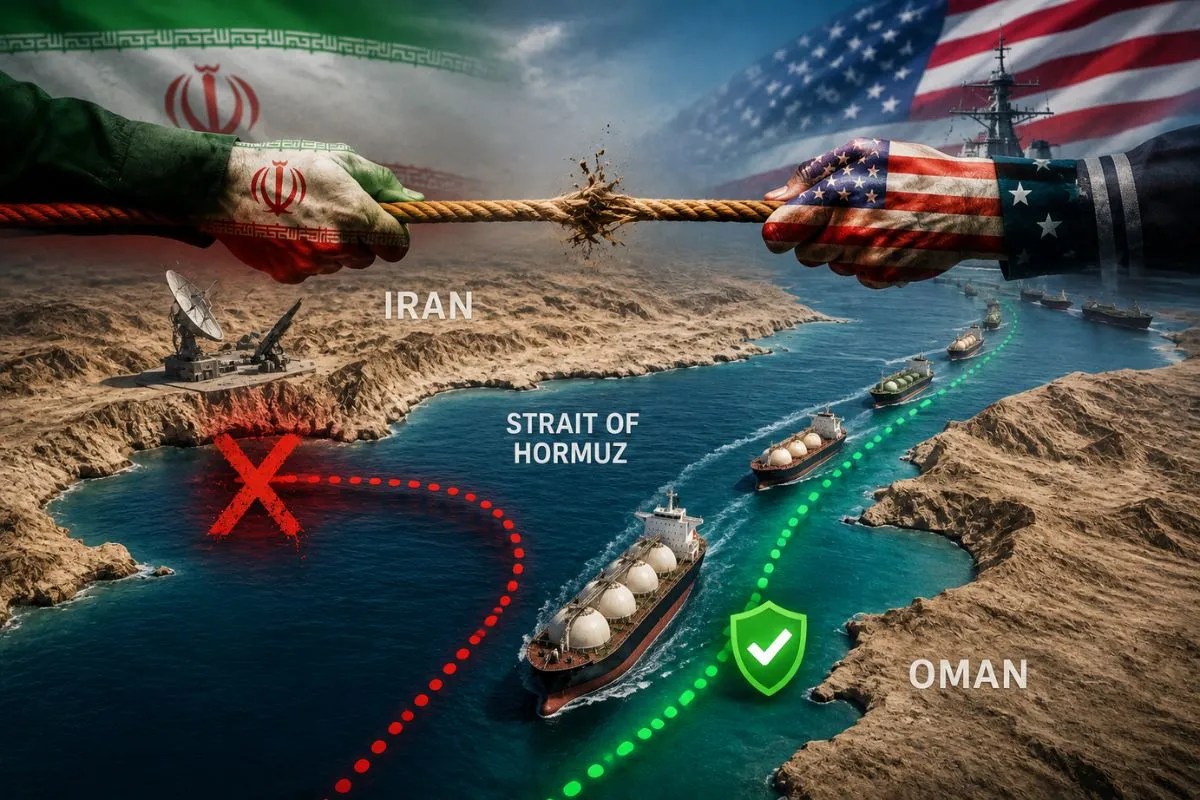
The maritime transit corridor through the Strait of Hormuz is not simply a geographic bottleneck; it is a high-stakes financial instrument for regional actors and a fundamental stressor for global supply chains. When traffic velocity through this corridor shifts toward zero, the result is not merely local disruption but a systemic revaluation of global risk premiums for energy and bulk commodities. Understanding the current operational status requires stripping away the political rhetoric of sovereignty to examine the physical and economic mechanics of modern maritime chokepoint management.
The Structural Mechanics of a Chokepoint
A maritime chokepoint functions on the principle of volumetric throughput. When this capacity is artificially throttled, the surrounding economic ecosystem enters a state of forced adaptation. Historical reliance on the Strait of Hormuz was predicated on the low marginal cost of short-distance maritime transit compared to the high capital expenditure of pipeline infrastructure or the long-duration operational costs of circumventing the African continent. Read more on a connected issue: this related article.
The current crisis represents a failure of this status quo. The transition from a transit corridor to a contested zone triggers three primary economic variables:
- Risk-Adjusted Insurance Premiums: As the probability of vessel seizure or kinetic action rises, insurance markets shift from standard rates to war-risk premiums. This creates a tipping point where the cost of transit exceeds the cost of rerouting or the cost of supply-chain downtime.
- Operational Dead-Space: When a transit corridor is effectively closed, the "dead-space" created by idling vessels generates massive demurrage costs. For crude oil and liquefied natural gas (LNG), this causes an immediate compression of supply at the point of origin, forcing a price spike in global spot markets.
- The Bypass Infrastructure Ceiling: Alternative routes, such as the East-West Pipeline (Petroline) or the Abu Dhabi Crude Oil Pipeline (ADCOP), were designed as strategic hedges, not as full-volume replacements. These systems operate with fixed capacity constraints. When maritime traffic in the Strait drops to near-zero, the total system capacity for regional energy exports is mathematically capped at a level significantly lower than historical daily output, creating an irreversible shortfall in global supply regardless of ship movement.
The Failure of Conventional Bypass Strategies
The assumption that a "bypass" is a viable immediate substitute for the Strait of Hormuz is a fundamental misunderstanding of regional infrastructure. The logic of a maritime route is based on infinite capacity; the logic of a pipeline is based on finite throughput. Additional reporting by Financial Times delves into comparable views on the subject.
The primary bypass mechanisms—the Saudi Petroline and the UAE’s ADCOP—serve as emergency relief valves. However, their physical throughput limits are rigid. If global demand requires 20 million barrels per day (bbl/day) to transit through the Persian Gulf, and the available bypass infrastructure can handle at most 10 million bbl/day, the remaining 10 million bbl/day gap cannot be filled by rerouting. It can only be filled by a massive surge in non-regional production or a catastrophic destruction of global demand.
Ships attempting to bypass the Strait via the Cape of Good Hope add 10 to 15 days to transit times for European destinations and 5 to 8 days for East Asian markets. This extension does not just increase fuel and crew costs; it effectively removes the vessel from the active fleet for weeks. This reduction in "fleet velocity" creates a synthetic shortage of shipping capacity, driving up freight rates globally, even for vessels that never intended to pass through the Middle East.
The Illusion of Transit Normalization
Recent attempts to characterize the reopening of the Strait as a triumph of security over blockage ignore the operational reality of the 2026 crisis. When navigation reaches an operational standstill, the primary variable is not the presence of naval escorts, but the confidence of the maritime operators.
When commercial vessels stop moving, it is not because they lack protection; it is because the uncertainty of risk exceeds the risk of economic non-operation. Even with the backing of state-sponsored naval escorts, shipping lines must contend with the unpredictability of sea mines, drone interference, and shifting legal jurisdictions. A corridor is only "open" when the commercial insurance industry, not a geopolitical actor, deems it insurable.
Operational Forecast for Regional Logistics
The current state of the Strait is defined by a persistent structural instability. Regional actors have weaponized the logistical architecture of the Strait, moving from a role of "transit administrators" to "gatekeepers." This shift forces a permanent change in how global commodity traders model risk.
The strategic play for logistics firms and energy purchasers is to transition from a "just-in-time" model that assumes the Strait will remain open, to a "resilient supply" model that factors in the following:
- Decoupled Sourcing: Prioritizing supply contracts that do not depend on Persian Gulf maritime transit.
- Inventory Buffering: Increasing the volume of strategic storage in destination markets to hedge against 30-to-60-day supply chain interruptions.
- Contractual Flexibility: Shifting from fixed-route shipping agreements to dynamic freight contracts that allow for immediate rerouting without penalty.
The Strait of Hormuz has evolved from a conduit into a binary gate. The future of regional energy export is not found in the reopening of the waterway, but in the permanent reduction of reliance upon it. Any capital investment intended to bolster throughput in the region should be directed toward pipeline expansion and long-term supply diversification, rather than attempting to restore a reliance on the existing maritime chokepoint. The era of the Strait as an assumed logistical constant has ended. The new reality is one of controlled, contingent, and expensive passage.