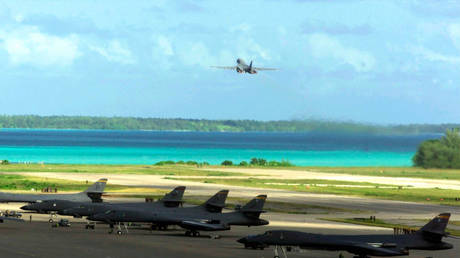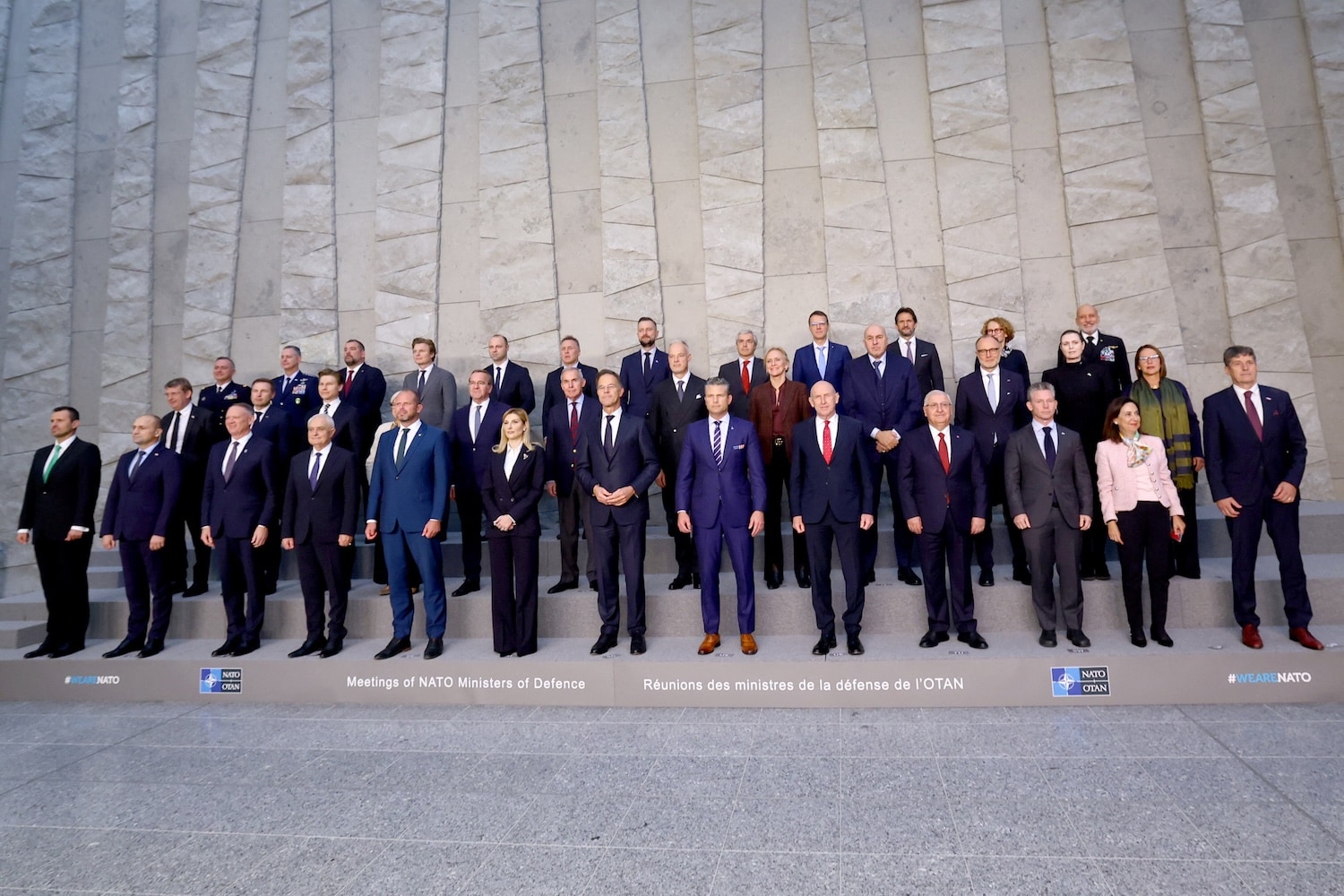
The refusal of NATO allies to participate in a United States-led blockade of the Strait of Hormuz is not a failure of diplomatic will, but a calculated response to a fundamental misalignment in risk-reward calculations. While Washington views the Strait through the lens of kinetic deterrence and maritime hegemony, European and Asian allies view it as a fragile node in a global energy supply chain where aggressive intervention acts as a catalyst for volatility rather than a dampener. The resulting friction exposes a structural break in the post-WWII security architecture: the divergence between "command of the commons" and the economic realities of energy interdependence.
The Trilemma of Maritime Interdiction
Any naval operation in the Strait of Hormuz must balance three mutually exclusive objectives. Attempts to maximize one inevitably degrade the others. For another look, check out: this related article.
- Deterrence of Asymmetric Threats: Suppressing the capability of regional actors (primarily Iran) to deploy fast-attack craft, naval mines, and anti-ship cruise missiles (ASCMs).
- Market Price Stability: Maintaining a low-volatility environment for Brent Crude and LNG spot prices, which are hyper-sensitive to insurance premiums and "war risk" surcharges.
- Allied Consensus: Ensuring that the burden-sharing of the mission does not trigger domestic political backlash within coalition member states.
The United States' push for a blockade or a "maximum pressure" maritime patrol forces allies into a position where they must prioritize U.S. geopolitical objectives over their own energy security. For an EU member state, a blockade is a self-inflicted supply shock. The Strait handles approximately 21 million barrels of oil per day, representing 21% of global petroleum liquid consumption. More critically, it is the sole exit point for nearly all Qatari LNG, which has become the foundational element of European energy diversification following the decoupling from Russian gas.
The Cost Function of Kinetic Engagement
NATO allies analyze the prospect of a blockade through a cost-benefit framework that the U.S. often overlooks. The cost of a failed or even a "successful" blockade is non-linear. Similar coverage regarding this has been shared by USA Today.
The Insurance Multiplier
Maritime security is governed by the Joint War Committee (JWC) of the Lloyd’s Market Association. When the U.S. announces an intention to "blockade" or "strictly patrol" a waterway, the area is designated as a listed area for hull war, piracy, and terrorism.
- Primary Cost: Increase in Additional Premiums (APs).
- Secondary Cost: Displacement of shipping routes, leading to increased fuel consumption and late-delivery penalties.
- Tertiary Cost: The "Shadow Fleet" effect, where sanctioned or high-risk cargo moves to unregulated vessels with no P&I (Protection and Indemnity) insurance, increasing the risk of environmental catastrophe in the event of a kinetic exchange.
Allies recognize that a blockade effectively "internalizes" the risk of Iranian retaliation. By participating, they move from being neutral observers of a U.S.-Iran dispute to being active targets. The Iranian doctrine of "gray zone" warfare utilizes a high volume of low-cost assets—specifically the Zolfaqar class fast boats and the Ghadir midget submarines—to overwhelm sophisticated Aegis-equipped destroyers. The cost-exchange ratio favors the disruptor; a $30,000 loitering munition can theoretically disable a $2 billion frigate, or at the very least, force it to expend a $2 million interceptor missile.
Architectural Flaws in the "Coalition of the Willing"
The U.S. request for NATO participation assumes that naval interoperability translates into strategic alignment. This is a category error.
Sovereignty vs. Command
European powers, particularly France and Italy, maintain naval assets in the region under the EMASoH (European Maritime Awareness in the Strait of Hormuz) mission. The deliberate choice to operate EMASoH independently of the U.S.-led International Maritime Security Construct (IMSC) is a de-escalation tactic. By maintaining a separate command structure, European states signal to Tehran that they are not party to the U.S. "maximum pressure" campaign. Joining a U.S. blockade would dissolve this "de-confliction buffer," removing the middle ground between diplomacy and total war.
The Problem of Proportionality
Under international law, a blockade is an act of war. For NATO allies to join, they require a clear casus belli that meets the threshold of Article 5 or a specific UN Security Council mandate. Neither exists in the current context. Washington’s attempt to frame the blockade as "freedom of navigation" (FON) operations is viewed by legal scholars in Berlin and Paris as a stretch of the UN Convention on the Law of the Sea (UNCLOS). Since the U.S. is not a signatory to UNCLOS, its moral and legal standing to enforce its provisions via a blockade is structurally weak.
The Mechanism of Regional Retaliation
The geography of the Strait makes a traditional blockade technically difficult and strategically suicidal. The navigable channel consists of two 2-mile-wide lanes (one inbound, one outbound) separated by a 2-mile-wide buffer zone. These lanes sit entirely within the territorial waters of Oman and Iran.
An enforcement mechanism—a blockade—requires the physical stopping and searching of vessels. This creates a "stationary target" environment.
- Vulnerability to Land-Based ASCMs: Iran’s coastline along the Strait is a 600-mile stretch of mountainous terrain. Mobile missile batteries (e.g., Noor, Qader) can be hidden in "missile cities" (underground bunkers), making preemptive strikes by a coalition navy nearly impossible without a full-scale land invasion.
- The Mining Factor: The bottom topography of the Strait is ideal for bottom-influence mines. Clearing a minefield in a contested environment takes weeks, during which the global economy would lose millions of barrels of oil daily.
- The Closing of the Strait: Iran does not need to "block" the Strait physically. It only needs to raise the risk of transit high enough that commercial insurers refuse to cover the hulls.
Economic Asymmetry and the Pivot to the East
A blockade would disproportionately affect U.S. allies while having a negligible impact on U.S. domestic energy prices. The United States is a net exporter of petroleum. While global prices would spike, the U.S. economy possesses a "natural hedge" through its domestic shale production.
In contrast, Japan, South Korea, and the EU are net importers. Japan imports approximately 80% of its oil through the Strait. A U.S.-led blockade that triggers a closure of the Strait is, for Tokyo, an existential threat. This creates a paradox: the U.S. asks its allies to support a policy that destroys their own economies to satisfy a U.S. geopolitical objective.
Furthermore, the rise of the BRICS+ bloc provides a diplomatic alternative to U.S. maritime hegemony. With the UAE and Saudi Arabia joining BRICS, the regional producers are increasingly looking toward "non-aligned" security arrangements. If NATO allies join a U.S. blockade, they risk alienating the very energy producers they rely on, who are currently moving toward "de-dollarized" trade and diversified security partnerships with China.
Strategic Recommendation: The Shift to Passive Protection
For a corporate or state entity navigating this volatility, the reliance on naval "escorts" or blockades is a failing strategy. The variables for success are too numerous and the cost of failure is catastrophic.
Strategic Play: Decouple from the Choke Point
The only viable path for NATO allies and global energy stakeholders is to transition from kinetic security to infrastructure redundancy. This involves three immediate operational shifts:
- Redundant Pipeline Capacity: Maximizing the utilization of the East-West Pipeline (Petroline) in Saudi Arabia and the Abu Dhabi Crude Oil Pipeline (ADCOP) which bypasses the Strait to the port of Fujairah. Current under-utilization of these assets is a strategic failure.
- Strategic Reserve Synchronization: Moving from national SPRs (Strategic Petroleum Reserves) to a "trans-national" reserve system where storage is located downstream of the choke point.
- Insurance Captives: Developing state-backed insurance consortiums to bypass the Lloyd’s JWC "War Risk" premiums, allowing for continued transit during low-level friction without the 500% spike in shipping costs.
The refusal of NATO allies to join the blockade is the first sign of a "security decoupling." The era of a single naval power dictating the terms of global energy transit is ending. The future belongs to those who build systems that do not require the protection of a carrier strike group to function.