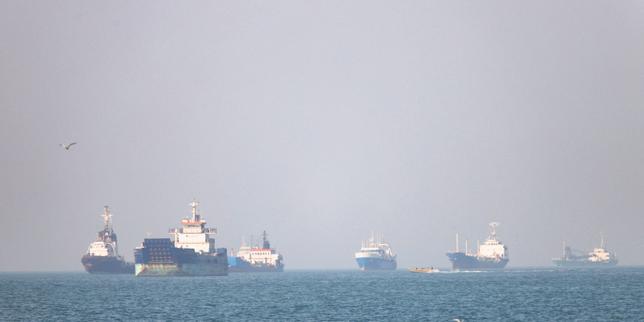
The Strait of Hormuz functions as the singular thermodynamic valve of the global energy market, responsible for the transit of roughly 21 million barrels of oil per day (bpd). Conventional analysis views a "blockage" of this artery as a binary event—either the strait is open or it is closed. This binary view is a failure of strategic imagination. The current geopolitical friction between the United States and Iran has produced a "double blockage" effect: a simultaneous degradation of physical security and legal-regulatory certainty. This dual-layered constriction operates through a feedback loop of escalating insurance premiums, kinetic threats, and extraterritorial sanctions that effectively "choke" the waterway without a single mine being laid.
The Physics of the Chokepoint Kinetic vs. Regulatory Friction
The Strait of Hormuz is approximately 21 miles wide at its narrowest point, but the actual shipping lanes consist of two two-mile-wide channels (one inbound, one outbound) separated by a two-mile buffer zone. This geographic reality creates a high-density transit environment where even minor disruptions yield disproportionate systemic shocks. If you enjoyed this piece, you should check out: this related article.
Iran’s strategy utilizes Asymmetric Kinetic Friction. This involves the deployment of fast attack craft (FAC), unmanned aerial vehicles (UAVs), and limpet mines to target merchant vessels. These actions are not intended to stop all traffic, but to increase the "risk-adjusted cost" of transit. When a vessel is seized or damaged, the immediate effect is not the loss of those specific barrels of oil, but the upward shift in the War Risk Surcharge (WRS).
The United States counters with Extraterritorial Regulatory Friction. Through the Office of Foreign Assets Control (OFAC), the U.S. enforces a secondary blockade. While Iran threatens the physical hull of the ship, the U.S. threatens the financial architecture supporting the voyage. This creates a scenario where a vessel may be physically able to pass through the strait but is legally prohibited from doing so because its cargo, ownership, or insurance is tied to sanctioned entities. For another perspective on this development, refer to the recent update from Reuters.
The Cost Function of Maritime Instability
To quantify the impact of the double blockage, one must analyze the three primary cost drivers that dictate the flow of global energy through the Persian Gulf.
- Freight and Insurance Elasticity: In periods of heightened tension, P&I Clubs (Protection and Indemnity) and Lloyd’s Market Association often declare the Persian Gulf a "Listed Area." This triggers additional premiums. For a Very Large Crude Carrier (VLCC), a spike in war risk premiums can add $200,000 to $400,000 to the cost of a single seven-day voyage.
- The Shadow Fleet Discount: Regulatory friction has birthed a "Shadow Fleet" of older tankers operating outside Western insurance and oversight. These vessels frequently disable their Automatic Identification Systems (AIS), a practice known as "going dark." The operational risk here is structural; these ships often lack adequate maintenance and insurance, increasing the probability of environmental catastrophe, which would provide a physical pretext for a total waterway closure.
- Opportunity Cost of Re-Routing: The only viable bypass for Hormuz is the East-West Pipeline (Abqaiq-Yanbu) in Saudi Arabia or the Abu Dhabi Crude Oil Pipeline (ADCOP). However, these have a combined spare capacity of only ~6.5 million bpd. The remaining 15 million bpd have no exit strategy. The "Double Blockage" forces markets to price in the permanent unavailability of this 15 million bpd "tail risk."
Iran’s Strategic Depth and Tactical Constraints
Iran’s "Maximum Pressure" counter-strategy relies on the Threshold of Response. Tehran understands that a total closure of the strait would be a casus belli for a global coalition, as it would cause an immediate 20-30% contraction in global GDP. Instead, Iran employs "calculated volatility."
The Multi-Domain Harassment Model
- Electronic Warfare (EW): Spoofing GPS signals to lure merchant vessels into Iranian territorial waters, providing a legal veneer for seizure.
- Swarm Tactics: Using high-speed, low-RCS (Radar Cross Section) boats to harass U.S. Navy assets, testing Rules of Engagement (ROE).
- Proxy Integration: Coordinating with Houthi forces in the Bab el-Mandeb to create a "dual-chokepoint" crisis, forcing the U.S. 5th Fleet to divide its Mediterranean and Gulf assets.
The limitation of Iran’s strategy is its own dependence on the strait. Iran requires the waterway for its own "dark" exports. Consequently, their goal is not a dead-stop blockage, but a "controlled impedance" that allows them to extract political concessions from the West while keeping their own economic lifelines semi-permeable.
The U.S. Security Architecture and the Escort Dilemma
The U.S. response, primarily through Operation Sentinel (International Maritime Security Construct), aims to provide "overwatch" rather than direct escort for every vessel. Direct escorts are resource-heavy and tactically rigid.
The Capacity Gap
A standard carrier strike group (CSG) cannot effectively monitor every square mile of the strait against small-cell threats. The U.S. has shifted toward Unmanned Integration. By deploying Task Force 59—a fleet of unmanned surface vessels (USVs) equipped with AI-driven sensor suites—the U.S. attempts to build a persistent "Common Operational Picture."
The failure of this strategy lies in its inability to address the legal blockage. Even if the U.S. Navy makes the strait 100% safe from physical attack, the OFAC-led sanctions regime continues to prevent a significant portion of regional oil from reaching the global market. The U.S. is essentially guarding a gate while simultaneously locking it from the outside.
Structural Vulnerabilities in Global Energy Supply Chains
The double blockage exposes three critical failures in modern energy logistics:
- JIT (Just-In-Time) Fragility: Refineries in Asia, particularly in South Korea and Japan, operate on lean inventories. A 72-hour delay in the Strait of Hormuz propagates through the supply chain, causing localized fuel shortages and price spikes within 14 days.
- The Insurance Monoculture: The dominance of Western-led insurance pools (The International Group of P&I Clubs) means that U.S. regulatory policy becomes de facto global maritime law. When the U.S. "blocks" a ship via sanctions, it effectively removes that ship’s ability to operate anywhere in the world.
- Storage Mismatch: Global strategic petroleum reserves (SPR) are designed for supply shocks, not prolonged "impedance." If the double blockage persists for months rather than weeks, the rate of SPR depletion will exceed the rate of alternative production, leading to a terminal price floor.
Geopolitical Realignment and the "Bypass" Economy
The persistent friction in Hormuz is accelerating a fundamental shift in energy flows. China, the primary consumer of Persian Gulf oil, is investing heavily in the Gwadar Port (Pakistan) and the Central Asia-China Gas Pipeline. These are not merely infrastructure projects; they are strategic hedges against the U.S. Navy’s ability to weaponize the Strait of Hormuz.
Russia, meanwhile, benefits from the double blockage. High volatility in the Gulf keeps Brent crude prices elevated, providing a fiscal cushion for Moscow while their own Urals grade—though sanctioned—finds its way into the "Shadow Fleet" ecosystem created by the very friction described here.
Tactical Conclusion and Strategic Play
The "Double Blockage" is not a temporary state of affairs but a permanent feature of the 21st-century energy landscape. For energy traders, sovereign wealth funds, and logistics firms, the following strategic imperatives apply:
- De-Risking from the "Hormuz Premium": Capital must be reallocated toward "Short-Strait" infrastructure. This includes increasing investment in Red Sea terminals and expanding the throughput of the Trans-Arabian pipelines.
- Autonomous Maritime Security: Private shipping entities must transition from passive reliance on state navies to active defense, utilizing non-kinetic electronic countermeasures and hardened "citadel" designs for tankers to mitigate the efficacy of Iranian swarm tactics.
- Regulatory Arbitrage Diversification: To counter the U.S. legal blockage, non-Western clearinghouses and insurance pools (based in Dubai or Singapore) will continue to grow. Market participants must develop the compliance infrastructure to interact with these "alternative" maritime ecosystems or risk being marginalized by the increasing bifurcation of the global fleet.
The Strait of Hormuz will remain the world's most dangerous "half-open" door. The victor in this environment is not the power that can close the strait, but the power that can most effectively navigate the friction of its partial closure.