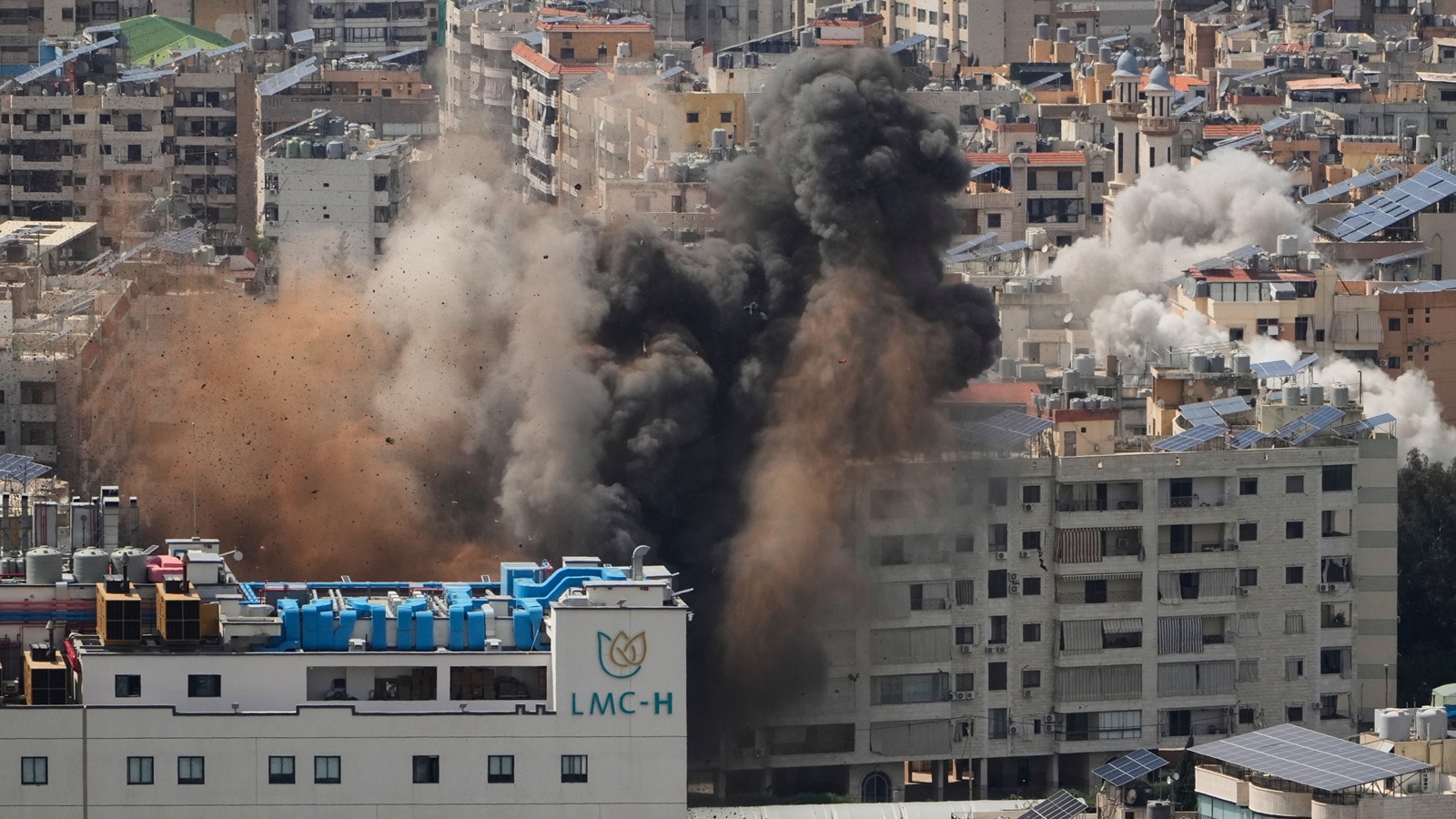
The headlines are screaming about a global energy apocalypse. They want you to believe that because tensions in Lebanon have reached a boiling point, the world’s most vital oil artery is officially severed. They are wrong. Every time a missile flies in the Levant, the "experts" dust off the same tired script about the Strait of Hormuz. They paint a picture of a total blockade that sends crude to $300 a barrel and collapses Western civilization by Tuesday.
It is theater. It is a fundamental misunderstanding of how power, physics, and economics actually function in the Persian Gulf.
The "lazy consensus" suggests that Iran can simply turn off the world’s oil tap like a kitchen faucet. This narrative ignores the reality that a permanent closure of the Strait is a suicide pact, not a strategic victory. If you are making investment or policy decisions based on the fear of a long-term maritime blockade, you are being played by the sensationalism of the 24-hour news cycle.
The Physical Impossibility of a Hard Seal
Let’s talk about the geography. The Strait of Hormuz is not a narrow door you can just lock and walk away from. We are talking about a waterway roughly 21 miles wide at its narrowest point, with shipping lanes that are two miles wide in each direction, separated by a two-mile buffer zone.
To "close" the Strait, you don't just sink one ship. You have to maintain constant, lethal presence over hundreds of square miles of open water against the most sophisticated naval presence on the planet.
I have watched analysts sit in air-conditioned offices in DC and London and talk about "closing the Strait" as if it’s a legal maneuver. It’s a combat operation. To actually stop the flow of oil, Iran would have to engage in a high-intensity, sustained naval war with the U.S. Fifth Fleet and a coalition of global powers.
The math doesn't work for a blockade. Modern supertankers (VLCCs) are massive steel islands. They don't go down because of a single limpet mine or a small drone strike. During the "Tanker War" of the 1980s, over 450 ships were attacked. Guess what happened? Global oil supply barely flinched. The insurance premiums went up, but the oil kept moving.
The Suicide Pact No One Mentions
The biggest flaw in the "Iran Closes the Strait" narrative is the assumption that Iran doesn't need the Strait.
Iran’s economy is already under massive pressure. They rely on the export of petroleum products to China and other buyers to keep their domestic economy from total collapse. If the Strait is closed, it is closed for them, too.
Do you really believe a nation facing internal dissent and economic strangulation is going to cut off its own carotid artery? By attempting a total blockade, Iran would be declaring war on its own customers—specifically China. Beijing imports millions of barrels a day through that waterway. Tehran is not in a position to alienate its only remaining superpower patron for the sake of a symbolic gesture in the Gulf.
What we are seeing is not a closure; it is "harassment as diplomacy." It is the use of naval friction to create leverage in negotiations elsewhere. It’s a loud, expensive way of saying, "Pay attention to us." But the moment that harassment turns into a genuine, functional blockade, the Iranian state signs its own death warrant.
The Strategic Petroleum Reserve and the Buffer Myth
People love to ask, "What happens when the oil stops?"
The premise of the question is flawed because it assumes a static world. The global energy market of 2026 is not the market of 1973.
- The UAE and Saudi Bypass: Both nations have spent billions on pipelines that bypass the Strait of Hormuz. The Habshan–Fujairah pipeline and the East-West Pipeline can move millions of barrels per day directly to the Gulf of Oman or the Red Sea. While they can't handle the entire volume of the Strait, they provide enough of a floor to prevent a total global freeze.
- U.S. Domestic Production: The United States is the largest producer of oil and gas in the world. The era of the U.S. being held hostage by Gulf logistics ended years ago. We are now a net exporter. The price of oil is global, yes, but the physical security of the supply is no longer an existential threat to American sovereignty.
- The China Factor: As mentioned, China is the primary stakeholder here. If the Strait is blocked, the first person calling Tehran isn't the U.S. Secretary of State; it’s the Chinese leadership demanding their energy security back.
Why the Market Overreacts Every Single Time
The reason the price of Brent crude spikes 10% on these headlines isn't because the oil has actually stopped flowing. It's because of the "Fear Premium."
Commodity traders aren't trading reality; they are trading the expectation of reality. They see a headline about Lebanon and Israel, they see the word "Hormuz," and they hit the buy button. It’s a reflexive, Pavlovian response.
If you want to win in this environment, you have to trade the fade. You have to recognize that the logistical reality of the Gulf is far more stable than the political rhetoric. The "closure" is almost always a temporary increase in inspections, a few symbolic boardings of vessels, or a localized skirmish. It is never the total cessation of traffic the media depicts.
Stop Asking if the Strait is Closed
The real question isn't whether Iran "closed" the Strait. The real question is: "Can the world afford to let it stay closed for more than 48 hours?"
The answer is a resounding no. Which means the combined military and economic weight of the G20 would be deployed to reopen it immediately. We are talking about a level of kinetic intervention that would make the 1991 Gulf War look like a training exercise.
Iran knows this. The U.S. knows this. The Saudis know this.
The current situation in Lebanon is tragic and volatile, but it does not change the fundamental laws of maritime physics or the necessity of global energy flows. When you hear that the Strait is "closed," look at the satellite tracking of the actual tankers. If they are still hovering in the holding patterns or moving through with escorts, the Strait is open for business.
The consensus is that we are on the brink of a 1970s-style energy crisis. The reality is that we are watching a highly choreographed ritual of regional signaling.
Don't let the noise drown out the data. The Strait of Hormuz is too big to fail, too wide to block, and too important to the people claiming to close it.
Stop buying the panic. Start looking at the pipelines.