
The global energy market lives in a state of manufactured hysteria. Every time a regional power in the Middle East rattles a saber or a drone clips a tanker, the "experts" crawl out of the woodwork to scream about $200-a-barrel oil and the collapse of Western civilization. They paint a picture of a world held hostage by a single, narrow choke point. They ask "Who will blink first?" as if we are watching a high-stakes staring contest between world leaders.
They are wrong. They are fundamentally misunderstanding the physics of modern naval warfare, the cold math of insurance premiums, and the shift in global energy flows. The "Strait of Hormuz Blockade" is the monster under the bed for commodity traders—scary to talk about in the dark, but non-existent when you turn on the lights.
A total, sustained blockade of the Strait of Hormuz is not just unlikely; it is functionally impossible in the 2026 reality of global trade. Here is why the consensus is lazy, and why the "energy armageddon" narrative is a relic of the 1970s.
The Physical Impossibility of a Hard Close
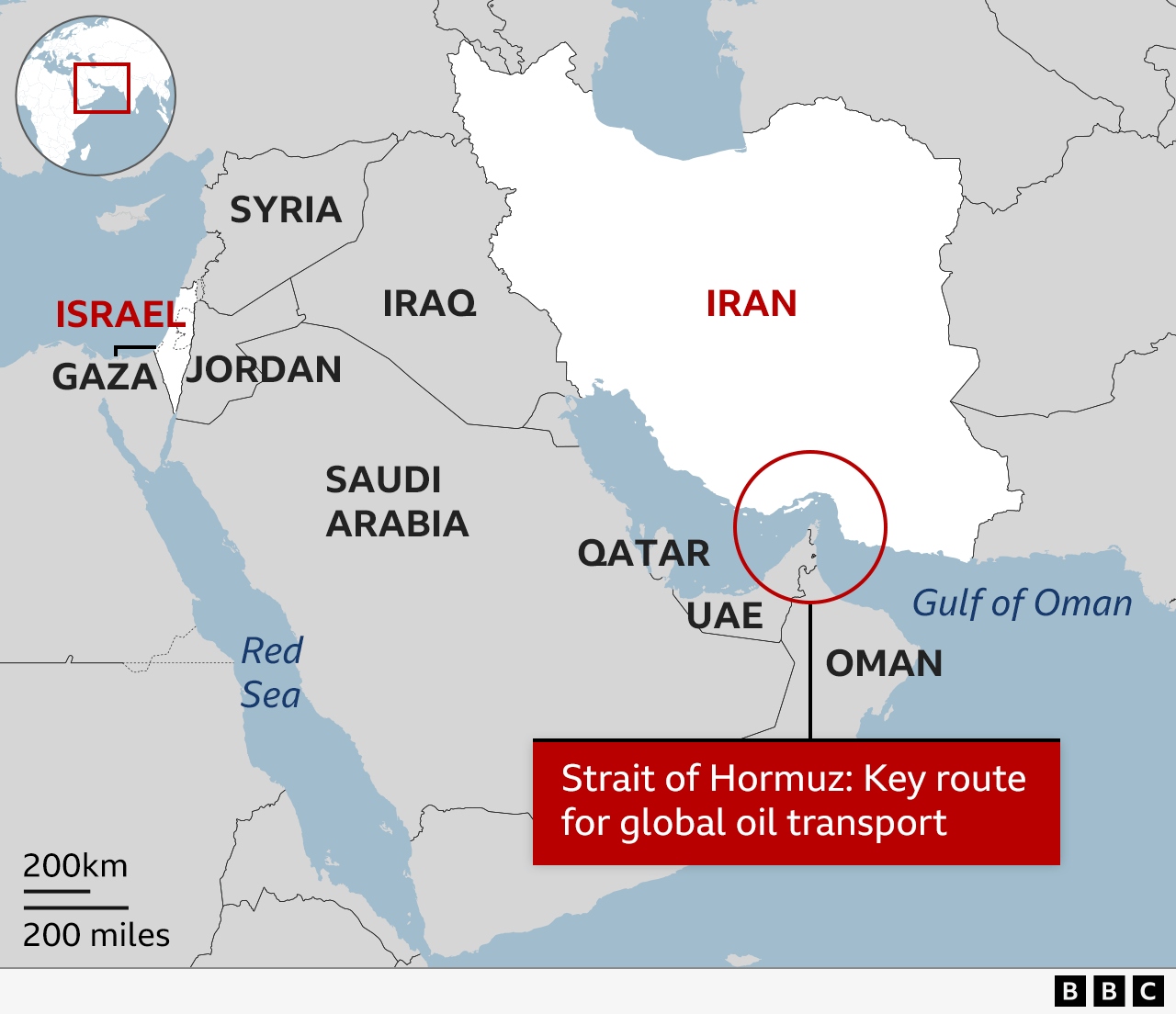
The pundits talk about the Strait like it’s a garden hose you can just kink. It isn’t. We are talking about a waterway where the shipping lanes alone are two miles wide in each direction, separated by a two-mile buffer zone. To "close" this, you don't just sink a ship or two. You have to maintain persistent area denial against the most sophisticated naval cooperatives in human history.
I have spent years analyzing maritime logistics and supply chain vulnerabilities. I have seen boardroom panics triggered by a single "breaking news" banner on a terminal. But when you look at the tactical requirements of a blockade, the math falls apart.
- The Depth Problem: The Strait is deep. You cannot "block" it with scuttled hulls like a harbor mouth in the 18th century.
- The Drone Fallacy: While cheap suicide drones can harass tankers, they cannot stop them. A Very Large Crude Carrier (VLCC) is a 300,000-ton steel fortress. It takes more than a few hobbyist motors with C4 to put one on the bottom.
- The Escort Reality: The moment a real threat materializes, we move to a "conveyance" model. We’ve done this before during the Tanker War of the 1980s (Operation Earnest Will). The result? Oil kept flowing.
The idea that a regional actor can flip a switch and stop 20% of the world’s oil consumption is a fantasy designed to drive up futures prices and justify defense budgets.
The Insurance Market Is the Real Choke Point
If the Strait "closes," it won't be because of mines or missiles. It will be because of spreadsheets in London.
The media focuses on the military aspect because it makes for better television. The real war is fought in the Lloyd’s of London underwriting rooms. When "War Risk" premiums spike, it becomes economically unfeasible for some shippers to move cargo.
However, this is where the contrarian reality kicks in: The world is now built for this.
The rise of the "shadow fleet"—thousands of tankers operating under opaque ownership and dubious insurance—has fundamentally broken the West's ability to use insurance as a gatekeeper. Countries like China and India, the primary destinations for Gulf crude, have already developed sovereign insurance guarantees. They don't care if a London underwriter won't sign off on a voyage. They provide their own indemnity.
The "blockade" is an institutional hurdle for Western companies, but for the East, it is merely a surcharge. The oil finds a way. It always finds a way.
The Myth of the $300 Barrel
Whenever the Strait is mentioned, some analyst predicts oil prices hitting $300. This ignores the basic economic principle of demand destruction and the technical reality of strategic reserves.
If the Strait were truly blocked for more than 48 hours, the following would happen simultaneously:
- IEA Releases: The International Energy Agency member countries hold over 1.5 billion barrels of emergency stock. This isn't a theoretical number. It’s sitting in salt caverns and tanks, ready to be flooded into the market.
- The Pipeline Pivot: Everyone forgets the East-West Pipeline (Abqaiq-Yanbu) in Saudi Arabia and the ADCOP pipeline in the UAE. These bypass the Strait entirely, capable of moving millions of barrels per day to the Red Sea or the Gulf of Oman. They are the pressure release valves the "doomsday" articles conveniently ignore.
- Shale’s Instant Response: US shale isn't a slow-moving giant. It’s a nimble, tech-driven extraction machine. At $120 oil, every capped well in the Permian Basin becomes a gold mine. Production would surge at a pace that would make the 1970s OPEC ministers weep.
We aren't in 1973. We aren't even in 2003. The world is awash in energy options. A Hormuz disruption is a weekend volatility event, not a decade-long depression.
Who Actually Blinks? Hint: It’s Not the West
The competitor article asks who will blink first between the US and Iran (or other regional actors). This is the wrong question.
The entity that blinks first in any blockade scenario is the nation attempting the blockade. Why? Because they are the ones who need the revenue the most.
Imagine a scenario where a nation successfully closes the Strait. They have just cut off their own jugular. The countries surrounding the Persian Gulf are rentier states. Their entire social contract—their ability to pay their police, feed their citizens, and maintain power—depends on the export of hydrocarbons.
Closing the Strait is an act of national suicide. It’s not a strategic move; it’s a "Sampson Option" where you pull the temple down on your own head. The moment the flow stops, the clock starts ticking on the blockading regime's internal collapse. They need the oil to flow more than we need to buy it. We have reserves. They have bills.
The Technology Gap: Why 1980s Tactics Fail in 2026
The "experts" love to cite the 1980s Tanker War as a blueprint. They talk about sea mines and Silkworm missiles. They are living in the past.
Modern maritime domain awareness (MDA) is total. Between sub-meter satellite imagery, persistent high-altitude drones, and acoustic sensors, it is impossible to move a minelayer or prep a missile battery without the entire world seeing it in real-time.
A "stealth" blockade is an oxymoron. Any attempt to seed the Strait with mines would be met with pre-emptive kinetic strikes before the first tether is dropped. The technological asymmetry between a global superpower and a regional disruptor has never been wider. We don't need to "blink" because we can see every twitch of their eyelid from 200 miles up.
The Pivot to the "Global South"
The final nail in the coffin of the Hormuz Panic is the shift in destination. The US is a net exporter of petroleum products. The "Strait of Hormuz" is no longer an American energy security issue; it is a Chinese and Indian industrial security issue.
If the Strait closes, the first phone call isn't from the White House to the Pentagon. It's from Beijing to the regional capital. China imports roughly 10 million barrels of oil a day, a massive chunk of which comes through that Strait.
Do you think China will sit idly by while their industrial engine is starved for a regional grudge match? Of course not. The presence of Chinese naval assets in the region is the new deterrent. The "Strait of Hormuz" narrative is outdated because it assumes the US is the only cop on the beat. There are now multiple cops, and most of them have much more to lose than Washington does.
Stop Asking the Wrong Question
The question isn't "Who will blink first?"
The question is: "Why are you still listening to people who treat a 2026 globalized economy like a 19th-century naval siege?"
The Strait of Hormuz is a psychological weapon, not a military one. It is a tool used to spike volatility, scare politicians, and sell newsletters. The physical reality of the Strait—the pipelines, the reserves, the shadow fleets, and the sheer economic desperation of the producers—ensures that the water stays open.
The blockade is a ghost. Stop being afraid of the dark.
The real threat isn't a closed Strait; it's the fact that you still believe a single waterway can break the world. The world has already moved on. You should too.

:max_bytes(150000):strip_icc():focal(749x0:751x2)/3-23-2020-cover-bb3f4a07be584d14971f7f2f6a968fda.jpg)