You trust that international waters are neutral ground until they aren't. This week, the simmering geopolitical friction in the Middle East boiled over into a nightmare for merchant mariners. Three Indian sailors are dead after a US military aircraft launched a precision strike on the Palau-flagged oil tanker MT Settebello in the Gulf of Oman.
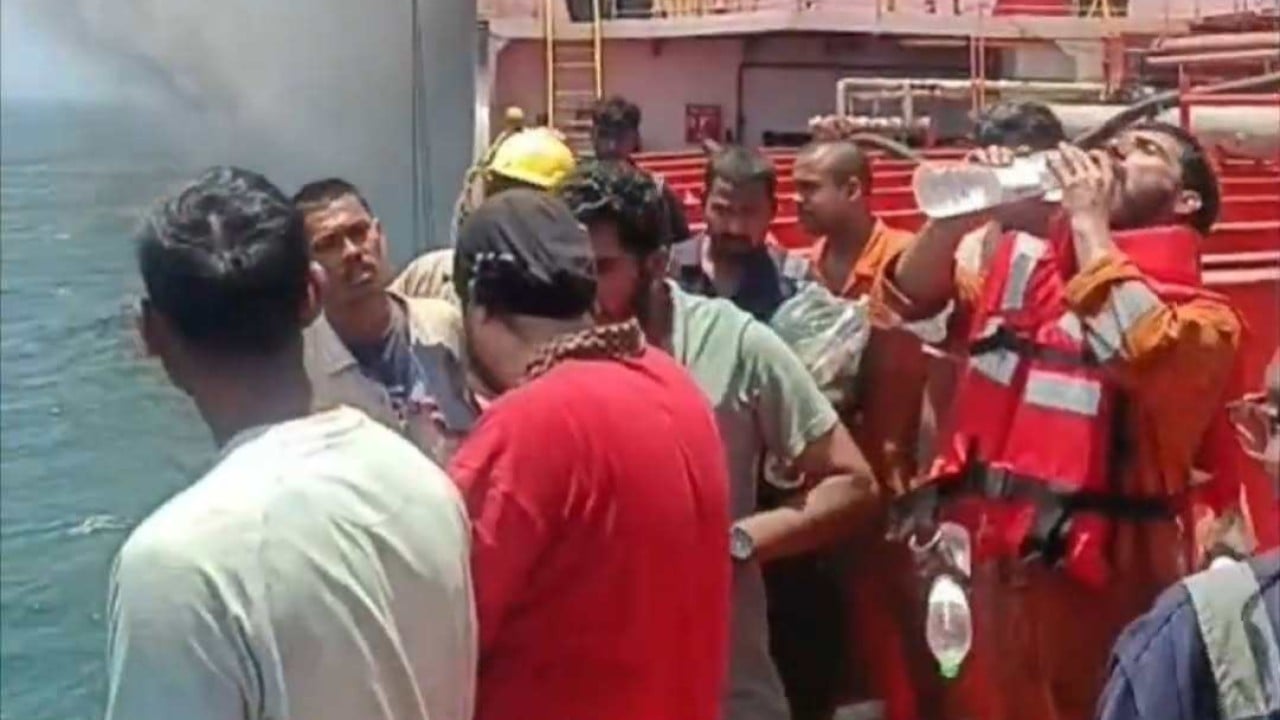
The strike targeted the ship's engine room, sparking a massive fire. While the Omani Navy managed to pull 21 Indian crew members from the burning vessel, three seafarers originally reported missing—Aditya Sharma, Shivanand Chaurasiya, and Patnala Suresh—have been confirmed dead. You might also find this connected coverage useful: Why the Escalating US and Iran Standoff is Much Closer to Edge Than You Think.
This isn't just another flare-up in a distant war. It's a massive, uncomfortable shift in global maritime dynamics. For the first time since Washington initiated its strict naval blockade of Iran-linked shipping on April 13, American weapons have killed civilian mariners from a strategic ally nation. New Delhi is furious, Washington is dug in, and the global shipping industry is watching its most critical choke point transform into a literal free-fire zone.
The Cost of Enforcing a Choke Point Blockade
The US military's Central Command (CENTCOM) didn't mince words about why they pulled the trigger. According to official statements, the MT Settebello violated the ongoing naval blockade by attempting to transport oil from Iran. CENTCOM claims their forces deployed precision munitions only after the tanker crew repeatedly failed to comply with direct orders from American naval assets. As highlighted in recent coverage by BBC News, the effects are worth noting.
Look at the numbers to see how aggressive this campaign has become over the last two months. Since April, American forces have intercepted and turned back over 100 ships. They have disabled eight vessels that refused to comply. The MT Settebello just happened to be the first one where the body count made global headlines.
The tragedy gets stickier when you look at the timeline. Aditya Sharma, one of the deceased sailors, told his family that the ship had already received two separate warnings from the US Navy in the weeks leading up to the attack. The crew knew the risks, but in the merchant navy, the sailors don't choose the route. The operators do.
India Demands Answers and Summons American Diplomats
New Delhi didn't waste time playing nice. Within hours of the strike, the Ministry of External Affairs summoned the US Chargé d'Affaires, Jason Meeks, to lodge a fierce diplomatic protest. Indian foreign ministry spokesperson Randhir Jaiswal stated plainly that these kinds of military actions must stop immediately.
The political anger inside India stems from a simple, frustrating reality. India is the world's third-largest supplier of seafarers. More than 300,000 Indian citizens keep global trade running, and right now, roughly 18,000 of them are working on various vessels scattered across the tense Gulf region.
Maritime union leaders aren't buying the "accidental collateral damage" excuse either. Representatives from the Forward Seamen's Union of India openly scoffed at the idea that the US didn't know who was on board. Given modern transponder tracking and naval intelligence, the military forces almost certainly knew the ship was manned by an entirely Indian civilian crew. Dropping high-explosive ordnance into an engine room full of engineers because the ship owner ignored a radio call is a massive escalation that sets a terrifying precedent for global trade.
The Collateral Damage of the Shadow Fleet
Why was a Palau-flagged ship hauling Iranian oil in the first place? Welcome to the world of the shadow fleet. These are typically older tankers, often lacking standard Western insurance, that utilize flags of convenience to bypass international sanctions.
The US military has made it clear that any vessel assisting Iran's energy exports is a valid target under their blockade rules. The problem is that the owners of these shadow fleets hide behind shell companies, leaving low-wage merchant mariners from developing countries to take the physical hits.
To make matters worse, the violence isn't isolated. The US Navy reportedly targeted three different vessels employing Indian crews this week alone. Just days before the Settebello disaster, US forces disabled the unladen tanker MT Marivex. On top of that, the Indian embassy in Muscat is tracking a brand-new emergency involving the MT Jalveer, another tanker with 20 Indian nationals on board that reportedly suffered an engine room fire off Oman's coast.
Where Maritime Security Goes From Here
If you operate commercial vessels or have family working at sea, the rules of the game just changed. You can no longer assume that flying a neutral flag or working for a commercial entity guarantees safety when a superpower decides to lock down an international waterway.
The timing of this incident guarantees it will dominate the upcoming Group of Seven summit, where Indian Prime Minister Narendra Modi will likely confront US leadership directly during bilateral talks.
For maritime shipping firms and crew placement agencies, immediate operational adjustments are mandatory. If you have vessels routing anywhere near the Strait of Hormuz or the Gulf of Oman, you need to verify the exact cargo, ownership history, and compliance status of the hull. Running afoul of a US naval blockade is no longer a matter of facing port delays or financial fines—it means risking a missile strike to the hull. Merchant crews must be given the absolute right to refuse deployment into the Gulf zone without facing professional retaliation or contract penalties until a clear diplomatic framework restores safety to these waters.