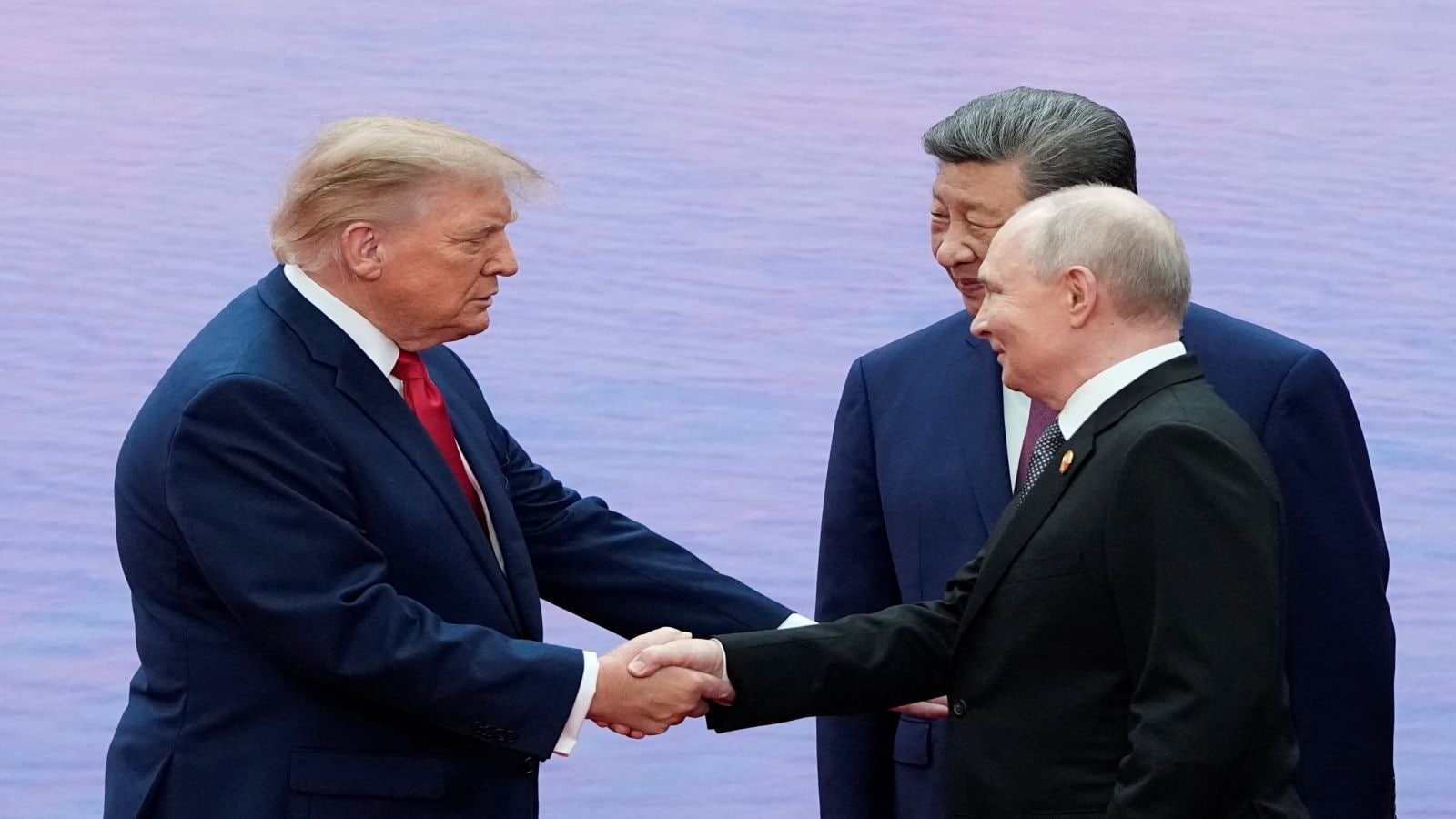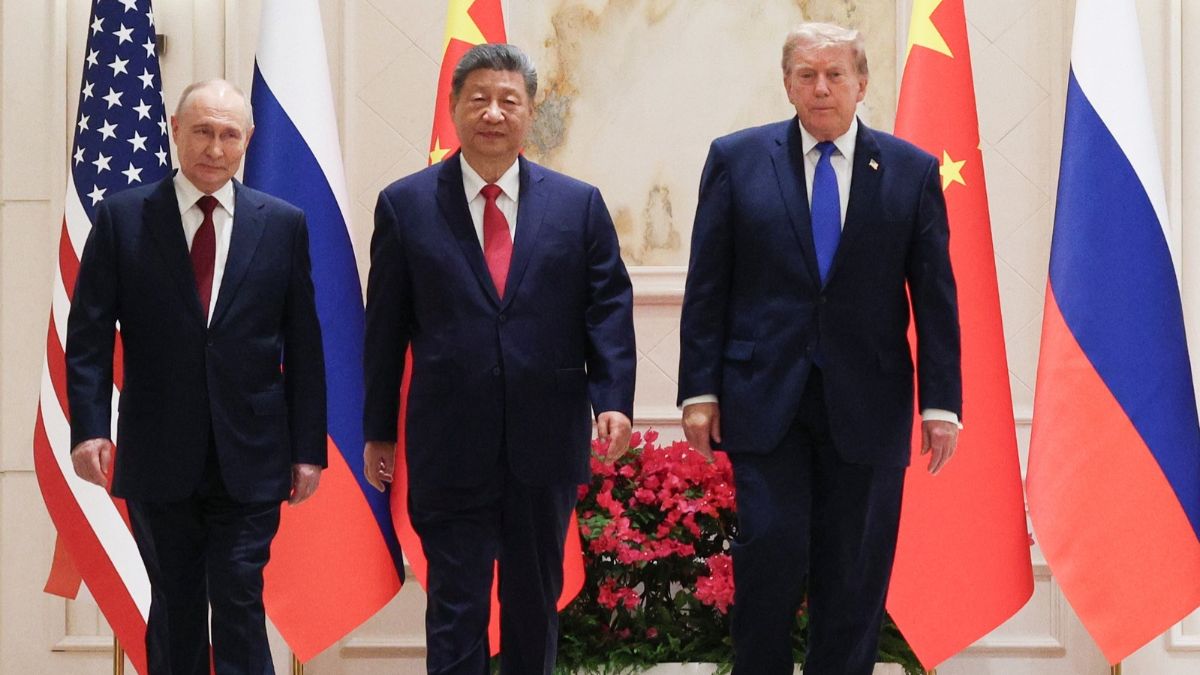
Mainstream coverage of the Asia-Pacific Economic Cooperation summit reads like a high school gossip column written by political science majors. Every November, foreign policy pundits obsess over body language on a red carpet, dissect the seating chart at a state banquet, and treat a thirty-second pull-aside between Donald Trump, Xi Jinping, and Vladimir Putin as if it dictates the fate of global commerce.
They are looking at the wrong stage.
While reporters crowd the press pens waiting for a joint communique that nobody intends to enforce, the actual architecture of Pacific trade is being rewritten in technical working groups, bilateral supply chain treaties, and regional currency clearinghouses that never make the evening news. The lazy consensus assumes APEC is a geopolitical boxing ring where three strongmen trade blows for supremacy. In reality, APEC is a non-binding, consensus-driven forum created in 1989 specifically to avoid hard power confrontations. Treating a consensus-based economic talk shop like the Congress of Vienna is the fastest way to misread global risk.
The Myth of the Three-Man Chessboard
I have spent fifteen years advising cross-border logistics firms and institutional investors on Pacific Rim exposure, and I have watched executive boards freeze billions in capital expenditure because a cable news anchor panicked over a tense photo-op in Lima, Gyeongju, or Shenzhen. That reaction costs real money. When you buy into the narrative that Trump, Xi, and Putin single-handedly steer the Asia-Pacific economy through summit theatrics, you ignore the structural mechanics that actually move cargo and capital.
First, examine the basic institutional reality of APEC. Unlike the World Trade Organization, APEC has zero enforcement mechanisms. It operates on the principle of "open regionalism" and voluntary commitments. No country can be sanctioned for ignoring an APEC declaration. When leaders gather in their matching host-nation shirts, they are ratifying agreements that trade ministers and mid-level bureaucrats spent the previous eleven months hashing out—or, more frequently, papering over irreconcilable differences with vague diplomatic phrasing.
Second, look at the actual alignment of the three players everyone fixates on:
- The United States under Trump views multilateral trade forums with deep skepticism, favoring bilateral leverage and tariff walls over sprawling regional frameworks. To Washington, APEC is a venue to project bilateral pressure, not to build collective rules.
- China under Xi uses APEC to present itself as the stable, predictable defender of globalization, courting middle powers while simultaneously tightening domestic state control and subsidizing industrial overcapacity.
- Russia under Putin is an economic footnote in the Pacific Rim outside of discounted hydrocarbons and raw commodities. Since 2022, Moscow's presence at APEC has been largely symbolic, frequently delegated to deputy prime ministers, serving mostly as a diplomatic distraction for Western media.
Putting these three men on an equal pedestal as co-architects of Pacific power dynamics is analytically bankrupt. Russia is not competing with the United States and China for Pacific trade dominance; it is acting as a junior resource supplier to Beijing while trying to prove it is not diplomatically isolated.
Why Middle Powers Are Quietly Running the Table
If you want to understand who actually holds the leverage at APEC, stop tracking Air Force One and start tracking the delegations from Singapore, Vietnam, South Korea, Australia, and Chile.
The most significant trade architecture in the Pacific today—the Comprehensive and Progressive Agreement for Trans-Pacific Partnership (CPTPP) and the Regional Comprehensive Economic Partnership (RCEP)—evolved largely around, rather than through, Washington's direct leadership. When the United States walked away from the original TPP in 2017, pundits predicted the collapse of Pacific trade integration. Instead, Japan and Australia salvaged the deal, turning it into a high-standard trade bloc that both China and Taiwan have since applied to join.
Middle powers realized years ago that waiting for Washington and Beijing to resolve their strategic rivalry is a suicide pact for export-driven economies. So they built redundancy into the system.
- Supply Chain Hedging: Manufacturers in Hanoi, Penang, and Monterrey are not picking sides between Washington and Beijing. They are acting as connective tissue—importing intermediate components from China, performing final assembly locally, and shipping finished goods to American consumers.
- Digital Trade Standards: While superpowers argue over tariffs on steel and electric vehicles, smaller APEC economies like Singapore, New Zealand, and Chile pioneered the Digital Economy Partnership Agreement (DEPA), setting the actual technical rules for cross-border data flows, electronic invoicing, and AI governance.
- Critical Mineral Cartels: Australia, Indonesia, and Peru hold the lithium, nickel, and copper required for the energy transition. Their bilateral negotiations on processing standards and export controls carry far more weight for global manufacturing than any plenary speech given by a superpower head of state.
The pundit class misses this because spreadsheets on customs harmonization do not generate clicks. A scowl between two presidents does.
What People Actually Get Wrong About Summit Diplomacy
When business leaders and retail investors search for answers about APEC, they usually ask the wrong questions. They want to know who "won" the summit, or whether a handshake means tariffs are coming down. Both questions rest on a fundamental misunderstanding of modern statecraft.
Does an APEC meeting actually prevent trade wars?
No. Historically, summit diplomacy between rival powers acts as a pressure release valve, not a structural fix. Look at the trajectory of US-China relations since 2018. Leaders have met repeatedly on the sidelines of APEC and the G20, announced temporary truces, promised working groups on fentanyl or agricultural purchases, and within six months, both sides have rolled out fresh export controls on semiconductors or new tariffs on clean energy hardware. A summit manages the temperature of a rivalry; it never changes the trajectory.
Can China replace the United States as the anchor of APEC?
Not under its current economic model. To anchor a regional trade bloc, a superpower must act as the consumer of last resort, absorbing the exports of its neighbors so they can grow. The United States consistently runs massive trade deficits with nearly every major APEC economy, pumping dollars into the region. China, by contrast, runs massive trade surpluses, exporting deflation and manufactured goods while suppressing domestic household consumption. Southeast Asian economies welcome Chinese infrastructure investment, but they cannot sell enough finished goods into the Chinese market to replace American consumer demand. Until Beijing restructures its economy to import vastly more than it exports, it cannot replace Washington as the commercial anchor of the Pacific.
Why does Russia even bother showing up?
Optics and spoiler value. For Moscow, sitting at the same table as the leaders of the world's largest economies breaks the narrative of global pariah status. It allows the Kremlin to signal to the Global South that Western sanctions have not erased Russia from international institutions. Beyond that, Russia uses consensus rules within APEC to water down language on territorial integrity and energy security, forcing host nations to spend diplomatic capital just to produce a chair's statement.
The Real Playbook for Reading Geopolitical Risk
There is a legitimate downside to dismissing summit theatrics entirely. Markets are driven by human psychology in the short term, and a reckless off-the-cuff remark by a head of state at a press conference can trigger a three-percent swing in currency markets or semiconductor stocks before lunch. If you trade on a forty-eight-hour time horizon, the theater matters.
However, if you are building a business, managing a supply chain, or allocating capital over a three-to-five-year horizon, reacting to summit headlines is a guaranteed way to get whipsawed.
Instead of watching the leaders' retreat, track the boring indicators that actually govern Pacific commerce:
- Rules of Origin Enforcement: Watch how customs authorities in Vietnam, Mexico, and Malaysia audit transshipped goods. When Washington pressures allies to crack down on Chinese re-routing, the enforcement happens in customs manuals, not summit speeches.
- Bilateral Investment Treaties (BITs) and Tax Accords: Follow where sovereign wealth funds from Singapore (GIC and Temasek) and the Middle East are deploying capital into Southeast Asian data centers and ports. Capital flows reveal true geopolitical alignment far better than diplomatic rhetoric.
- Sub-national Trade Missions: Pay attention to governors, mayors, and provincial leaders signing direct procurement and tech-transfer deals. Even when national governments are locked in ideological gridlock, sub-national entities continue cutting pragmatic commercial deals beneath the radar.
- Technical Standard-Setting Bodies: Monitor who chairs the committees on maritime decarbonization, green shipping corridors, and cross-border payment rails. Whoever writes the technical specifications controls the tollbooths of future trade.
Geopolitical strategists like Kishore Mahbubani and trade economists like Richard Baldwin have spent decades pointing out that Asian economic integration operates on an entirely different clock than Western political cycles. Western media covers diplomacy like a sporting event with a final buzzer. Asian economic statecraft operates like water—flowing around obstacles, eroding tariff barriers through incremental supply chain shifts, and ignoring the noise at the podium.
The next time APEC convenes, turn off the cable news panels analyzing the firmness of a handshake. Open the customs tariff schedules, read the rules-of-origin annexes, and watch where the container ships actually dock. Everything else is just expensive theater for people who don't move freight.