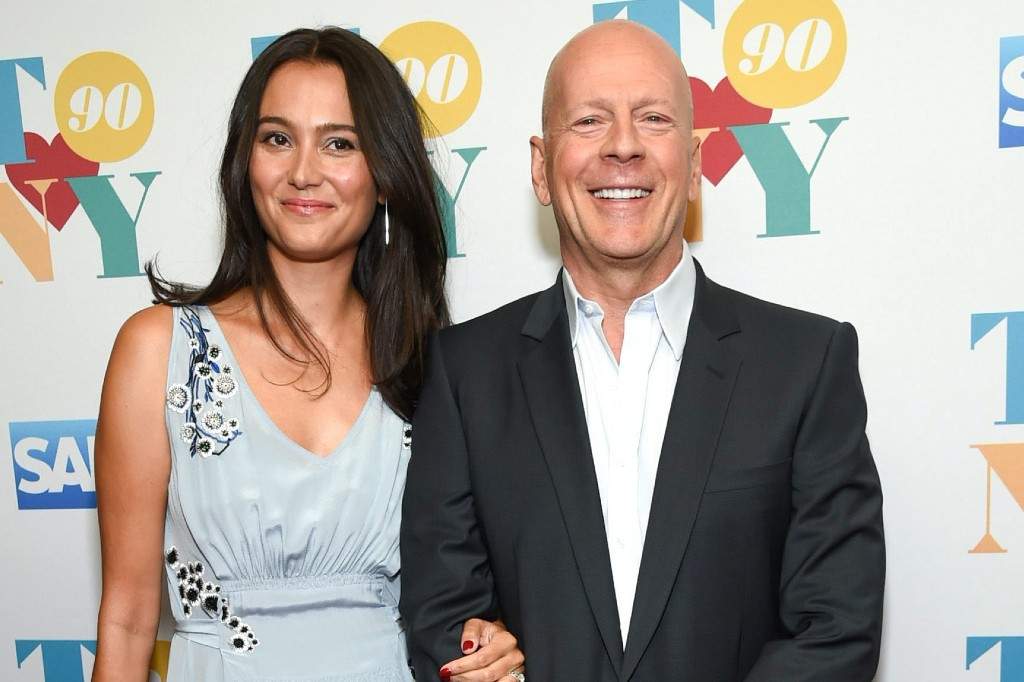
We need to stop using Bruce Willis as a prop for our collective emotional catharsis.
Every time Emma Heming Willis steps in front of a camera or posts an update about her husband’s frontotemporal dementia, the internet erupts into a predictable chorus of applause. We call her a warrior. We call his diagnosis a lesson. We tell ourselves that his tragic decline will not be in vain because it is raising awareness, sparking conversations, and shining a light on an overlooked disease.
It is a comforting narrative. It allows us to consume a human tragedy and digest it as an inspiring PSA.
It is also deeply corrosive.
When we insist that a devastating, irreversible neurodegenerative disorder must have a silver lining, we are not honoring the patient or supporting the caregiver. We are sanitizing a nightmare to make it easier for ourselves to watch. We are demanding that a family’s private catastrophe perform a public service, turning an agonizing erosion of self into content.
Let us dismantle the lazy consensus right now: awareness campaigns and public transparency do not slow down neurodegeneration, they do not fund the clinical breakthroughs we actually need, and they place an unconscionable burden on caregivers to perform grace under the flashbulbs of global scrutiny.
The Trap of the Public Martyr
The prevailing cultural script dictates that when tragedy strikes a famous household, the surviving partner must transform into an advocate. We expect the grieving spouse to stand on a metaphorical soapbox, wipe away a tear, and declare that some greater good is being served.
I have watched families inside the healthcare ecosystem buy into this myth, exhausting their last reserves of physical and emotional energy to mount public campaigns, believing that visibility equals victory. It is a dangerous illusion.
Frontotemporal dementia does not care about your hashtag. It does not negotiate because you managed to trend on social media. It is an aggressive, merciless destruction of the frontal and temporal lobes that alters personality, erases language, and strips away executive function. No amount of public awareness stops the pathology.
When we praise caregivers only when they convert their private grief into public inspiration, we create a toxic binary. We imply that quiet, untelevised suffering—the kind happening behind locked doors in millions of ordinary homes without a PR team or a million Instagram followers—is somehow less noble. We turn advocacy into an obligation, suggesting that if you aren't turning your spouse’s brain atrophy into a teaching moment, you are wasting the tragedy.
That is not support. That is exploitation disguised as empathy.
The Myth That Awareness Pays the Bills
Let us address the core economic delusion driving the modern obsession with public health narratives: the belief that awareness naturally translates into a cure.
Charity boards and institutional fundraisers love to push the line that we just need to get people talking about a disease. It sounds proactive. It costs very little to produce. And it completely misdiagnoses the structural failures holding back neurology.
The bottleneck in treating frontotemporal dementia or any other neurodegenerative condition is not a lack of public chatter. The bottleneck is capital allocation, high clinical trial failure rates, and the brutal complexity of the blood-brain barrier.
Imagine a scenario where every single person on earth knows what frontotemporal dementia is by tomorrow morning. Does that manufacture a single new FDA-approved disease-modifying therapy? Does it lower the astronomical cost of 24-hour skilled nursing care? Does it subsidize the lost wages of a family member who has to quit their job to change diapers and manage behavioral outbursts?
No. It changes absolutely nothing about the material reality of the disease.
We rely on awareness as a cheap substitute for structural reform because actual solutions are expensive and politically difficult. We would rather clap for a celebrity spouse giving an interview on morning television than fund universal long-term care insurance or subsidize neurological research on a scale that actually moves the needle.
The Toll of Forced Resilience
There is a dark side to our cultural addiction to resilient caregivers. We love the narrative of the strong woman standing tall amidst the ruins because it lets us off the hook.
When we look at Emma Heming Willis and declare how strong she is, we are often admiring our own reflection. We are praising the archetype we constructed, not the human being underneath.
Caregiver burnout is not a personal failing, and resilience is not a renewable resource. Chronic caregiving for a partner with frontotemporal dementia triggers physiological stress responses akin to chronic post-traumatic stress disorder. The constant vigilance, the anticipatory grief, the loss of companionship, and the physical exhaustion dismantle the immune system and accelerate biological aging.
When the culture demands that this process look inspiring, it forces caregivers to hide their anger, their resentment, their exhaustion, and their despair. It creates a performance of grace that leaves no room for the ugly, messy truth of caring for someone who is slowly vanishing before your eyes.
True support does not ask the person holding the burden to smile for the camera and talk about silver linings. True support says: This sucks. It is unfair. There is no lesson here. It is just a cruel biological lottery, and you are allowed to hate every second of it without feeling guilty that you aren't making it a teaching moment.
What Real Support Looks Like
If we want to stop treating celebrity illness as entertainment and actually improve the landscape of neurological care, we have to redirect our focus away from the media cycle and toward structural fixes.
First, we must stop valorizing suffering. Let caregivers break down. Stop telling them they are strong and start asking what administrative, financial, or physical help they need to get through the next four hours.
Second, we must fund infrastructure, not marketing. If you want to honor Bruce Willis, or any of the hundreds of thousands of people suffering in obscurity, stop donating to awareness campaigns that spend eighty percent of their budget on administrative overhead and PR. Put money directly into direct-support worker wages, respite care grants, and basic science research.
Third, we need to normalize silence. Not every private agony needs to be converted into a public asset. Sometimes, the most respectful thing a family can do is pull the curtains, lock the doors, and protect what remains of their dignity away from the hungry maw of the content machine.
We do not need another interview about finding hope in the darkest moments. We need systemic solutions for families drowning in medical debt and institutional neglect.
Until we are willing to do the hard, unglamorous work of fixing our healthcare systems, our applause is just noise, and our inspiration is just a distraction.
Stop looking for the lesson. There isn't one. Fix the system instead.