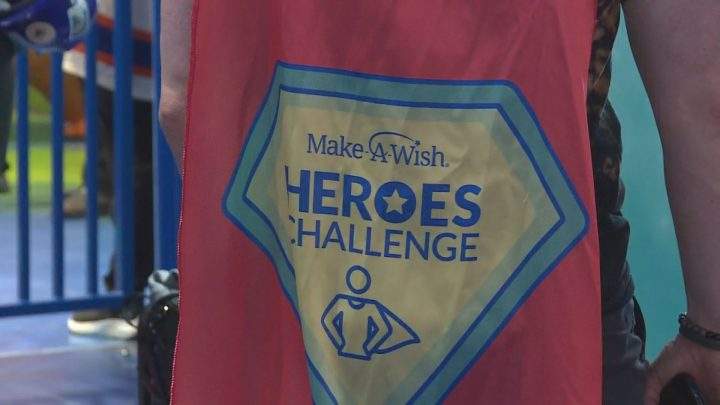
The standard charity event is a sedative. It is designed to make the donor feel like a hero without requiring them to actually understand the problem they are solving. Nowhere is this more apparent than the "Heroes Challenge" at West Edmonton Mall. People dress up in capes, navigate obstacle courses, and high-five for the cameras, all under the guise of supporting Make-A-Wish Canada.
It is high-octane optics. It is also an incredibly inefficient way to move the needle on human suffering. If you found value in this post, you might want to check out: this related article.
We have reached a point where the "experience" of giving has eclipsed the impact of the gift. When a corporation or a group of individuals spends thousands on registration fees, costumes, and the logistics of a mall-based obstacle course, they are participating in a closed-loop ego economy. They are buying a memory, not a cure. They are purchasing the feeling of "making a difference" while the actual mechanics of that difference remain obscured by foam pits and polyester capes.
The High Cost of the Feel-Good Factory
The math of these events rarely holds up to scrutiny if you prioritize the beneficiary over the participant. Event-based fundraising is notoriously expensive to produce. Between venue costs, marketing, insurance, and administrative overhead, the "leakage" of capital is staggering. For another look on this development, refer to the recent update from ELLE.
Compare this to the principles of Effective Altruism (EA), championed by figures like Peter Singer. The goal of EA is simple: maximize the good done per dollar spent. If your goal is truly to alleviate the burden of a child facing a life-threatening illness, why are you spending $500 on a team entry fee for a race through a shopping mall?
A significant portion of that money stays within the event’s ecosystem. It pays for the banners. It pays for the event staff. It pays for the electricity to run the mall. If you took that same $500 and wired it directly to a family struggling with the hidden costs of pediatric oncology—parking fees, lost wages, out-of-pocket medication—the utility of that capital would triple.
But direct wire transfers don't provide a photo-op for the corporate LinkedIn page.
The Hero Complex is a Barrier to Progress
The "Heroes Challenge" name itself reveals the fundamental flaw in the modern charity landscape. It frames the donor as the protagonist. It suggests that by navigating a glorified playground, you have performed a feat of strength that somehow mirrors the struggle of a sick child.
This is not just inaccurate; it is patronizing.
A child navigating a terminal diagnosis is not looking for a "hero" in a spandex suit. They are looking for a healthcare system that functions, a support network that doesn't evaporate when the cameras turn off, and medical research that receives consistent, unglamorous funding. By turning charity into a spectacle, we reinforce the idea that helping others is something we do when it’s fun, social, and physically engaging.
We have commodified empathy.
I have watched companies spend six figures on "Corporate Social Responsibility" (CSR) retreats that culminated in build-a-bike workshops or fun runs. When I asked the CFOs why they didn't just write a check for the same amount and save everyone the time, the answer was always the same: "Our employees need to feel involved."
This "involvement" is a tax on the charity. We are forcing non-profits to become event planners because donors have lost the ability to give without receiving a dopamine hit in return.
The "Wish" vs. The Reality
Make-A-Wish Canada does vital work. Granting a wish provides a psychological reprieve that is clinically significant. There is no dispute there. However, the way we fund these wishes through mall-based spectacles creates a hierarchy of "marketable" illnesses.
Spectacle-based fundraising favors the visual. It favors stories that fit into a 30-second highlight reel. It creates a "Charity Beauty Pageant" where the causes that can be condensed into a fun obstacle course get the lion’s share of the attention, while systemic issues—like the lack of affordable housing for families of hospitalized children or the crushing debt of long-term care—go ignored because they are "depressing" or "too complex" for a mall event.
If you want to help, stop trying to be a hero.
The Superior Path: Radical Efficiency
If we want to disrupt the current state of "charity-tainment," we have to change the incentive structure for donors. We need to stop rewarding the spectacle and start rewarding the ROI of the donation.
Imagine a scenario where a corporation announces: "We are skipping the Heroes Challenge. Instead, we are taking the $20,000 we would have spent on entry fees, costumes, and lost billable hours, and we are paying the rent for ten families whose children are currently in the ICU."
That doesn't get a write-up in the local lifestyle blog. It doesn't yield a "team-building" photo of the accounting department in Batman masks. But it is objectively better for the world.
The downside to this approach? It’s boring. It requires an ego-death from the donor. It requires admitting that your "participation" is actually a hindrance to the efficient distribution of resources.
The Problem With "Awareness"
The "Heroes Challenge" defenders will point to "awareness." They claim that the spectacle draws eyes to the cause.
This is a logical fallacy. Awareness is a vanity metric. Unless that awareness translates into sustained, low-overhead funding, it is just noise. Most people who see a costumed race in West Edmonton Mall don't go home and set up a monthly recurring donation. They take a picture, maybe drop a fiver in a bucket, and move on to the food court.
We are confusing "being seen doing something" with "doing something."
Stop Helping for the Wrong Reasons
The status quo is a trap. It keeps charities on a treadmill of event planning, constantly chasing the next gimmick to keep donors "engaged." It keeps donors in a state of arrested development, believing that their physical presence at a mall is the primary driver of social change.
If you want to support Make-A-Wish or any other organization, do it with the cold, hard efficiency of a venture capitalist.
- Calculate the overhead: Ask the organization what percentage of your event fee actually reaches the beneficiary. If it's less than 80%, you are funding a party, not a cause.
- Cut the Middleman: Skip the event. Donate the money you would have spent on the "experience" directly to the charity’s general fund.
- Demand Systemic Change: Use your platform to talk about why these charities need to exist in the first place.
The most "heroic" thing you can do for a child in need is to fund their support system quietly, efficiently, and without the need for a costume.
The mall is for shopping. Charity is for results.
Stop confusing the two.