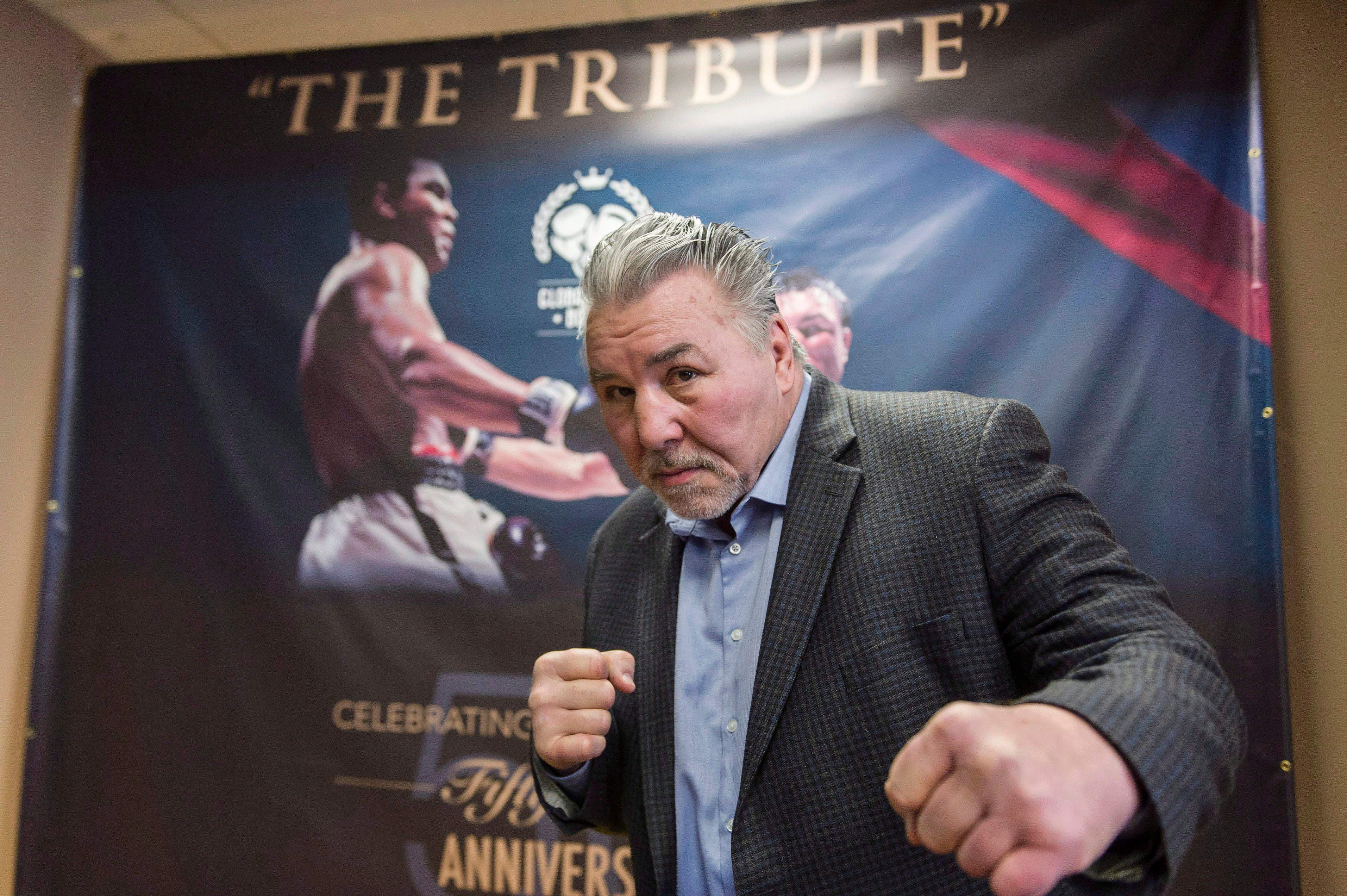
The mainstream obituaries for George Chuvalo read like lazy hagiographies, reducing a complex, tragic, and fiercely intelligent man into a cartoon character made of stone. Media outlets standardly headline his passing at 89 by regurgitating the tired myth of the granite chin, celebrating the fact that he was never knocked down in ninety-three professional bouts. They marvel at how he absorbed atomic-grade combinations from Muhammad Ali, Joe Frazier, and George Foreman and walked away upright.
It is time to stop romanticizing human shield tactics.
What the sports establishment frames as the ultimate symbol of Canadian toughness was actually a horrific tactical miscalculation born of an era that viewed human brains as disposable commodities. Chuvalo was not a defensive master; he was a walking anatomical anomaly whose career longevity was purchased with long-term neurological devastation. When we applaud a fighter for standing upright while absorbing three hundred flush power punches, we are praising a medical disaster in slow motion.
Let us look at the raw mechanics with cold objectivity. Chuvalo finished his career with a 73-18-2 record, but his style was fundamentally flawed for modern prizefighting. Standing six feet tall with a limited reach, he absorbed punishment to deliver punishment, operating on the dangerous assumption that a thick skull could substitute for lateral movement and head defense. Muhammad Ali famously called him the toughest man he ever fought, a high-water mark of praise, but that praise came with an invisible invoice that Chuvalo paid every single day of his later life.
The lazy consensus treats his lack of knockdowns as a victory over physics. It was not. In biomechanics, force does not simply disappear because a fighter stays on his feet; it transfers directly into the cervical spine and the intracranial fluid. The brain sloshes against the interior of the skull whether the fighter hits the canvas or stays vertical. Chuvalo's famous durability meant his neurological tissue absorbed the full kinetic energy of world-class heavyweights without the dissipation cushion of a knockdown count, which resets a fighter and gives the referee a chance to intervene.
When you examine his losses to the elite tier—Ali, Frazier, Foreman—you see a blueprint of how not to fight a puncher. Against Frazier in 1970, his face was rearranged, his cheekbone cracked, and his eye swelled to the size of a grapefruit. Against Foreman, he was violently caromed from one side of the ring to the other. The referees kept the fights going because Chuvalo kept his boots under him. That was not bravery; that was an institutional failure of ringside medicine.
Yet, the tragedy of George Chuvalo extends far beyond the canvas, and this is where the conventional sports narrative completely fails its subject. The mainstream media loves to pivot from his boxing career to his personal tragedies—the heartbreaking losses of his three sons, Jesse, Georgie Lee, and Steven, and his first wife Lynne—framing him as a Job-like figure of stoic endurance. They treat his post-boxing life as an inspirational speaking tour against drug abuse, painting him as a noble crusader who turned private agony into public service.
This narrative is comfortable because it keeps us from confronting the ugly intersection of combat sports, brain trauma, and familial collapse. Chronic traumatic encephalopathy and severe neurological trauma do not just affect memory; they alter impulse control, emotional regulation, and familial stability. The toll that decades of unchecked head trauma took on Chuvalo's cognitive architecture undoubtedly influenced the domestic fabric of his household during the exact years his children were fighting their own fatal battles with addiction. By isolating his boxing career from his family tragedies as if they occurred in separate universes, sports journalists commit intellectual cowardice.
Imagine a scenario where a modern fighter today employs Chuvalo’s exact strategy: walking forward with both hands glued lazily to his chest, inviting a tier-one heavyweight to use his face as a speed bag. Athletic commissions would pull his license before the fourth round. Modern trainers would fire him. Sports scientists would publish white papers on his imminent cognitive decline. The sweet science evolved precisely because we realized that letting men prove their toughness by refusing to fall down is an ethical failure of the sport.
Chuvalo deserved better than to be remembered as a prop for national machismo. He was a voracious reader who loved Freud, Jung, and complex word games—a stark contradiction to the grunting brawler stereotype assigned to him by promoters. He possessed a sharp mind that was systematically scrambled by a system that profited off his capacity to bleed.
When we look back at his legendary 1966 and 1972 battles with Ali, let us stop pretending that surviving a beating is the same thing as winning an exchange. George Chuvalo was undeniably tough, but the most enduring lesson of his life is that celebrating athletic brutality leaves a wreckage that no championship belt can ever fix.


