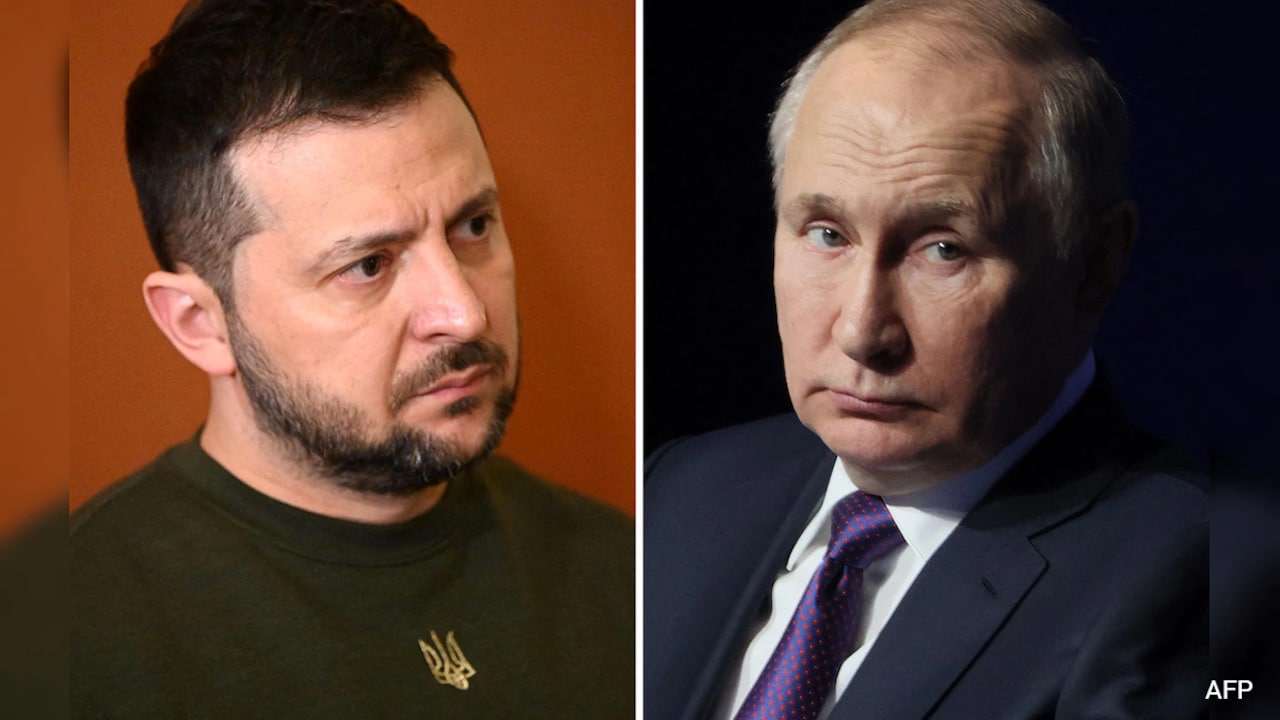
When Vladimir Putin stands before state cameras and accuses Ukraine of trying to sabotage Russia’s parliamentary elections, the western press corps reaches for its favorite reflexive tool: jaw-dropping irony. Editorial boards line up to chuckle at the sheer gall. How can a state accused of hacking western ballots for a decade complain about foreign interference? It is a tidy, lazy headline. And it is completely wrong.
By framing this episode as a simple case of geopolitical hypocrisy, mainstream commentators miss the entire architecture of modern authoritarian survival. They treat a managed legislative rubber-stamp ritual as if it were a high-stakes democratic contest vulnerable to foreign espionage or voter manipulation. That category error is precisely what the Kremlin wants. If you enjoyed this piece, you should look at: this related article.
Let us discard the comfortable clichés. What happened during the Russian legislative cycle was never an election in any meaningful sense. It was a domestic loyalty test engineered to manufacture public ratification for a grueling military campaign. And when long-range drones strike fuel refineries or cyber operations hit electronic voting servers, that is not electoral meddling. That is kinetic reality shattering the fourth wall of political theater.
The Architecture of the Loyalty Pageant
To understand why calling this "interference" is a linguistic trap, you must first look at what the Russian State Duma actually is. I have spent years analyzing how hybrid regimes manage domestic political friction. In a mature democracy, an election is an unpredictable mechanism for transferring or contesting power. In a closed autocracy, an election is an elaborate ritual of subjugation. For another look on this story, check out the recent update from NPR.
The parliamentary vote was designed with one singular objective: to produce an unyielding supermajority for the ruling party that could be flashed across television screens as a blanket endorsement of the war in Ukraine. Real opposition voices were sidelined, jailed, or driven into exile long before the first ballot box opened. The state controlled the media environment down to the pixel.
When a system is completely rigged from top to bottom, it ceases to be an electoral arena. It becomes a closed broadcasting studio. The audience inside is told to applaud, and the cameras record the standing ovation.
So what happens when an outside adversary disrupts the broadcast?
The Digital Panopticon of Remote Electronic Voting
To grasp the absurdity of the "interference" claim, look closely at the mechanics of modern digital control in Russia. Over recent cycles, Moscow heavily pushed Remote Electronic Voting (REV) across dozens of regions, encompassing tens of millions of eligible voters. Mainstream outlets frequently report on these digital rollouts as technological modernization or convenience upgrades.
That is a profound misreading of digital authoritarianism.
In an open society, electronic voting aims to lower barriers to participation and enhance convenience. In a closed autocracy, REV serves as an absolute instrument of administrative compliance. State employees, municipal workers, and corporate dependents in government-linked enterprises are routinely required to register and cast their votes through centralized digital portals under the watchful eye of management.
Physical ballot box secrecy is notoriously difficult to guarantee when voting is tied to employer-mandated terminals or trackable digital footprints. The system functions as a digital panopticon. It allows the state to monitor participation rates in real time, ensuring that loyalty is verifiable down to the individual worker.
When Ukrainian cyber operations or domestic saboteurs target these digital infrastructure nodes, they are not trying to stuff ballot boxes or alter ideological outcomes. They are attacking the logistical machinery of administrative coercion. They are throwing sand into the gears of bureaucratic surveillance. To label these actions as "election interference" is to accept the premise that a coerced digital compliance drill is an exercise in popular sovereignty.
Kinetic Feedback Versus Foreign Meddling
When Kyiv launched waves of long-range drones that struck industrial targets and fuel depots near Moscow, or when cyber assaults targeted central voting portals, western analysts immediately categorized these moves through the lens of foreign election meddling.
This is a fundamental misunderstanding of physics and strategy.
Electoral interference implies an attempt to subvert the free will of an electorate or alter the legitimate outcome of a democratic race. But you cannot subvert an outcome that was hardcoded into the software before the campaign even began. The result was never in doubt. The ruling party was always going to claim its pre-determined victory.
What Ukraine executed was not an attempt to steal a senate seat or shift legislative power balances. It was an offensive military operation designed to puncture the Kremlin's domestic illusion of normalcy. For years, the official line sold to the Russian public was that the special military operation was a distant, controlled affair that would not disrupt daily life in the capital. When oil refineries burn a few miles from voting precincts and communication nodes flicker, that illusion evaporates.
By labeling these military strikes and infrastructure disruptions as "election interference," Moscow achieves a brilliant semantic sleight of hand. It repositions itself as an innocent democracy suffering from foreign subversion. It borrows the vocabulary of Western liberalism—voter suppression, cyber threats, sovereignty violations—to rebrand battlefield losses as dirty tricks.
The Myth of the Missing Evidence
Consider the recurring questions raised by compliance watchdogs and newsrooms: What evidence did Putin actually provide to back his claims of Ukrainian interference?
The answer is simple: none worth analyzing.
In the official narrative, any friction—whether a delayed server response, a localized communication glitch, or a burning fuel depot—is conveniently lumped under the umbrella of hostile external sabotage. Autocrats love external scapegoats because internal failures are existential threats. If a voting system fails or public apathy runs high, admitting that your own citizens are quietly checking out or quietly furious is dangerous. Blaming Kyiv allows the state to channel public frustration into nationalist mobilization.
The mainstream media falls for this trap every time by treating the accusation as a debate over proof. Reporters spend days asking whether Ukrainian hackers actually penetrated specific regional servers or whether drone strikes truly altered turnout numbers in remote districts. That debate is a distraction. It legitimizes the foundational lie that an authentic election was taking place in the first place.
The Brutal Reality of Authoritarian Electorates
Let us address the uncomfortable downside of my own contrarian view. Am I suggesting that external actors have no impact on authoritarian domestic politics? Of course not. Psychological operations, information flows, and economic sanctions do shape domestic calculus.
However, we must be ruthlessly precise about definitions. When an authoritarian regime stages a plebiscite during an active war, the electorate is not exercising franchise; they are navigating survival. State employees are marshaled to the polls. Digital monitoring tracks compliance. The vote is an obedience drill.
When an adversary attacks the infrastructure supporting that drill, they are targeting the logistics of state propaganda, not the democratic rights of citizens. To call that election interference is to dignify a sham with constitutional dignity it does not possess. It is equivalent to complaining that an enemy army bombed your propaganda printing press during a general election year and calling it a violation of free speech.
Dismantling the Mainstream Playbook
Why do legacy media outlets continue to use these terms? Because lazy templates are easier to run than structural critiques. It requires zero analytical heavy lifting to take a standard wire service dispatch, swap out the names, and apply the generic template used for routine geopolitical spats between Washington and Moscow.
Real analysis demands looking past the press releases. It requires examining the underlying levers of power. When you strip away the bureaucratic jargon, the parliamentary cycle was an internal stress test for a wartime regime facing resource strains and silent domestic fatigue.
The Kremlin needed a high turnout figure to project unyielding strength to both its domestic audience and external rivals. When Ukrainian strikes disrupted that choreography, Putin did what any cornered autocrat does: he weaponized the grievance. He seized upon the vocabulary of international law to frame military self-defense as electoral sabotage.
Stop Buying the Script
We need to stop evaluating authoritarian political rituals through the lens of western procedural norms. Every time we analyze a Russian legislative vote as if it were a flawed democratic election, we validate the Kremlin's grand illusion. We allow them to play on our linguistic turf, transforming an existential military conflict into a routine dispute over ballot box integrity.
The next time an autocrat claims his scripted coronation was marred by foreign meddling, do not ask for the evidence. Recognize the play for what it is. It is not a defense of democracy. It is a desperate attempt to disguise the sound of war as the rustle of ballots.