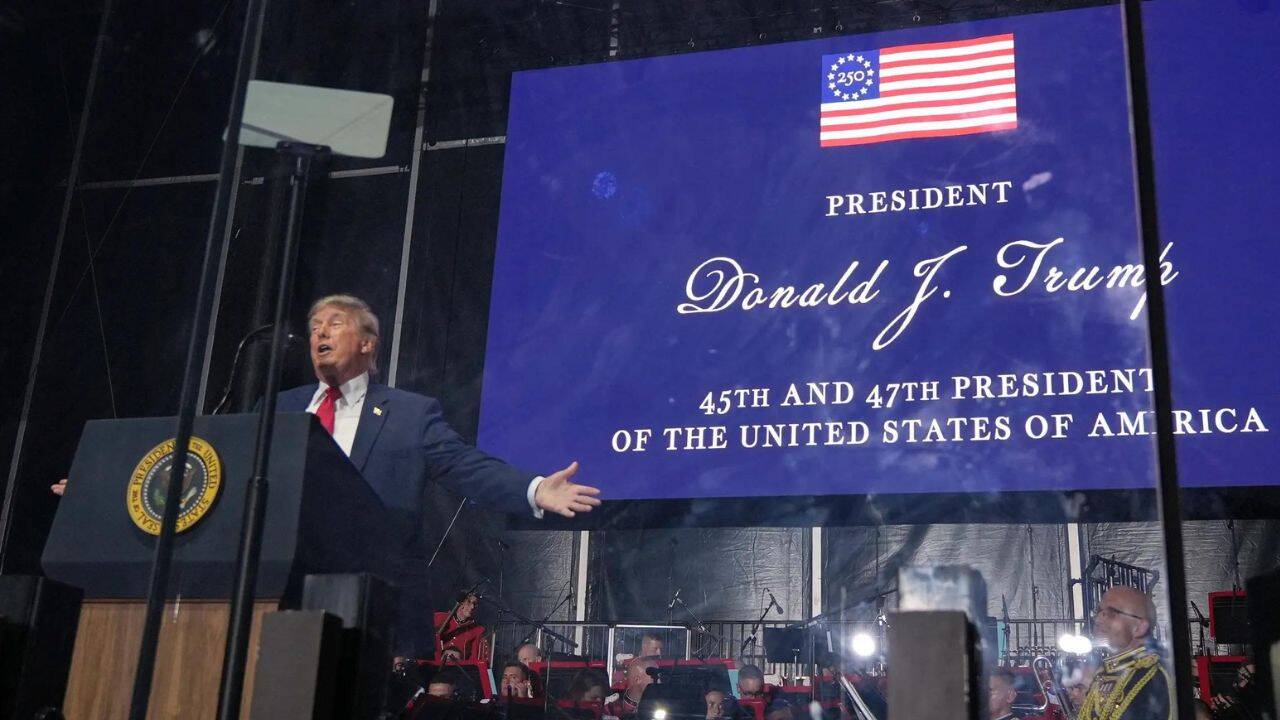
The media elite is currently drowning in a collective bathtub of tears over the United States reaching its 250th anniversary. The consensus narrative is as predictable as it is lazy: America is exhausted, fractured, and paralyzed by a cultural epidemic of anxiety. Critics look at polling data showing historically low institutional trust and historically high stress levels, and they conclude that the American experiment is entering a terminal nose-dive.
They are fundamentally misreading the data.
What the hand-wringers diagnose as a fatal disease is actually the exact mechanism that keeps the country from stagnation. Complacency, not anxiety, is the silent killer of empires. The moment a society stops worrying, stops fighting, and sits back in collective satisfaction is the moment it gets disrupted.
I have spent two decades analyzing market volatile cycles and organizational behavior. The most dangerous state for any enterprise—whether a Silicon Valley startup or a global superpower—is total consensus and tranquil satisfaction. When people are comfortable, they do not innovate. They do not challenge corrupt structures. They do not build.
America is not having a nervous breakdown. It is experiencing a massive, necessary, and agonizingly loud recalibration.
The Fallacy of the Golden Age
The foundational error of the "United States of Anxiety" thesis is the historical myth of a pristine, stress-free past. Commentators love to point toward the mid-twentieth century as a benchmark of American stability and unity.
This is historical revisionism at its finest. The mid-1950s and 1960s were not a era of serene national consensus; they were defined by the looming threat of nuclear annihilation, violent civil rights struggles, geopolitical proxy wars, and profound cultural upheaval. The anxiety was deafening. The difference is that today, every individual grievance is magnified a million times over by digital algorithms designed to monetize outrage.
The premise that a healthy nation must be a relaxed nation is wrong.
Let us look at the hard macroeconomic realities. The nations currently experiencing the lowest self-reported stress levels are often those trapped in demographic decline and economic inertia. Complacency breeds stagnation. According to historical growth patterns tracked by economic historians like Joel Mokyr, material progress is driven by "creative instability." People who are perfectly content with their lives do not build new industries, upend legacy systems, or move across continents to start fresh.
Anxiety is the emotional tax paid for living in a highly competitive, dynamic meritocracy. When you remove the safety nets that lock people into rigid social castes, you inherently introduce uncertainty. That uncertainty creates stress. But it also creates the exact conditions necessary for upward mobility.
Dismantling the Comfort Industrial Complex
A massive industry has emerged to profit off the idea that anxiety is an unnatural malfunction requiring constant curation and eradication. HR departments blast employees with mindfulness apps, wellness gurus preach the gospel of quiet quitting, and corporate pundits demand that workplaces become psychological sanctuaries.
This approach actively harms the very people it claims to protect.
By treating all stress as toxic, we are conditioning a generation to flee from the friction required to achieve greatness. In my years consulting for high-growth firms, the teams that delivered breakthroughs were never the ones operating in a state of frictionless zen. They were the teams fueled by a healthy, obsessive paranoia. Andrew Grove, the legendary former CEO of Intel, codified this reality in his management classic: Only the Paranoid Survive. Grove did not build a tech giant by fostering a culture of relaxed complacency; he built it by weaponizing anxiety into strict operational discipline and relentless self-examination.
Consider the alternative. A society completely devoid of internal tension looks less like a utopian paradise and more like a decaying bureaucracy. When institutional trust is artificially high, corruption goes unchecked. The current American skepticism toward institutions—while painful and messy—is a brutal, necessary audit of systems that have failed to deliver value.
The Wrong Question About National Distress
When public intellectuals ask, "How do we reduce national anxiety and restore unity?" they are asking the wrong question entirely. They assume unity is an absolute good. It is not. Forced national unity is the hallmark of authoritarian regimes and dying economies. Dynamic societies are loud, argumentative, and deeply stressed about the future.
The real question we should be asking is: How do we convert raw, unfocused anxiety into productive friction?
Right now, an enormous amount of mental energy is wasted on performative doom-scrolling and political tribalism. That is the true downside of our current state—not the anxiety itself, but our total failure to direct it toward tangible outputs.
To understand the mechanics of this, look at the divergence between different sectors of the modern economy.
- The Complacent Sectors: Regulated monopolies, legacy education institutions, and bloated municipal bureaucracies. They have low immediate anxiety because they are shielded from market forces. The result? Decreasing quality, skyrocketing costs, and systemic inertia.
- The Anxious Sectors: Venture-backed technology, independent creator economies, and bleeding-edge engineering. These fields are defined by chronic uncertainty, rapid obsolescence, and intense stress. The result? The entirety of global deflationary innovation.
If you want to see what happens when a nation successfully cures its anxiety, look at the stagnant GDP charts of Western Europe over the last two decades. They traded volatility and stress for stability and predictability. In doing so, they traded away the future.
A High-Stakes Framework for Personal Utility
If you are waiting for the macro-environment to calm down before you make your next big move, you will be waiting forever. The chaos is a permanent feature, not a passing bug. The only winning strategy is to change your relationship with the friction around you.
Reject the Myth of Psychological Safety
True psychological safety does not mean a life free from criticism or pressure. It means having the internal fortitude to speak the truth and take risks knowing that failure is a statistical certainty. Stop looking for organizations that promise to insulate you from stress. Look for organizations that challenge you to use that stress as fuel for execution.
Audit Your Outrage Vectors
Most modern anxiety is synthetic. It is manufactured by media entities that trade your attention span for ad revenue. You must ruthlessly differentiate between structural anxiety (worrying about your skills, your capital, your actual output) and narrative anxiety (worrying about the daily news cycle). Cut the narrative anxiety to absolute zero. Double down on the structural anxiety by using it to identify gaps in your skill set.
Bet Against the Pacified
The widespread cultural push toward comfort and "wellness" creates a massive arbitrage opportunity for anyone willing to endure friction. While the majority of your peers are optimizing for comfort, quiet quitting, and seeking refuge from pressure, you can win simply by remaining in the arena. Competence is increasingly scarce because discipline hurts.
The Cost of the Contrarian Stance
It is necessary to acknowledge the downside of this perspective. Operating in a high-friction, high-anxiety environment takes a severe physical and mental toll if left unmanaged. Chronic, paralyzed panic leads to burnout and cognitive decline. The goal is not to live in a state of perpetual panic, but to develop the psychological stamina to convert that raw emotional energy into focused, decisive action.
This requires a level of emotional maturity that the current cultural conversation completely ignores. It is far easier to complain about systemic stress on social media than it is to wake up, look at a chaotic environment, and execute a strategy regardless of how you feel.
America at 250 is not dying of anxiety. It is wrestling with its own future in the mud, just as it did in 1776, 1860, and 1968. The noise you hear isn't the sound of a collapse; it is the sound of a engine revving at its absolute limit. If you are looking for a calm, predictable, and peaceful place to coast through the next decade, you are living in the wrong country, and you are living in the wrong century.
Get used to the friction, or get out of the way.