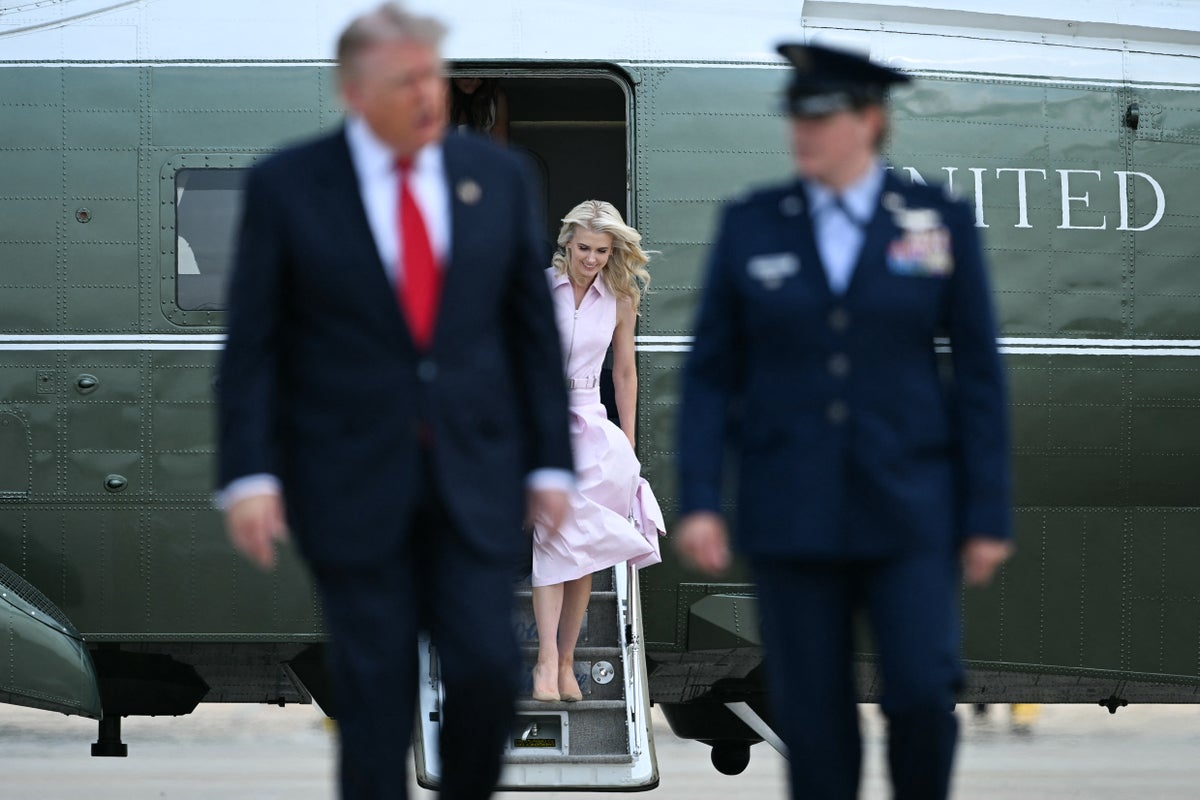
Headline culture thrives on the cheap thrill of family drama. The media industrial complex wants you to stare endlessly at personal squabbles, sibling fallout, and internal campaign gossip because it requires zero cognitive heavy lifting. It is much easier to write a breathless hit piece about a staffer's brother complaining on the internet than it is to analyze the actual mechanics of political influence, media access, and ideological alignment.
Every single mainstream take on political entourage dynamics treats campaigns like high school cafeterias. They look at plane seating charts, family text messages, and minor staff churn as if these elements dictate the course of governance. This is a profound category error. Political proximity is not a measure of emotional health or familial harmony; it is a transactional alignment of incentives.
When commentators fixate on personal relationship friction within political circles, they miss the structural reality of how modern movements recruit, retain, and project influence.
The Fallacy of the Functional Narrative
The lazy consensus assumes that a healthy, conventional background produces effective political operatives, while messy personal dynamics signal institutional dysfunction. History completely dismantles this premise. Political revolutions and high-stakes administrative pushes are rarely driven by well-adjusted suburbanites with pristine family trees. They are forged by ideological absolutists, outsiders, and individuals whose entire identities are wrapped up in a singular mission.
Look at how political journalism covers staff members like Natalie Harp. The coverage zeroes in on sibling disputes, estranged relatives, and interpersonal friction, framing these details as red flags. Why? Because the press operates on a domestic sitcom framework. They want a neat narrative about how normal people react to power.
The truth is starkly different. People who seamlessly integrate into high-pressure political environments are almost never normal by standard societal metrics. They are hyper-focused, radicalized by cause, and willing to endure intense public scrutiny. Measuring their utility by whether their sibling approves of their career choices is absurd.
The Currency of Proximity
Let us define the actual currency at play here: access and information velocity.
In a modern political campaign or administrative apparatus, proximity to the principal is everything. Traditional political science models used to focus on policy committees, institutional endorsements, and party machinery. Those levers have largely decayed. Today, the leverage points are narrative control, direct communication channels, and real-time responsiveness.
When an operative secures a spot on a campaign plane or manages digital communications closely, they are not there because of a balanced lifestyle. They are there because they provide a specific, high-frequency service: speed, absolute loyalty, and an understanding of the principal's digital echo chamber.
Critics call this unhealthy. I call it an efficient labor market.
Imagine a scenario where a corporate executive relies on a tight-knit, fiercely loyal inner circle that alienates their extended family. The business press doesn't write psychoanalytical profiles about the executive's estranged cousins; they analyze market share, operational efficiency, and competitive advantage. Politics should be viewed through the exact same cold, analytical lens.
The Media's Projection Problem
Why does the press corps obsess over these personal dynamics? Because journalists understand social status games better than they understand systemic power.
Most political reporters operate within a tightly regulated guild system. They go to the same schools, live in the same neighborhoods, and adhere to a rigid set of polite, upper-middle-class social norms. When they encounter figures who break those norms—who burn bridges with relatives, ignore conventional career ladders, or display absolute fealty to a polarizing figure—they genuinely do not know how to process it outside the language of pathology.
They label it "unhealthy" because it violates bourgeois etiquette.
Let's address the Marco Rubio defection angle that always gets tacked onto these stories. The media treats political career pivots like romantic breakups. Staffer leaves Senator A for Trump's orbit, and it is framed as a betrayal, a psychological defection, or a sign of moral compromise.
This is juvenile. Careers in high-level politics are mercenary. Politicians trade loyalty for execution, and operatives trade labor for upward mobility and ideological impact. Moving from a traditional legislative office to an aggressive populist operation isn't a psychological crisis; it's a rational migration toward where the real energy and power are concentrated.
The Downside of the Mercenary Model
To be entirely fair, this hyper-transactional approach comes with massive structural vulnerabilities.
When you build a system based on absolute personal alignment and digital responsiveness rather than institutional competence, you invite chaos. Echo chambers form. Flattery replaces feedback. The quality of governance degrades because the machinery rewards performance art and narrative defense over operational execution.
I have seen organizations blow millions and collapse entirely because they prioritized ideological purity and personal loyalty over baseline competence. It creates a brittle infrastructure. When the principal wins, the loyalists are insulated. When the pressure mounts, the internal paranoia spikes, leading to the very leaks and family drama that the media loves to sensationalize.
Yet, pointing out this downside does not validate the media's framing. The problem isn't that a staffer's brother thinks their job is weird. The problem is that the entire political apparatus has devolved into a reality television show where substance is entirely subordinated to spectacle.
The Real Question You Should Be Asking
Stop asking whether political insiders have healthy family dynamics. They don't. Normal people do not choose to live inside the meat grinder of modern political campaigns.
The question you should be asking is how narrative velocity alters institutional power. When a digital communications operative can bypass traditional gatekeepers and speak directly to millions through a principal's feed, traditional party structures become completely obsolete.
The plane-swap guests and the sibling interviews are noise. The signal is the total collapse of institutional intermediation. Political power no longer flows through committee chairs and elder statesmen; it flows through the people who control the feedback loops of attention.
Until you stop looking at politics through the lens of a soap opera, you will remain perpetually confused by how the world actually works.