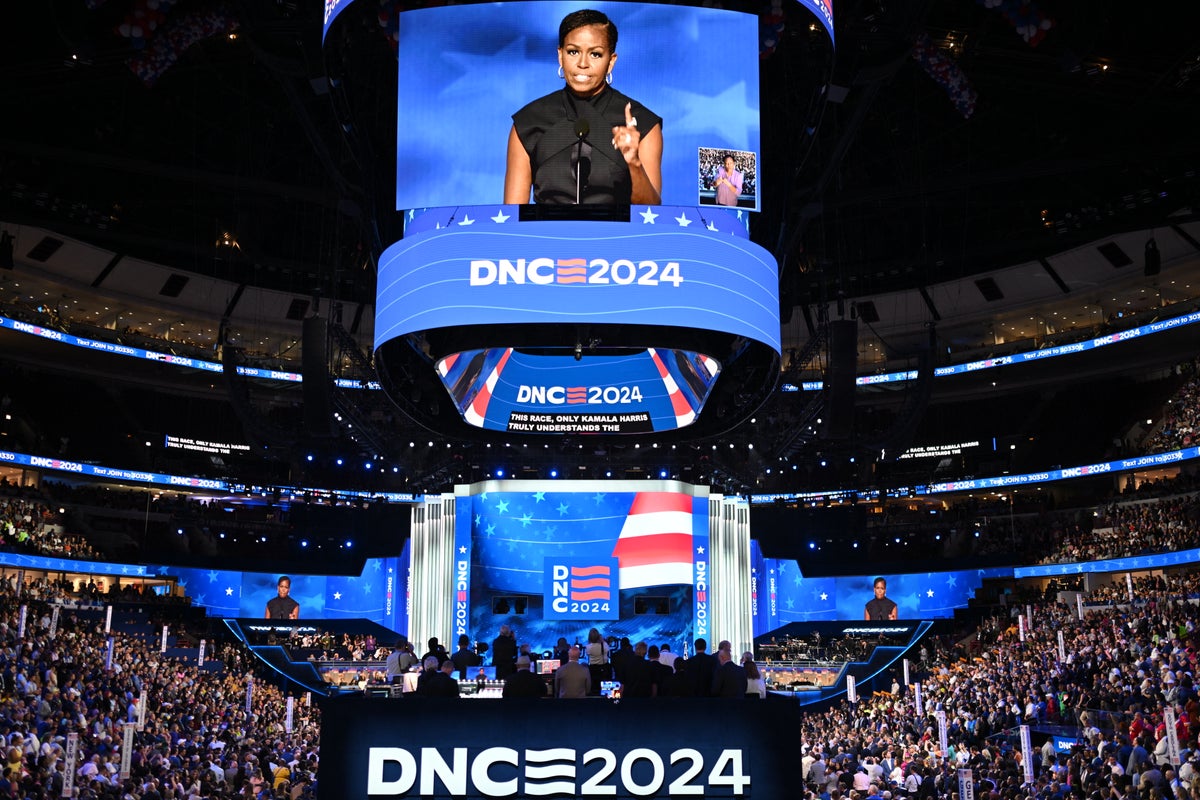
The Democratic National Committee just narrowed their 2028 convention shortlist to Boston, Denver, and Philadelphia. The political class is already salivating over the "symbolism" of these locales—the coastal liberal hub, the mountain west outlier, the swing-state battleground.
They are wasting their time. And yours.
The obsession with where a party parks its stage, screens, and balloon drop is the ultimate theater of the absurd. It is a relic of a time when the physical location of a meeting actually dictated the flow of information. We are living in the era of digital saturation, yet the DNC continues to play this high-stakes game of municipal musical chairs as if it will somehow pivot the national consciousness. It won't.
The Geography Fallacy
The "lazy consensus" among pundits suggests that choosing a host city signals a commitment to a specific demographic or a strategic pivot toward a crucial battleground. If you pick Philadelphia, you’re nodding to Pennsylvania’s Rust Belt influence. If you pick Denver, you’re signaling a play for the West.
This is amateur-hour map-reading.
I have spent decades watching political organizations hemorrhage capital on these massive, bloated logistical spectacles. The math is simple and brutal: a convention host committee is essentially a massive fundraising machine designed to extract private donations from local business elites in exchange for the intangible promise of "prestige." It creates a vacuum where local party leaders become obsessed with vendor contracts, hotel room blocks, and donor galas rather than the actual work of winning elections.
When party leaders talk about "logistical and fundraising capacity" as the primary metrics for selection, they are telling you the quiet part out loud. The convention is not about the voter. It is about the party’s ability to survive its own financial insolvency. By limiting their choices to these three cities, the DNC is merely choosing which group of regional donors is best equipped to bail them out of their current debt cycle.
The Illusion of Battleground Relevance
People ask why certain cities get the nod while others vanish from the shortlist. The answer isn't "electoral strategy." It's "access."
The Democratic Party loves to talk about being "battle-tested" and "reaching rural voters." But when the time comes to pop the champagne and crown a nominee, they retreat to the comfort of cities with high-density donor bases and expensive, pre-built infrastructure. It is the political equivalent of a corporation hosting its annual meeting in a resort town. It is safe. It is predictable. And it is completely disconnected from the voters they claim to be chasing.
Imagine a scenario where a party actually put its money where its mouth was. Instead of picking a city with massive hotel blocks and existing convention centers, they held the event in a neglected exurb or a mid-sized town that hasn't seen a national campaign bus in decades. They would have to build the infrastructure from scratch, yes. It would be a logistical nightmare. But it would force the party to engage with the reality of the country outside the bubble.
They won't do it. The risk of operational failure is too high for a party that views the convention as an infomercial rather than a political rally.
The Real Power Move
If you want to understand where the party is actually heading, stop looking at the map. Look at the balance sheet.
The selection of these finalists—Boston, Denver, and Philadelphia—proves that the DNC is prioritizing stability over disruption. They are terrified of a chaotic floor fight, a fractured base, or a failed broadcast. They want a controlled, sterilized environment where the optics can be managed with surgical precision.
My advice to anyone still reading these headlines as if they are meaningful? Stop treating the convention as a strategic indicator. It is a party-planning exercise. The real battle for 2028 isn't being fought in the boardrooms of Philadelphia or the streets of Boston. It is happening in the data silos, the primary calendars, and the relentless, boring work of voter turnout operations that no one covers because they don't feature glitter cannons or prime-time speeches.
The party is broke, the donors are tired, and the convention is a shell game. You are being sold a story about "future nominees" and "inspiring celebrations." You are actually watching a party struggle to find a city that can afford the party they want to throw for themselves.
Watch the fundraising. Watch the debt. Forget the cities. The stage doesn't matter when the play is already written.