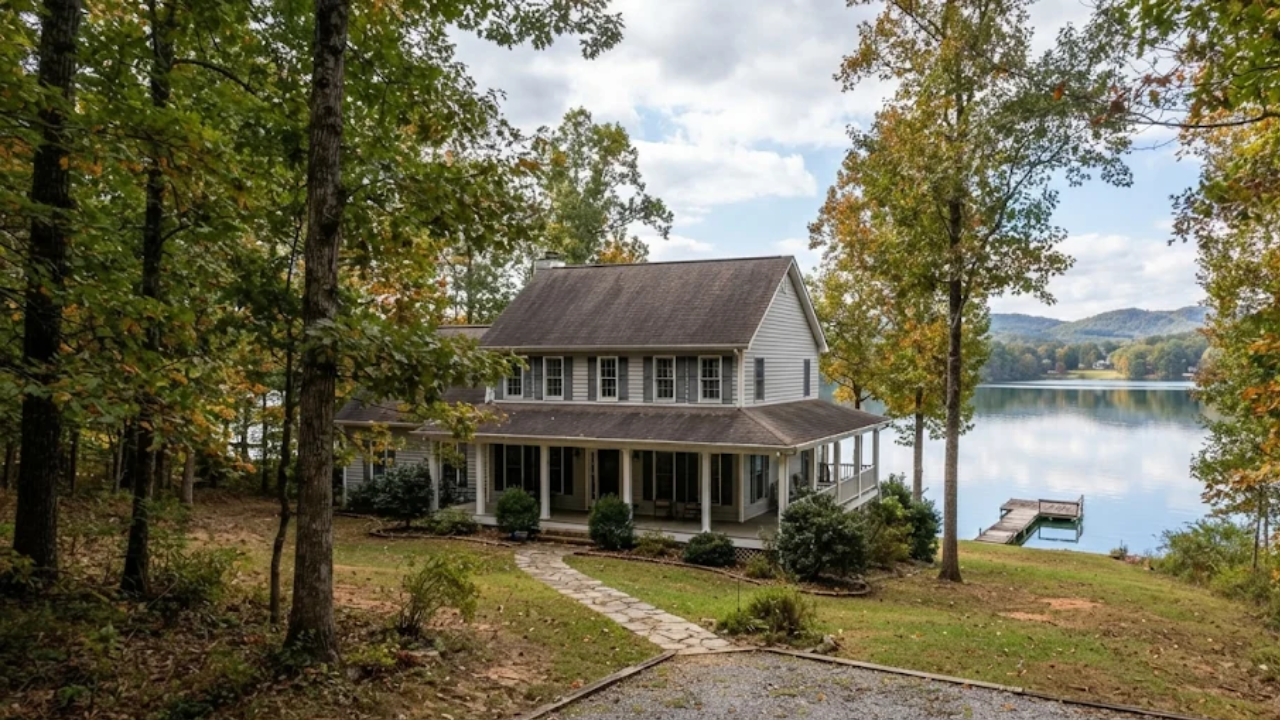
The lazy consensus surrounding a recent Virginia appellate ruling over a Smith Mountain Lake property is predictable. Local legal blogs and armchair commentators treat the dispute as a sad, isolated squabble among greedy relatives who simply failed to communicate. They look at a fractured family fighting over fractional ownership shares and conclude that the cure is better family meetings, clearer wills, and a little more holiday cheer.
That is complete nonsense.
The Virginia court did not witness an anomaly. It presided over the mathematically inevitable conclusion of the worst estate planning habit in America: leaving an illiquid, high-maintenance vacation home to multiple adult children as tenants in common.
When parents leave a waterfront house at Smith Mountain Lake—or anywhere else—to three or four kids equally, they think they are handing down a legacy. In reality, they are handing down a ticking legal time bomb wrapped in nostalgia. The Virginia appellate bench merely applied centuries-old property law to a modern sentimental delusion. Nobody won that lawsuit except the litigators billing by the hour.
The Myth of the Peaceful Co-Ownership
Most families operate under the romantic assumption that shared childhood memories will somehow override adult financial reality. I have watched families burn through hundreds of thousands of dollars in legal fees over properties worth half as much, all because Mom and Dad refused to accept basic human psychology.
When a deed passes directly to multiple heirs without a rigorous operating structure, Virginia law—like the law in almost every other state—defaults to tenancy in common. Under a tenancy in common, each co-owner holds an undivided fractional interest in the whole property. Every single owner has an equal right to possess the entire house, regardless of whether they own 50 percent or 5 percent.
Here is where the wheels fall off.
- Asymmetric Usage: One sibling lives thirty minutes from Smith Mountain Lake and uses the dock every weekend. Another lives in California and visits once every three years.
- Asymmetric Liquidity: The local sibling wants to replace the aging boat lift and remodel the kitchen. The California sibling is paying two college tuitions and refuses to write a check.
- The Free-Rider Trap: Under Virginia common law, a co-tenant in sole possession generally does not owe rent to out-of-possession co-tenants unless there is an actual "ouster"—meaning one sibling physically locks the others out or explicitly denies their right to enter. Meanwhile, the sibling paying the taxes and insurance has to fight tooth and nail in an equitable accounting action just to get reimbursed for necessary preservation expenses, often getting zero credit for routine maintenance or unilateral upgrades.
You do not need a crystal ball to see how this ends. Resentment builds. Maintenance gets deferred. Taxes go unpaid. Eventually, one sibling gets tired of subsidizing everyone else's summer vacations, or a third-party creditor attaches a lien to the broke sibling's fractional share.
Why Partition Actions Are the Nuclear Option
When co-owners deadlock, Virginia Code Title 8.01, Chapter 3, Article 9 kicks in. Any single fractional owner—even someone holding a microscopic sliver of equity—has an absolute, near-unconditional right to file a partition action.
People routinely ask how they can stop a sibling from forcing the sale of an inherited family home. The brutal answer is that if you hold title as tenants in common without a binding agreement, you probably cannot.
Courts hate managing family drama. A judge in Bedford, Franklin, or Pittsylvania County—the jurisdictions surrounding Smith Mountain Lake—is not going to play referee over who gets the master bedroom during the Fourth of July. When a partition suit hits the docket, the court has only a few statutory paths:
- Partition in Kind: Physically dividing the land into separate parcels. For a standard waterfront lake house with one septic field, one dock permit from Appalachian Power, and a single structure, physical division is a legal and engineering impossibility.
- Allotment: One or more co-owners buy out the others at a court-determined valuation. This only works if the remaining siblings actually have the cash or borrowing capacity to pay fair market value—a rarity when lakefront valuations have skyrocketed.
- Partition by Sale: The court orders the property sold—often at a public auction or through a court-appointed special commissioner—and splits the net proceeds after deducting massive legal fees, commissioner commissions, and court costs.
In 2020, Virginia adopted the Uniform Partition of Heirs Property Act (UPHPA), codified in Virginia Code § 8.01-83.1 et seq. The UPHPA was designed to stop predatory real estate speculators from buying a 1/16th share from a desperate cousin and forcing an auction of generational family land. It mandates independent appraisals, grants a statutory buyout window to non-petitioning co-tenants, and favors open-market sales over courthouse steps auctions.
Yet even under the UPHPA, the core vulnerability remains untouched. If the siblings who want to keep the Smith Mountain Lake house cannot raise the cash to buy out the sibling who wants out within the strict statutory deadlines, the house gets sold anyway. The statute slows down the execution; it does not grant a pardon.
What Everyone Gets Wrong About Inherited Property Disputes
When a case like the Smith Mountain Lake dispute hits the appellate docket, observers fixate on the wrong details. They argue over whether the trial judge properly calculated contributions for a new roof, or whether a specific deed ambiguity shifted a 12.5 percent share from one branch of the family to another.
Those are symptoms, not the disease. Let's dismantle the biggest lies people tell themselves about inherited real estate.
"We will just put it in a revocable living trust."
A standard revocable living trust is a probate-avoidance tool, not a governance tool. When the surviving parent dies, a typical boilerplate trust simply instructs the successor trustee to distribute the assets outright to the children in equal shares. Congratulations—you avoided probate only to dump your kids straight into a tenancy in common. Unless the trust explicitly holds the property in a continuing sub-trust with dedicated funding and strict distribution rules, it solves nothing.
"My kids love each other; they would never sue."
They do not have to hate each other to end up in court. What happens when your son gets divorced, and his ex-spouse claims an equitable interest in his share? What happens when your daughter dies unexpectedly, leaving her third of the lake house to her new husband—who happens to hate your other kids? What happens when one heir files for Chapter 7 bankruptcy, and a federal bankruptcy trustee steps into their shoes to liquidate the asset for creditors? Good intentions cannot stop a bankruptcy trustee or an ex-spouse's divorce attorney.
"A simple will solves everything."
A will is the worst possible vehicle for a multi-generational vacation property. It guarantees public probate, invites immediate challenges to capacity or undue influence, and leaves zero operational framework for day-to-day management after the estate closes.
The Structural Fix: Treat the Lake House Like a Business
If you want a family compound to survive past your own funeral, stop treating it like an heirloom and start treating it like a commercial asset. The heavy hitters in estate and asset protection law—attorneys and scholars like John A. Warnick, who pioneered purpose-driven estate planning, and the drafters of the Uniform LLC Act—have spent decades proving that Limited Liability Companies (LLCs) and irrevocable dynasty trusts are the only mechanisms capable of surviving generational friction.
Imagine a scenario where a couple owns a $1.8 million home on Smith Mountain Lake. Instead of leaving the deed to their three children, they transfer the property into a Virginia LLC prior to death, governed by a custom-drafted Operating Agreement, and fund a separate maintenance endowment.
Here is how that structure neutralizes every single trigger that lands families in Virginia circuit courts:
- Elimination of Partition Rights: Members of an LLC own personal property (membership units), not direct fractional interests in real estate. A disgruntled sibling cannot file a partition action against the lake house because they do not own the lake house—the LLC does.
- Strict Transfer Restrictions: The Operating Agreement prohibits transferring membership units to non-bloodline spouses, creditors, or outsiders. If a sibling divorces or goes bankrupt, the LLC or the remaining siblings have an automatic option to buy back that member's units at a discounted formula price, payable over ten years at low interest.
- Mandatory Capital Calls: The agreement establishes an annual operating budget. If a member fails to pay their share of taxes, insurance, and dock maintenance within thirty days, their voting rights are suspended, their usage calendar is revoked, and their equity is diluted by the members who cover the shortfall.
- Pre-Set Exit Valuation: If a sibling wants out, they cannot demand full appraised retail value overnight. The Operating Agreement sets a clear buyout formula—often 70 to 80 percent of appraised value to reflect lack of marketability—paid out in structured installments so the remaining family members are not forced to sell the property to raise lump-sum cash.
The Uncomfortable Downsides Nobody Mentions
If LLCs and dedicated maintenance trusts are so superior, why does almost nobody use them? Because sophistication comes with real friction, and pretending otherwise is dishonest.
First, it is expensive to set up and maintain. A basic will costs a few thousand dollars. A bespoke family cabin LLC paired with a funded maintenance trust, transfer tax analysis, and lender consent paperwork can easily run $10,000 to $25,000 in legal and accounting fees. You also have to file annual LLC reports, maintain separate bank accounts, and potentially file partnership tax returns (Form 1065) every year, even if the house generates zero rental income.
Second, mortgages complicate transfers. While the federal Garn-St. Germain Depository Institutions Act of 1982 protects certain transfers into a borrower's revocable trust from triggering a "due-on-sale" clause, transferring mortgaged property into an LLC can technically violate standard residential loan covenants unless you get prior written consent from the lender.
Third, forfeiting property tax breaks and step-up traps. Depending on how the entity is structured and whether you use irrevocable trusts during your lifetime, you risk losing the IRC Section 1014 step-up in cost basis at death—exposing your kids to massive capital gains taxes if they eventually decide to sell. You can also lose local homestead or primary-residence tax exemptions if one parent was using the lake house as a primary domicile.
The Hardest Conversation You Will Ever Have
Before you spend a dime on an LLC operating agreement, ask your children a blunt question while you are still alive: Do you actually want this house, and can you afford to pay $25,000 a year to keep it?
Most parents never ask because they are terrified of the answer. They project their own emotional attachment onto children who have moved away, developed different hobbies, or simply do not want their entire annual vacation budget locked into a single zip code in southwestern Virginia.
If two of your kids want the lake house and one wants cash, equalize the estate using life insurance, brokerage accounts, or retirement funds. Leave the real estate solely to the children who actually want it and have the financial bandwidth to maintain it.
And if none of them want the headache? Put a clause in your trust directing the trustee to sell the property immediately upon your death, split the cash equally, and let your children buy their own memories wherever they choose.
A vacant house sold cleanly by a trustee leaves behind a healthy bank balance and intact sibling relationships. A house fought over in the Virginia appellate courts leaves behind nothing except public court transcripts and relatives who never speak again. Sell the house while you can still sign the deed, or lock it down in an ironclad operating entity before the lawyers divide it for you.