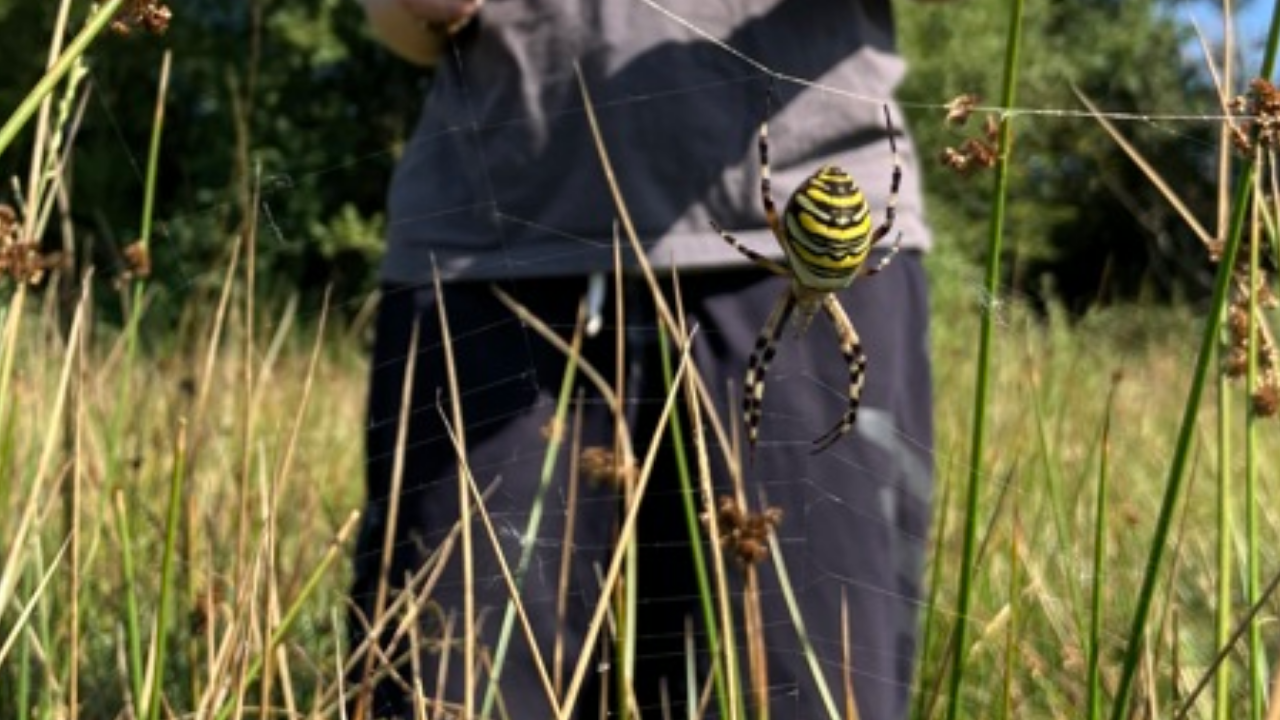
Every time a striped arachnid crosses a county line, environmental journalism turns into a low-budget horror film. The recent headlines about wasp spiders establishing a foothold in Cheshire are a masterclass in manufactured panic. Chester Zoo and regional outlets want you to believe that a striking black-and-yellow spider migrating north is a harbinger of ecological collapse, driven inexorably by shifting climate markers.
It is not a crisis. It is basic biology operating on a timeline older than human anxiety.
For decades, sensationalist nature reporting has treated British wildlife as a static diorama. If a species moves five miles past its historical boundary, editors reach for the emergency klaxons. But nature refuses to respect imaginary county borders drawn on Victorian maps. Organisms disperse when conditions allow. The wasp spider, Argiope bruennichi, has been expanding its range across Europe and into southern Britain for years because its primary prey and microhabitat preferences are expanding right alongside it.
The lazy consensus in the original reporting is that this northward creep signals an unnatural disturbance. Look closer at the mechanics of range expansion, and a very different picture emerges.
Species do not sit politely in designated zones waiting for climate permits. They push against barriers until they find suitable temperatures, abundant grasshoppers, and uncultivated tall-grass margins. Cheshire has plenty of all three. When a dispersal phase hits—often aided by ballooning, where spiderlings ride silk threads on thermal updrafts—they land where the ecosystem supports them. Calling this an invasion is like calling a tourist moving to Manchester a military occupation.
Let us dismantle the core misconception: that northern England is somehow thermally or ecologically off-limits to Mediterranean or southern European wanderers. Britain’s climate has always been dynamic. The wasp spider is not a venomous tyrant waiting to depose local fauna; it is an opportunistic predator filling an available niche in rough grasslands and railway embankments.
The panic relies on a fundamental misunderstanding of how species interact with shifting environments. When populations expand, they do not automatically annihilate native competitors. More often, they integrate. They become part of the background noise of the local food web, eaten by shrews, birds, and parasitic wasps just like any other native invertebrate.
If you spend your life managing conservation projects or studying macro-invertebrate distribution, you see the pattern everywhere. Media outlets need a villain of the week. Last month it was an invasive plant; this month it is a brightly colored orb-weaver making a living in a Cheshire meadow.
The real story here is not that a spider crossed a geographical threshold. The real story is our collective refusal to accept that nature is an active, moving system rather than a preserved museum exhibit. Stop treating every ecological shift as an emergency siren. Sometimes a spider is just a spider finding a new patch of grass.
Let them migrate. Your garden can handle it.