Every local newsroom in America treats low altitude aerial coverage of breaking accidents as a sacred ritual. When tragedy strikes on the asphalt, assignment editors immediately push the bird into the sky. They call it keeping the public informed. I call it an expensive, high-mortality theater of vanity that should have been grounded decades ago.
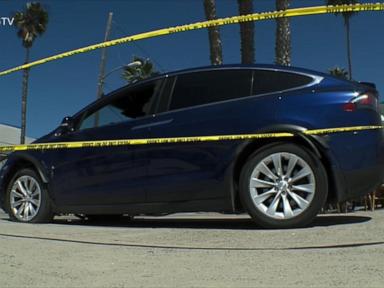
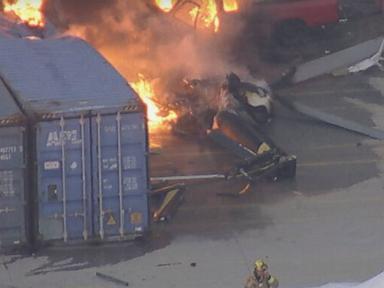
The recent crash in Los Angeles, where a news helicopter went down in Chatsworth while reporting on an earlier transit collision, cost three lives. Veteran pilot George Marciniw and reporter Eliana Moreno died in the wreckage alongside a pedestrian on the ground. The industry response has followed a predictable, nauseating script. Networks offer tearful on-air tributes, talk about the dangers of the job, and then quietly fuel up the chopper for the next morning commute sweep.
We need to stop mourning systemic negligence and start calling it what it is: journalistic malpractice born out of archaic ratings addiction.
The Lazy Consensus of Aerial Reporting
The mainstream justification for news choppers rests on a tired premise. Broadcasters claim that live aerial video provides essential context, spatial awareness, and emergency oversight that ground cameras cannot capture.
That argument expired the moment high-definition drones, networked traffic cameras, and widespread aerial surveillance feeds became standard municipal infrastructure. Yet stations cling to crewed helicopters because a spinning rotor blade above a crash site signals urgency to viewers scrolling past local broadcasts. It is a visual narcotic. It tells the audience that something monumental is happening simply because a corporation is burning thousands of dollars an hour in aviation fuel to look down at it.
Physics does not care about your sweeps week ratings. When a helicopter hovers low over a congested area to capture tight shots of emergency response units, it operates in a hazardous flight envelope. Low airspeeds, restricted maneuvering room, and sudden distractions in the cockpit create a razor-thin margin for error. If an engine stumbles or a gearbox binds while a pilot is trying to frame a live shot for the six o'clock news, there is no altitude cushion left to recover.
The Physics of Low Altitude Vanity
Let us look at the mechanics that defenders of traditional news aviation love to ignore. The Eurocopter AS350 platform, a staple of local news fleets, is a capable machine. But hovering or maneuvering slowly at low altitude near obstacles while the pilot splits attention between flight control systems and the reporter's prompts creates a high-workload trap.
When things go wrong in that profile, the transition to autorotation is a gamble against time and gravity. If you lack forward speed and height, trading altitude for rotor RPM to cushion a landing becomes mathematically impossible.
We saw the result of this math in Chatsworth. The final moments captured on broadcast audio featured warning alarms, an engine speed shift, and frantic questions about pulling up before the transmission cut out. That is not an unpredictable act of God. It is the predictable outcome of parking a complex rotary-wing aircraft in a low-level hover over a chaotic urban scene just to satisfy a visual medium's demand for live smoke.
Ground the Birds
Modern news gathering does not require putting journalists and contract pilots directly into the path of danger. Automated drone deployment can cover perimeter angles without risking human lives in the cockpit. High-resolution traffic tracking and stationary ground reporting provide all the necessary facts without the atmospheric grandstanding.
Stations that continue to operate crewed news choppers for routine accident chasing are trading human lives for live shots. Until executives value safety over a flashy opening sequence, every single one of these flights is an accident waiting for a headline.
Sell the choppers. Ground the fleet. Stop turning local news into an aerial death race.