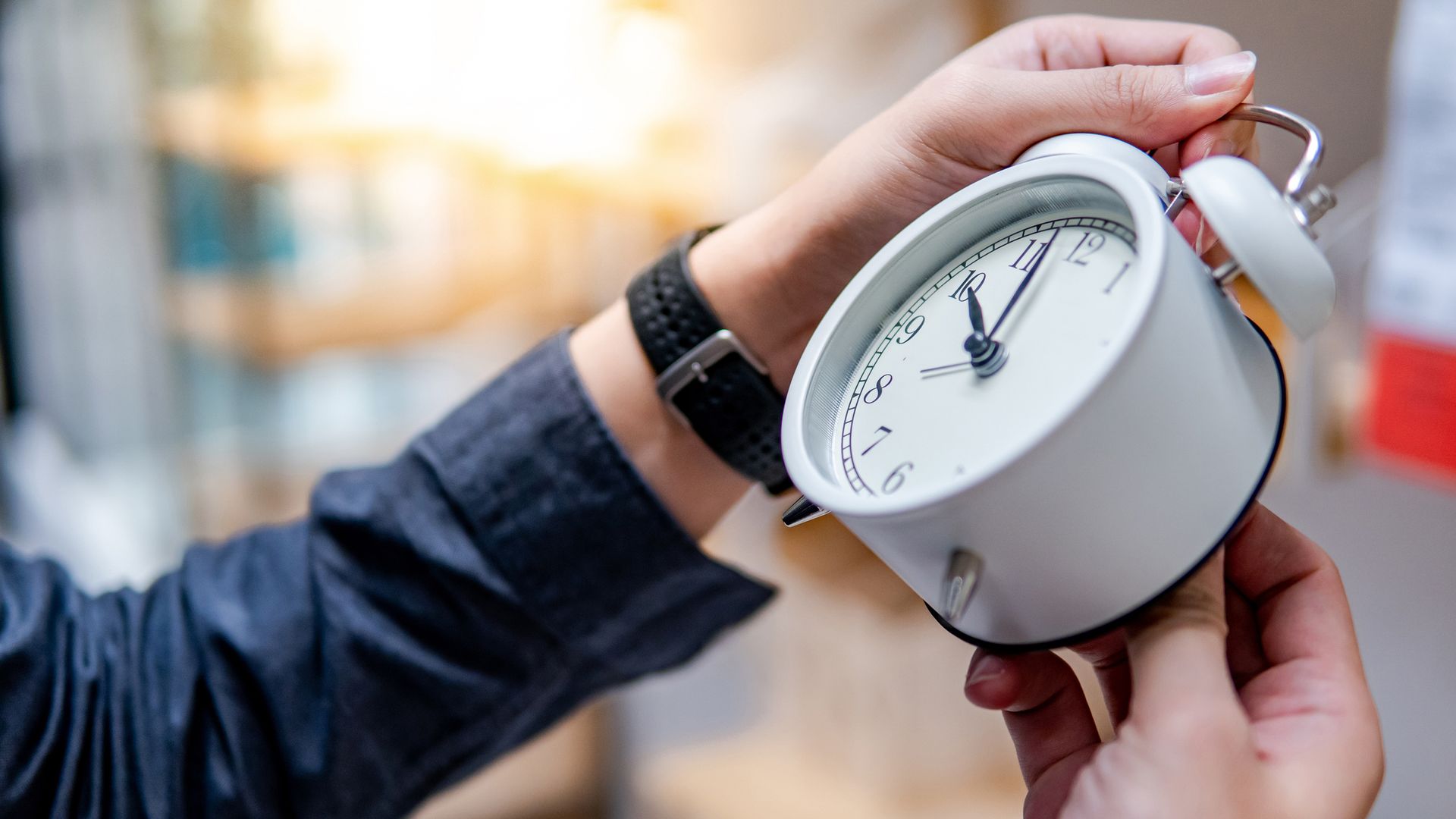
The annual whining session has arrived. Every time the clocks shift, the internet fills with recycled outrage about "lost sleep," "circadian disruption," and the supposed heart attack spikes associated with Daylight Saving Time (DST). Modern pundits treat a sixty-minute shift like a biological catastrophe, begging for a return to Permanent Standard Time as if it’s some holy grail of human wellness.
They are missing the point. The clock on your wall isn't what's killing your productivity or your health. The culprit is the artificial environment you’ve built to ignore the sun entirely.
If a one-hour shift ruins your week, your biological foundation is already made of glass. We don't have a "time" problem; we have a chronic light-malnutrition problem.
The Standard Time Delusion
The loudest voices in the "Abolish DST" movement claim that Permanent Standard Time is the only way to align our internal biology with the solar cycle. They cite the importance of morning light for setting the circadian rhythm. On paper, they’re right. In reality, they’re ignoring how 21st-century humans actually live.
Standard Time in the winter means the sun sets at 4:30 PM in many parts of the northern hemisphere. Unless you are a Victorian chimney sweep, you aren't finishing your workday at 3:00 PM. You are working under flickering 4000K overhead LEDs until 6:00 PM, then commuting in the dark, only to sit under more artificial light at home.
By the time you get off work, the "natural" day is over. Permanent Standard Time doesn't give you more light; it just ensures the light happens while you are staring at a spreadsheet in a windowless cubicle or a home office.
The real argument for DST—the one the "experts" hate to admit—is that it forces a social alignment that favors human activity. Having an extra hour of light in the evening isn't just about "leisure." It’s about Vitamin D synthesis, physical movement, and psychological relief from the sensory deprivation chamber of modern employment.
The Heart Attack Myth and Statistical Noise
You’ve seen the headlines: "Heart attacks jump 24% the Monday after the clocks go forward." It sounds terrifying. It’s also a classic example of cherry-picking data to support a narrative.
When you look at the total cardiac events over the week following the shift, the numbers level out. The "spike" is largely a pull-forward effect—people who were already at high risk of a cardiac event had it triggered by the minor stress of losing an hour of sleep. If a sixty-minute change in your wake-up time is enough to cause a myocardial infarction, you were a walking time bomb.
We don't see these same activists calling for the ban of international flights, which subject millions of people to "jet lag" far more severe than a one-hour shift every single day. We don't see a ban on Netflix "next episode" buttons, which do more to disrupt global sleep patterns than any government mandate ever could.
The focus on DST is a distraction. It’s easier to blame the government for "stealing" an hour than it is to admit you have a broken relationship with your phone and your thermostat.
Your Biological Clock is Screaming for Better Tech, Not Better Laws
The circadian rhythm is governed by the suprachiasmatic nucleus (SCN). The SCN responds to specific wavelengths of light. Specifically, it needs high-intensity blue-rich light in the morning to suppress melatonin and "reset" the clock, and it needs the absence of that light in the evening.
The "lazy consensus" says we should change the law to fix this. The insider truth is that we should be changing our infrastructure.
The $40 Solution to a National Crisis
Instead of lobbying for Permanent Standard Time, spend forty dollars on a high-lux light therapy lamp. If you blast your retinas with 10,000 lux for twenty minutes at 7:00 AM, the DST shift becomes a non-event.
The reason people struggle with the transition is that their indoor environments provide about 200 to 500 lux—a biological "dimness" that keeps the brain in a perpetual state of twilight. When the clocks move, your brain has no strong signal to latch onto. You aren't suffering from "time change"; you’re suffering from a lack of contrast.
The Temperature Gap
We also ignore the thermal component of sleep. In a natural environment, temperature drops as the sun goes down. In a modern apartment, the HVAC system keeps it a steady 72 degrees Fahrenheit (22°C) year-round. This thermal monotony is just as damaging to your sleep-wake cycle as light pollution.
If you want to survive the "spring forward," stop arguing about the clock and start dropping your bedroom temperature to 65 degrees Fahrenheit (18°C) two hours before bed. Your body uses the drop in core temperature as a signal to initiate sleep. Most people are "circadian-blind" because they live in a climate-controlled, dimly lit bubble.
Why "Permanent Standard Time" Would Be a Disaster for Public Health
Let’s look at the counter-intuitive reality of the "Permanent Standard" proposal. If we stayed on Standard Time year-round, the sun would rise at 4:30 AM in the summer in cities like New York or London.
Who benefits from that?
- The birds? Maybe.
- The 2% of the population who are extreme early risers? Sure.
- The rest of society? Absolutely not.
That light is wasted. It hits your bedroom curtains while you’re trying to sleep, likely waking you up earlier than intended and decreasing your total sleep time. Then, the sun sets an hour earlier in the evening, robbing you of the only time you actually have to be outside.
The "Standard Time" advocates are essentially arguing for a world where we maximize light during the hours we sleep and minimize it during the hours we live. It is a recipe for seasonal affective disorder on a permanent, year-round loop.
The Productivity Lie
Business leaders love to complain about the "productivity dip" following the time change. I’ve seen companies lose thousands of billable hours to employees "adjusting" to the new schedule.
But these are the same companies that demand "hustle culture," encourage late-night Slack messages, and provide zero natural light in their office designs. If your workforce is so fragile that one hour of lost sleep tanks your Q1 projections, your management style is the problem, not the Gregorian calendar.
A resilient human system can handle a one-hour variance. We do it every weekend when we stay up late on Friday and sleep in on Saturday. We call that "living." Calling it "circadian rhythm disruption" when the government does it is just a way to externalize our own poor habits.
The Path Forward: Radical Personal Sovereignty
Stop waiting for a legislative miracle. The debate over whether to scrap DST is a circular firing squad of minor grievances. Even if the law changes, your sleep will still suck if you keep staring at a high-intensity LED screen until 11:00 PM.
If you want to master your biology, you have to stop being a "passenger" to the clock.
- Optical Reset: Use a 10,000 lux lamp every morning, regardless of what the clock says. Force your SCN to acknowledge the day has begun.
- Biological Sunset: Install red-shift software on every device you own. If your screen is white or blue after 8:00 PM, you are lying to your brain.
- Thermal Cycling: Use technology to mimic the natural world. Use a smart thermostat to create a steep temperature drop at night.
The controversy over daylight savings is a distraction designed to make you feel like a victim of "the system." You aren't a victim of a time zone; you’re a victim of a lifestyle that treats biological needs as optional inconveniences.
The clock is moving. Deal with it. Better yet, build a personal environment that makes the clock irrelevant. Your body doesn't read the time on your iPhone; it reads the photons in the room and the heat on your skin. Fix those, and the DST debate becomes the triviality it always should have been.
Stop complaining about the hour you lost and start looking at the sixteen hours you’re wasting in a biological vacuum.