Every time major world leaders sit in the same room, the foreign policy press corps reaches for the exact same script.
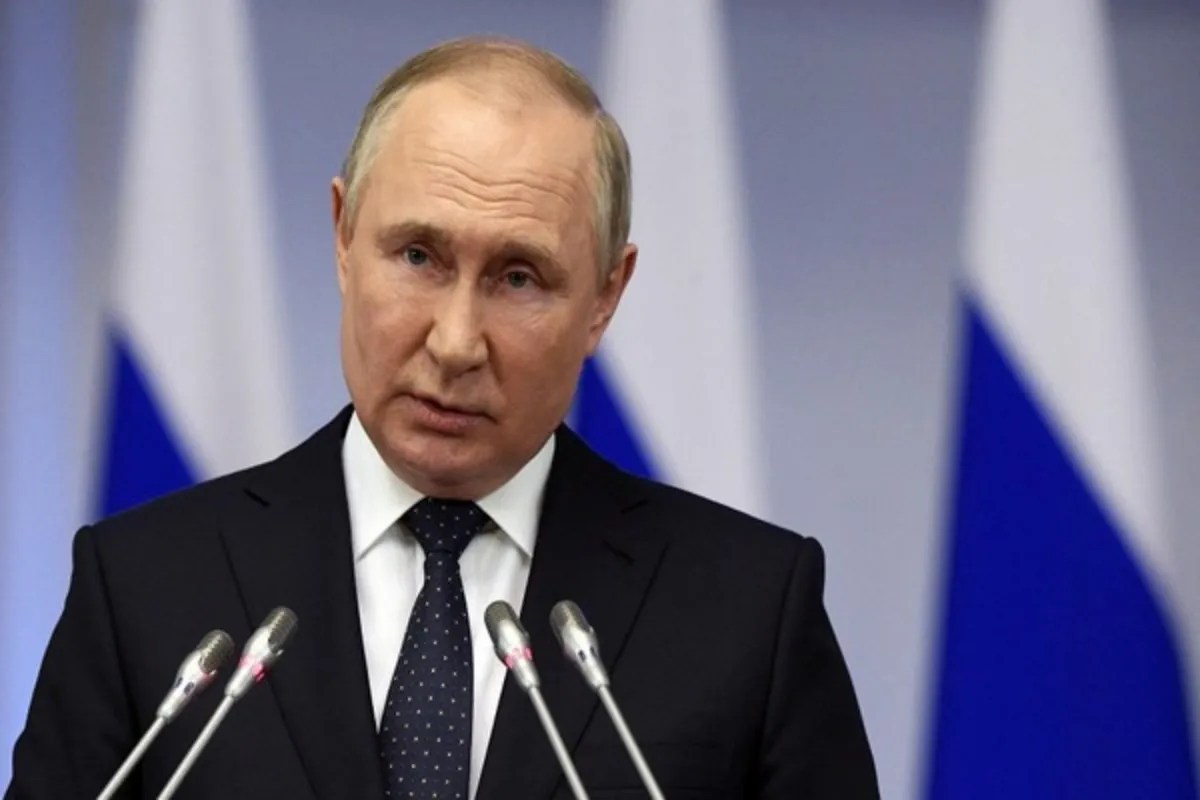
When Vladimir Putin recently emerged from discussions involving Donald Trump and Xi Jinping, expressing gratitude for a G20 Summit invitation and floating the "possibility of reforming the UN," mainstream outlets dutifully transcribed the quote as a diplomatic breakthrough. Analysts immediately began speculating about Security Council expansion, veto overrides, and a new era of multilateral cooperation.
They are completely missing the point.
In international relations, "UN reform" is the ultimate diplomatic sedative. It is the phrase leaders deploy when they want to signal statesmanship to domestic audiences while guaranteeing that nothing of substance will actually change. Treating a passing mention of Security Council restructuring alongside a G20 invitation as a substantive shift in global governance misunderstands how great power politics actually operates.
The Structural Illusion of UN Reform
To understand why talk of UN reform from permanent Security Council members is pure theater, you have to look at the mechanics of the UN Charter itself.
Under Article 108, any amendment to the Charter requires a two-thirds vote in the General Assembly, followed by ratification by two-thirds of member states—including all five permanent members of the Security Council (the P5: the United States, China, Russia, the United Kingdom, and France).
Each of those five nations holds an absolute, unilateral veto over any change to the rules that grant them that very veto.
Think about the incentive structure here. Asking Russia, China, or the United States to genuinely reform the UN Security Council is like asking a casino owner to redesign the roulette wheel so the house loses its mathematical edge. They might publicly express sympathy for the players' complaints, and they might even offer complimentary drinks at the bar—like a warm invitation to the G20—but the underlying math of the table remains untouched.
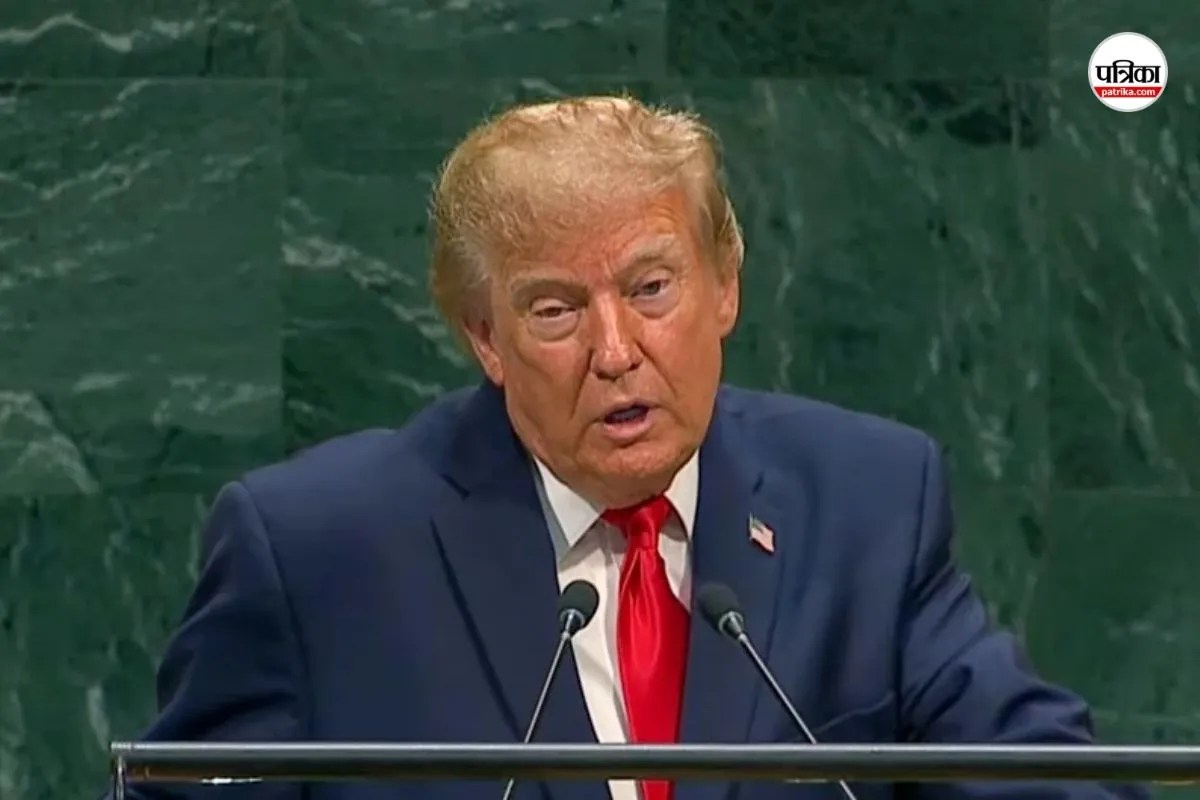
When Putin, Trump, and Xi discuss the "possibility" of reforming the UN, they are not negotiating the surrender of their own institutional privileges. Rather, each leader uses the phrase to mean something entirely different and mutually incompatible:
- Moscow’s definition of UN reform involves diluting Western influence by bringing friendly nations from the Global South—such as India or Brazil—into the fold, thereby diluting American and European voting blocs without sacrificing Russia's own veto.
- Beijing’s definition centers on reshaping international norms and development agencies to reflect multipolarity and state sovereignty, while quietly ensuring its own status as the premier Asian power on the Council remains unchallenged.
- Washington’s definition, particularly under a transactional leadership approach, views multilateral bodies through the lens of burden-sharing, financial contributions, and curbing bureaucratic overreach that constrains American unilateral action.
Because these visions directly collide, the status quo is locked in amber. The talk of reform is not a prelude to action; it is a polite way of acknowledging a stalemate while keeping diplomatic channels open.
Why the G20 Invitation Is the Real Story
While commentators fixate on the UN soundbite, the far more revealing detail in the exchange is the G20 invitation and Putin's pointed expression of gratitude.
The United Nations is a legacy institution built for the post-1945 world. Its rigid legalism and universal membership make it slow, bureaucratic, and prone to paralysis. The G20, by contrast, is an informal, executive-level club with no permanent secretariat, no binding charter, and no formal veto mechanism.
Over the past two decades, real crisis management—from the 2008 global financial meltdown to sovereign debt restructuring—has steadily migrated away from the formal halls of Turtle Bay in New York toward informal groupings like the G20, BRICS, and ad-hoc bilateral summits.
Why do leaders like Putin care deeply about a G20 seat while treating UN reform as an abstract talking point?
- Legitimacy Without Legal Constraints: Attending a G20 summit signals that a leader cannot be diplomatically isolated. It provides high-visibility photo opportunities alongside the world's largest economies without requiring the host or guest to sign binding treaties.
- Bilateral Cover: Multilateral summits are rarely about the official communiqués. Their primary utility is providing political cover for quiet, bilateral pull-asides between leaders who would face domestic backlash for scheduling a standalone state visit.
- Agenda Setting Over Rule Making: In an informal forum, power is exercised through economic weight and personal leverage rather than parliamentary procedure. For transactional leaders, an unstructured table is infinitely preferable to a rules-based assembly.
Dismantling the "Multilateral Revival" Narrative
If you follow standard geopolitical commentary, you will frequently encounter two recurring assumptions whenever these summits occur. Both collapse under scrutiny.
Myth 1: "Expanding the Security Council would make the UN more effective."
Advocates constantly argue that adding permanent seats for powers like India, Brazil, Germany, Japan, or an African representative would modernize the UN and end its paralysis. In reality, adding more permanent members—especially if they are granted veto power—would mathematically increase the likelihood of deadlock. Even without the veto, expanding the Council from 15 to 25 members turns a tight executive board into a miniature General Assembly, driving the P5 to conduct even more of their real business behind closed doors before formal sessions ever convene.
Myth 2: "Great power dialogue at summits signals an end to geopolitical rivalry."
When leaders express gratitude for invitations and speak warmly of institutional cooperation, optimistic observers often mistake civility for convergence. Realist scholars of international relations, from Hans Morgenthau to John Mearsheimer, have long pointed out that great powers cooperate on process precisely so they can continue competing on substance. Agreeing to talk about reforming an institution costs nothing and buys time.
The Trade-Off Nobody Wants to Admit
There is an uncomfortable truth that both starry-eyed multilateralists and cynical isolationists refuse to confront: the United Nations was never designed to stop great powers from fighting each other.
Franklin D. Roosevelt, Winston Churchill, and Joseph Stalin explicitly engineered the Security Council veto at Yalta and San Francisco as a circuit breaker. They knew that if the UN ever attempted to enforce collective security against a nuclear-armed superpower, the organization would shatter instantly, much like the League of Nations did in the 1930s. The veto forces the major powers to negotiate rather than outvote one another on existential issues.
If you strip away the veto or force through radical reforms against the wishes of Washington, Beijing, or Moscow, you do not get a fairer, more democratic world order. You get an empty building in Manhattan while the major powers walk away to form competing, exclusive blocs.
The downside of accepting this reality is obvious: it leaves smaller and middle powers frustrated, perpetually locked out of the top tier of global decision-making, and subject to the whims of great power bargains. That frustration is entirely justified. Yet pretending that a few warm words between Putin, Trump, and Xi will dismantle a system built to preserve their own leverage only sets the public up for perpetual disillusionment.
How to Read Diplomatic Signals Like an Insider
The next time a major summit produces headlines about "historic institutional reform" or "renewed multilateralism," ignore the press releases and apply a stricter filter to what is actually happening:
- Follow the budgets, not the speeches. Watch whether major powers are increasing or withholding assessed dues and voluntary contributions to specific UN agencies. Financial commitments reveal true strategic priorities far better than summit rhetoric.
- Watch the side-rooms, not the plenary. The official G20 or UN General Assembly schedule is choreography. Look at which bilateral meetings occur on the margins, which cabinet officials are in the room (finance ministers and defense chiefs signal real business; cultural envoys signal window dressing), and how long those unscheduled conversations last.
- Distinguish between norms and mechanics. Leaders love endorsing broad principles like "fairer representation" or "modernizing global governance." Unless they propose specific, ratifiable amendments to Article 27 or Article 108 of the UN Charter—complete with a timeline for domestic legislative ratification—they are merely engaging in public relations.
Diplomatic language is designed to conceal friction beneath a veneer of shared purpose. Putin thanking hosts for a G20 seat while nodding toward UN reform alongside Trump and Xi is not the dawn of a new global architecture—it is three seasoned operators using the oldest diplomatic playbook in existence to keep their seats at the head of the table.