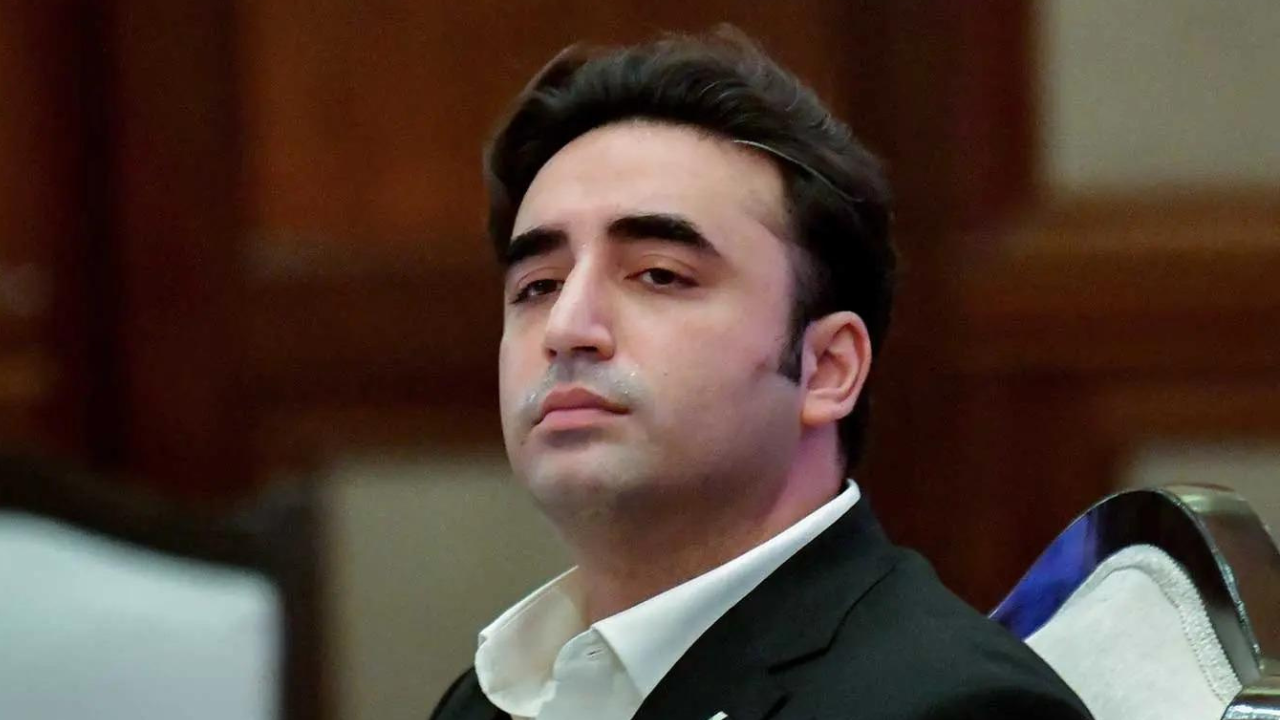
Bilawal Bhutto-Zardari is not trying to save Sindh from civil war. He is trying to save his family's monopoly over Pakistan's only cash cow.
Mainstream coverage of Pakistan's provincial redrawing crisis treats the Pakistan Peoples Party (PPP) chairman's warning of "bloodshed in Karachi and Hyderabad" like a prophetic alarm bell. Journalists frame the debate as a clash between Field Marshal Asim Munir's centralizing military establishment and a valiant defender of provincial autonomy. That framing is lazy. It takes a seasoned dynastic politician at face value while ignoring eighteen years of deliberate urban strangulation.
When politicians threaten violence in the streets to protect an administrative boundary, look at the balance sheet they are defending.
The Myth of the Benevolent Protector
In November 2026, standing at the Karachi Press Club, Bilawal Bhutto declared that any forced division of Sindh would drive ordinary people to take up arms. He invoked the Constitution, blasted the idea of a referendum as a dictator's tool, and wrapped his party in the banner of historic Sindhi identity.
Media outlets ate it up. They dutifully reported his constitutional objections without asking the obvious question. Why does a party that champions the creation of a South Punjab province suddenly scream about ethnic apocalypse the moment anyone suggests splitting Sindh?
The answer is arithmetic.
Punjab is an electoral battleground where the PPP has been largely irrelevant for decades. Carving a new province out of southern Punjab weakens the Pakistan Muslim League-Nawaz (PML-N) and gives the PPP a shot at rural seats. Sindh is the exact opposite. Since 2008, the PPP has ruled Sindh without interruption. Its power rests on a simple, brutal demographic lock:
- Rural Sindh delivers the provincial assembly majority to the PPP through entrenched feudal patronage.
- Urban Sindh—specifically Karachi and Hyderabad—generates the overwhelming majority of the province's tax revenue and industrial output.
- The Provincial Treasury captures those urban revenues and channels them through a Chief Minister's House controlled exclusively by rural vote banks.
If Karachi becomes a separate administrative unit—whether as one of the 12 to 15 new provinces floated by ministers like Ahsan Iqbal and Mohsin Naqvi, or as a federally administered territory—that fiscal pipeline snaps overnight. Without Karachi's tax base, a rump rural Sindh province would be fiscally dependent on federal handouts from Islamabad. Bilawal's warning of bloodshed is not a prediction of spontaneous ethnic fury. It is a protection racket dressed up as constitutionalism.
Why Both Sides Are Lying to You
To understand what is actually happening in Pakistan right now, you have to strip away the propaganda from both camps. Neither the military-backed coalition in Islamabad nor the dynastic feudalists in Karachi are telling the truth about why this map is being redrawn.
Islamabad's "Governance" Lie
Interior Minister Mohsin Naqvi and Defence Minister Khawaja Asif claim Pakistan's four-province structure has collapsed under a population exceeding 250 million people. Smaller units, they argue, mean better schools, faster courts, and cleaner streets.
Anyone who has watched South Asian bureaucracies operate knows this is fiction. Multiplying four dysfunctional provinces into twelve or fifteen smaller ones does not fix institutional rot. It multiplies the overhead. Every new province requires a governor, a chief minister, a cabinet, a secretariat, a high court, and an inspector general of police. In a country surviving on International Monetary Fund bailouts, creating a dozen new provincial bureaucracies is fiscal arson.
The real motive in Rawalpindi and Islamabad is political fragmentation. Large provinces with entrenched regional parties—the PPP in Sindh, the PML-N in Punjab, and the Pakistan Tehreek-e-Insaf (PTI) in Khyber Pakhtunkhwa—act as counterweights to centralized military authority. Slice those four power centers into fifteen bite-sized pieces, and no single chief minister can ever challenge the center again. It is the ghost of the 1955 One Unit scheme in reverse: instead of merging provinces to neutralize Bengali majorities, the state is atomizing provinces to neutralize civilian political dynasties.
Bilawal's "Constitutional" Lie
On the other side, Bilawal Bhutto hides behind Article 239(4) of Pakistan's 1973 Constitution. Under this clause, Parliament cannot alter the boundaries of a province unless the bill is passed by a two-thirds majority of that specific provincial assembly. Because the PPP holds a commanding majority in the Sindh Assembly—which unanimously passed a resolution against division on September 3, 2026—Article 239(4) gives Bilawal an absolute legal veto.
That is why rumors of a 28th Constitutional Amendment designed to strip out Article 239(4), or a nationwide referendum to bypass provincial assemblies, have sent the PPP into a panic.
Bilawal is right that a referendum on provincial boundaries has zero basis in Pakistan's current constitutional text. He is also right that military rulers like Zia-ul-Haq and Pervez Musharraf abused referendums to manufacture fake legitimacy. Yet his sudden reverence for the sanctity of the 1973 Constitution is pure theater. The same PPP has spent the last sixteen years gutting Article 140-A, which mandates the devolution of political, administrative, and financial authority to elected local governments.
You cannot strangulate local democracy at the municipal level for nearly two decades and then claim to be a constitutional purist when the city you starved demands a divorce.
Answering the Questions Nobody Asks Honestly
When Pakistan's provincial crisis trends globally, readers ask the same three questions. Most analysts answer them with diplomatic hedging. Here is the unvarnished reality.
1. Would a separate Karachi province actually solve the city's problems?
No—not by itself. Separating Karachi from Sindh removes the predatory extraction of the provincial government in Thatta and Larkana, which is a massive step forward. However, Karachi's dysfunction is also driven by overlapping land-owning authorities that answer to neither the mayor nor the chief minister. Roughly two-thirds of Karachi's land is controlled by federal agencies, cantonment boards, port trusts, and housing authorities rather than the municipal corporation. Creating a Karachi province without dismantling those parallel real estate empires would simply replace one set of absentee landlords with another.
2. Is ethnic violence in Sindh actually inevitable if the map changes?
Violence in Karachi is rarely spontaneous; it is almost always switched on and off by political patrons. In the 1980s, 1990s, and late 2000s, street warfare between Muhajir, Sindhi, and Pashtun factions served specific party bosses who used body counts as bargaining chips in Islamabad. When Bilawal warns that ordinary people will pick up weapons, he is projecting party mobilization onto the general public. Ordinary citizens in Karachi—regardless of whether they speak Sindhi, Urdu, Pashto, or Punjabi—want functioning sewers, reliable water, and mass transit. The people with the motive and machinery to turn an administrative dispute into street slaughter are the political operators who stand to lose their patronage networks.
3. Why doesn't the federal government simply hold a referendum?
Because under Pakistan's legal architecture, a national referendum cannot amend the Constitution. Even if Shehbaz Sharif's cabinet pushed a referendum through a joint sitting of Parliament, the Supreme Court would face a straightforward textual violation of Article 239. More importantly, a referendum in Sindh alone would be a logistical and political bloodbath, while a nationwide referendum allowing Punjab to vote on carving up Sindh would ignite the exact ethno-nationalist firestorm that tore East Pakistan apart in 1971.
The Real Structural Trap
I have watched political elites across developing federations pull this exact sleight of hand for years. Whenever an entrenched party faces accountability for failing to govern a megacity, it weaponizes identity politics to turn a service-delivery failure into an existential tribal threat.
Look closely at the incentives in Sindh:
| Actor | Public Narrative | Actual Strategic Objective |
|---|---|---|
| PPP Leadership | Protecting historic Sindhi unity and constitutional federalism. | Preserving unilateral control over Karachi's tax revenues and provincial ministries. |
| Military Establishment | Improving service delivery for 250+ million citizens via smaller units. | Breaking up large provincial power bases to ensure a compliant, fragmented political class. |
| MQM-P | Liberating urban Sindh from feudal neglect and unequal resource distribution. | Reclaiming lost urban patronage and municipal relevance in Karachi and Hyderabad. |
| PML-N | Pragmatic administrative modernization. | Surviving as junior partners in a hybrid system while keeping the PPP off-balance. |
Notice who is missing from that table: the twenty-plus million residents of Karachi.
As veteran Pakistani policy analysts like governance scholar Ishrat Husain and urban planner Arif Hasan have argued for decades, the crisis of Pakistan's cities is not a shortage of provinces. It is the total absence of empowered municipal government. London, Tokyo, and New York do not need to be sovereign states to run subways, collect property taxes, and police their streets. They have empowered mayors with statutory fiscal autonomy.
In Pakistan, provincial elites treat local governments like rival political parties rather than constitutional tiers of the state. They delay municipal elections for years, strip mayors of control over water boards and building authorities, and hoard development funds at the provincial level.
What Needs to Happen Instead
If Pakistan's policymakers actually wanted to fix governance without triggering an ethnic insurgency, they would drop the 15-province fantasy tomorrow. Redrawing provincial borders is a blunt, dangerous instrument that invites violent resistance while leaving the underlying feudal-bureaucratic state intact.
There is a cleaner, constitutional path that dismantles the PPP's fiscal chokehold without touching a single inch of Sindh's historic map:
- Enforce a binding Provincial Finance Commission (PFC) award. Just as the National Finance Commission (NFC) guarantees provinces a fixed share of federal taxes, a constitutional amendment should lock in a non-negotiable formula transferring a minimum percentage of provincial revenues directly to elected city and district councils.
- Transfer urban land and utility control to metropolitan corporations. Dissolve the overlapping provincial development authorities and hand water, sewerage, mass transit, and building control directly to elected mayors in Karachi, Lahore, Peshawar, and Quetta.
- Establish constitutional protection for municipal tenures. Strip provincial chief ministers of the power to dissolve local councils or withhold municipal budgets at will.
Will the military establishment support this? Unlikely, because empowered mayors build independent grassroots political power that Rawalpindi cannot easily co-opt. Will Bilawal Bhutto support this? Never, because fiscal devolution starves the provincial patronage machine that keeps the PPP in power.
That is the dirty secret behind the headlines. Both sides prefer a noisy, dangerous fight over splitting Sindh because an ethnic crisis keeps their own voters terrified and loyal. If the debate ever shifted from redrawing maps to empowering local mayors, every single cartel running Pakistan would lose.
Check out Bilawal Bhutto's Karachi Press Club warning for a closer look at the exact political confrontation and constitutional arguments surrounding Article 239 and the new provinces debate.