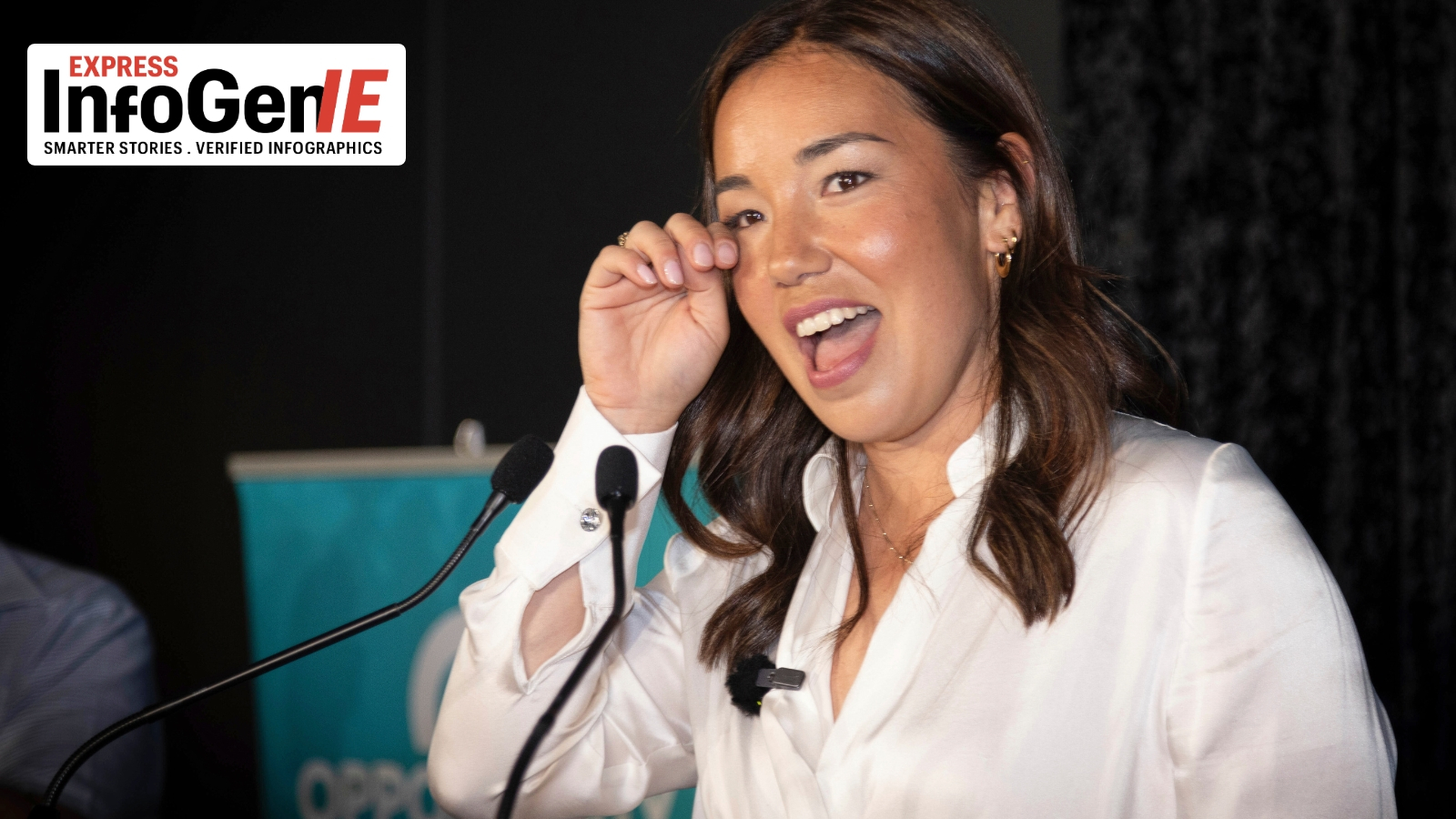
Political commentators in Wellington love a shiny new toy, and right now, they are treating Qiulae Wong like the golden ticket to the Beehive.
Every election cycle produces the exact same breathless profiles. A charismatic outsider steps into the arena, media outlets scramble to anoint them the "kingmaker" who will hold the balance of power, and voters are fed a fairy tale about how one fresh face is going to upend thirty years of Mixed Member Proportional (MMP) calculus. It happened with Gareth Morgan’s Opportunities Party. It happened with Colin Craig’s Conservatives. It happened with Jamie Whyte’s ACT before David Seymour actually did the unglamorous, multi-cycle trench work to rebuild it from the ground up.
Now, the pundit class is running the exact same playbook on Qiulae Wong, co-leader of The Opportunities Party (TOP).
The lazy consensus says that because New Zealand’s major parties are bleeding disillusioned centrists and younger voters are frustrated with the National-Labour duopoly, Wong is uniquely positioned to sweep up the middle, cross the five percent threshold, and dictate terms to the next Prime Minister.
That narrative is seductive. It makes for great Sunday morning panel television. It is also completely detached from the brutal mathematical reality of New Zealand electoral politics.
If you want to understand what is actually happening in Wellington, stop asking whether Qiulae Wong holds the key to the next government. Start asking why minor parties in New Zealand consistently fail when they mistake media buzz for structural voter alignment.
The Kingmaker Myth Is a Trap for Minor Parties
Let’s look at the mechanics of MMP, because most political commentary treats the five percent party vote threshold like a polite suggestion rather than a concrete wall.
Under New Zealand’s Electoral Act, a party that does not win an electorate seat must capture at least five percent of the nationwide party vote to enter Parliament. In a standard general election with roughly 2.8 million valid votes cast, that means Qiulae Wong and TOP need approximately 140,000 people to walk into a booth and tick their box instead of National, Labour, ACT, the Greens, or New Zealand First.
I have watched dozens of political operatives and well-funded campaigns burn through millions of dollars chasing that exact number, convinced that "common sense" policy and a likable leader would carry them over the line. They always make the same fatal miscalculation: they confuse voter dissatisfaction with voter conversion.
Yes, New Zealanders are frustrated. Housing affordability remains broken, productivity lags behind the OECD average, and tax brackets have barely kept pace with inflation. TOP’s traditional pitch—a comprehensive land value tax (LVT) paired with a universal basic income (UBI) or tax-free threshold—is an economist’s dream. On a whiteboard at Victoria University, it looks brilliant.
In the real world, voters do not cast ballots like macroeconomists. They cast ballots out of tribal identity, immediate pocketbook fear, or strategic panic.
When the campaign enters its final ten days, the "wasted vote" narrative hits minor parties like a freight train. Even voters who genuinely like Qiulae Wong’s background, her business acumen, or TOP’s policy whitepapers start doing the math in the voting booth. A centre-left voter looks at the polls, panics about a right-wing coalition, and retreats to Labour or the Greens. A centre-right voter worries about government spending, panics about a left-wing bloc, and retreats to National or ACT.
Calling Wong a "kingmaker" before TOP has ever broken three percent in a general election does not help her. It actively hurts her by setting an expectation of inevitability that collapses the moment the first televised leaders' debate excludes minor parties polling under the threshold.
Who Is Qiulae Wong Really Pitching To?
To understand why the mainstream coverage misses the mark, you have to look at who Qiulae Wong actually is and what she represents inside the TOP apparatus.
Wong is not a career political staffer who grew up handing out flyers for Young Labour or the Young Nats. She brings genuine private-sector experience, having worked in corporate finance, governance, and sustainability advisory, alongside deep roots in New Zealand’s Asian business community. When she stepped into the co-leadership role alongside Raf Manji’s legacy and the party's ongoing restructuring, the strategic intent was obvious: broaden TOP’s appeal beyond its historical demographic of young, male, Reddit-browsing policy nerds.
That is a smart internal move. A party cannot survive if its entire base consists of software engineers arguing about Georgist land taxes on X.
However, broadening a party’s leadership profile does not automatically solve its ideological homelessness. And ideological homelessness is TOP’s real problem.
In New Zealand politics, every successful minor party owns a distinct, visceral emotional territory:
- ACT owns libertarian individualism, strict law-and-order, and aggressive deregulation.
- The Green Party owns environmental urgency, social justice, and wealth redistribution.
- New Zealand First owns economic nationalism, regional protectionism, and populist skepticism of Wellington elites.
- Te Pāti Māori owns indigenous sovereignty and constitutional transformation.
Now, ask yourself: what emotional territory does Qiulae Wong own?
"Evidence-based policy" is not an emotional territory. "Radical centrism" is not a rallying cry that gets people knocking on doors in the rain in Palmerston North. When you position yourself as neither left nor right, you do not automatically get the best of both worlds. Usually, you get attacked by both sides simultaneously.
To the political right, TOP’s wealth and land taxes look like big-government socialism dressed up in a corporate blazer. To the political left, TOP’s market-friendly instincts and refusal to commit to a left-wing coalition look like neoliberalism with better branding.
Dismantling the "Electorate Coat-Tails" Shortcut
Whenever pundits realize the five percent hill is too steep, they immediately pivot to Plan B: What if TOP wins an electorate seat?
Under MMP, winning a single electorate seat waives the five percent threshold entirely. If a party wins one seat and gets two percent of the party vote, it gets two or three MPs in Parliament. This is how ACT survived in Epsom for years, and it is how Raf Manji tried—and failed—to break through in Ilam in 2023.
Let’s be brutally honest about the electorate strategy. Winning an electorate seat in New Zealand without a major-party deal is one of the hardest feats in Westminster democracy.
Look at the history. Winston Peters did it in Tauranga and Northland because he was a political titan with forty years of name recognition. Hone Harawira and Te Pāti Māori did it in the Māori electorates through deep community mobilization. Chlöe Swarbrick won Auckland Central in 2020 and 2023 because she was already a sitting list MP with massive national profile, running in an inner-city student seat where the left-wing vote split favorably.
Imagine a scenario where Qiulae Wong targets a high-profile urban electorate—say, Wellington Central, Auckland Central, or a suburban Auckland seat with a high Asian-New Zealand demographic like Botany or Pakuranga.
In Wellington Central or Auckland Central, she would have to out-organize entrenched Labour and Green machines that have thousands of volunteers on the ground. In Botany or Pakuranga, she would run straight into National’s blue wall, where business-minded voters already have Christopher Luxon’s National Party or David Seymour’s ACT delivering tax relief without threatening to tax the equity in their family homes.
Neither National nor Labour is going to cut a "cup of tea" deal in Epsom-style fashion to gift Qiulae Wong a seat. Why would they? Winston Peters is notoriously difficult to work with, and David Seymour already pushes National to its limits during coalition negotiations. Christopher Luxon has zero appetite for adding a unpredictable, technocratic wildcard to a future governing arrangement, and Chris Hipkins has enough trouble keeping Labour and the Greens aligned without bringing in a party that rejects traditional union-backed economics.
What Everyone Gets Wrong About New Zealand’s Asian Vote
There is an unspoken assumption humming beneath many of the profiles written about Wong: that as a prominent Asian New Zealander leading a political party, she will naturally unlock a massive, untapped voting bloc in Auckland.
This is one of the laziest tropes in New Zealand political journalism, and it deserves to be dismantled completely.
The "Asian vote" does not exist as a monolith. Lumping together third-generation Chinese New Zealanders in Dunedin, recent Indian migrants in Papatoetoe, Korean small-business owners on the North Shore, and Filipino healthcare workers in Christchurch is demographic nonsense.
Furthermore, political scientists like Raymond Miller and the team behind the New Zealand Election Study have repeatedly demonstrated that ethnic representation alone does not override core economic and social priorities. Over the past two decades, both National and Labour have aggressively recruited high-profile Chinese, Indian, and Korean candidates—from Pansy Wong and Melissa Lee to Raymond Huo and Priyanca Radhakrishnan.
Voters in Howick or Mount Roskill do not abandon their views on crime, education standards, small business taxation, or infrastructure simply because a minor-party leader shares their heritage. If Qiulae Wong wants those votes, she has to convince pragmatic, aspirational families that TOP’s tax overhaul will leave them wealthier and safer than National’s policies will. Given that property ownership is the primary wealth-building vehicle for a massive portion of suburban Auckland, pitching a land tax to those exact voters is like trying to sell umbrellas in a drought.
The Real Value of Qiulae Wong (And Why It Still Matters)
Here is the nuance the cheerleaders miss—and where I will give credit where it is actually due.
You do not have to win Parliament to shift the Overton window in New Zealand politics.
If we judge Qiulae Wong strictly by whether she sits at the Cabinet table after the next election, she will almost certainly look like a failure. The structural barriers of MMP, the lack of a guaranteed electorate seat, and the ideological squeeze from both major blocs make a TOP breakthrough a long-shot bet at best.
However, judging minor parties solely on seat counts misunderstands how policy actually gets made in Wellington.
Look at what TOP has already accomplished over the last decade without holding a single seat:
- Forcing tax reform onto the agenda: Ten years ago, talking about a tax-free income threshold or shifting the tax burden away from productive labor and onto unproductive land was treated as political suicide. Today, variations of tax-free thresholds and wealth adjustments are actively debated inside Labour, the Greens, and Te Pāti Māori.
- Exposing the housing Ponzi scheme: Before it was fashionable, TOP relentlessly hammered the point that New Zealand’s economy was addicted to untaxed capital gains on residential property. That critique is now mainstream consensus from the Reserve Bank to Treasury.
- Pressuring the major parties on generational theft: Wong brings a sharp, modern corporate polish to an argument that used to sound overly academic. When she critiques the fiscal sustainability of New Zealand Superannuation or the crumbling state of local infrastructure, younger professionals listen—and National and Labour staffers take notes so they can steal the talking points six months later.
That is the actual role Qiulae Wong plays. She is not a kingmaker. She is an intellectual agitator forcing two tired, risk-averse major parties to confront math they would rather ignore until after the election.
The Downside of My Own Skepticism
Of course, political history is littered with insiders who bet on the status quo right before a black swan event blew up the model.
My skepticism rests on the assumption that New Zealand’s two major parties will remain fundamentally competent enough to hold their core bases together. That is not a guarantee.
If New Zealand experiences a severe, prolonged economic shock—say, a sharp spike in unemployment combined with a stubbornly high cost of living and visible public service failures—voter anger can easily curdle into an anti-establishment wave. We saw glimpses of this volatility in 2023 when New Zealand First roared back from the political dead to capture over six percent of the vote and return to government.
If both National and Labour look paralyzed, and if the existing minor parties appear too ideologically rigid or tied to past failures, a disciplined, articulate outsider like Qiulae Wong could theoretically catch lightning in a bottle. Stranger things have happened under MMP—just ask the voters who watched the Alliance, New Zealand First, or the Māori Party rise and fall over the past thirty years.
How to Actually Read the Next Election Cycle
If you are watching New Zealand politics over the coming months, stop falling for glossy profile pieces that mistake eloquence for electoral power. Instead, watch the cold, hard indicators that actually determine whether Qiulae Wong is a serious threat or just another media darling:
- Watch the rolling polls six weeks out, not six months out. Early polling noise means nothing. Until a minor party consistently clears 4.2 percent in multiple reputable polls (like 1News Verian or Talbot Mills) within two months of Election Day, strategic voting will crush them in the final week.
- Watch the war chest. Running a nationwide MMP campaign requires millions of dollars for digital targeting, field organizers, and broadcast media. Without deep-pocketed institutional donors—the kind that funded Gareth Morgan’s early runs—a minor party cannot buy the frequency required to overcome major-party advertising.
- Watch for an electorate anchor. If TOP does not pour eighty percent of its ground resources into one hyper-specific, winnable electorate seat, they are gambling everything on the five percent threshold—a bet that has buried almost every new party since 1996.
Qiulae Wong is smart, articulate, and saying things about New Zealand’s economic future that desperately need to be said. None of that makes her a kingmaker. Until she proves she can turn polite applause in Auckland boardrooms into 140,000 ruthless, committed ticks on a ballot paper, the keys to the Beehive are staying right where they have always been.