Every few months, Seoul’s political press corps dusts off the exact same spreadsheet. They tally the jet fuel, count the hotel suites, scrutinize the first lady’s itinerary, and declare a national crisis over presidential overseas travel.
It is lazy journalism masquerading as fiscal accountability.
When critics attack South Korean leadership—whether it is Lee Jae-myung or his predecessors—for logging heavy air miles on diplomatic missions, they are fighting a phantom. They treat the presidency of an export-dependent G20 powerhouse like the board of a neighborhood credit union. They obsess over the price of the plane ticket while completely ignoring the trillion-won cost of an empty chair at the negotiating table.
The debate over presidential perks in South Korea is broken because the premise itself is backwards. The real danger to the South Korean taxpayer isn't a president who travels too much. It is a political culture that punishes leaders for leaving the peninsula while global supply chains are being redrawn in real time.
The Myth of the "Luxury Junket"
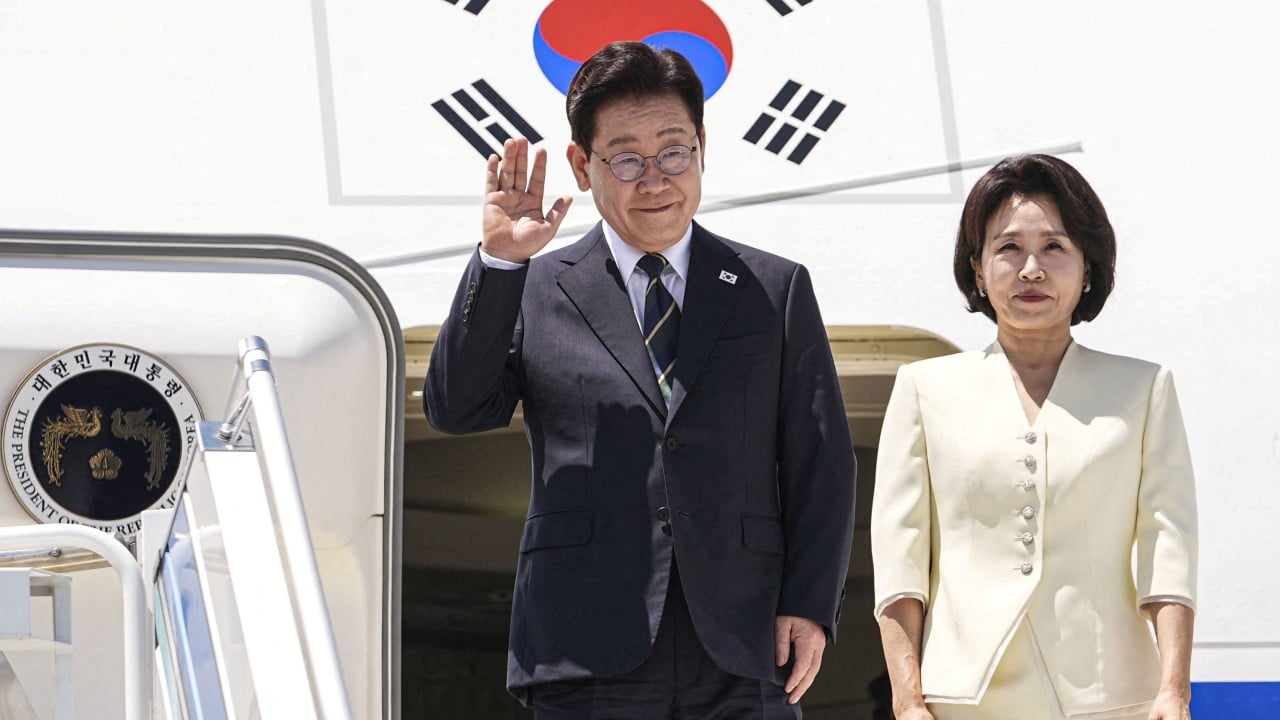
Let’s look at how the standard media narrative operates. A president boards Code One—the South Korean equivalent of Air Force One—bound for Washington, Brussels, or Southeast Asia. Within hours, opposition lawmakers and pundits begin dissecting the manifest. Why is the delegation so large? Why did the itinerary include a cultural stop? How much did the banquet cost?
This framing relies on a deliberate confusion between executive vanity and statecraft infrastructure.
I have spent years watching mid-sized Asian conglomerates and state-backed trade missions negotiate cross-border deals in Frankfurt, Silicon Valley, and Riyadh. Here is the cold reality of high-stakes international commerce: access is currency, and presence is non-negotiable. When a South Korean president lands in a foreign capital accompanied by the chairmen of Samsung, Hyundai, SK, and LG, that isn't a vacation. It is a sovereign battering ram.
In Seoul, political commentators love to isolate the line-item expense of a presidential summit—say, a few billion won for logistics, security, and chartered flights—and compare it to the average Korean household income. That is a cheap rhetorical trick. It measures the cost of the fishing rod against the price of a loaf of bread, while refusing to look at the size of the catch.
South Korea is not a self-sustaining continental economy like the United States. It has virtually no domestic oil, limited arable land, and a rapidly shrinking demographic base. Its entire modern existence rests on a single pillar: export-led industrialization. Roughly 40% to 45% of South Korea's Gross Domestic Product comes directly from exports. Compare that to the United States, where exports account for barely 11% of GDP.
When an American president stays in Washington for six months, the U.S. domestic market hums along. When a South Korean president stays locked in Yongsan or Sejong to placate domestic critics, the country’s primary economic engine loses its chief closer.
Why Seoul’s Political Class Loves the Travel Debate
If the economic math is so obvious, why does this exact controversy erupt like clockwork regardless of which party holds the Blue House?
Because attacking travel budgets is the ultimate low-effort political weapon.
- It requires zero policy literacy. You do not need to understand semiconductor export controls, battery supply chain subsidies under the U.S. Inflation Reduction Act, or nuclear energy tenders in Eastern Europe to complain about a hotel bill.
- It triggers instant populist outrage. Every taxpayer hates the idea of an elite class flying first-class on the public dime.
- It traps the sitting administration in a defensive crouch. Once the debate shifts from what deals were signed to how much the catering cost, the administration has already lost the narrative.
This is a bipartisan disease in Korean politics. When conservatives are in power, progressives decry the "imperial presidency" wasting taxpayer money on pointless photo ops abroad. The moment progressives take the wheel, conservatives suddenly discover a deep passion for fiscal austerity and demand receipts for every diplomatic dinner.
Both sides know the game. Both sides play it anyway. And the result is a perverse incentive structure where South Korean presidents are penalized for doing the single most productive part of their job.
What Actually Happens Behind Closed Doors at Summits
Critics frequently ask a seemingly reasonable question: Why can't the Foreign Minister or trade envoys handle these trips? Why does the president have to go?
Anyone who has ever worked in international trade or defense procurement knows the answer immediately. In top-down corporate cultures—and especially in state-directed economies across the Middle East, Southeast Asia, and Europe—ministers cannot close sovereign-level deals.
Consider how mega-projects actually move:
- Defense Exports: South Korea has become one of the world’s fastest-growing arms exporters, selling K2 tanks, K9 self-propelled howitzers, and FA-50 fighter jets to countries like Poland, Australia, and the UAE. These are not commercial transactions; they are multi-decade geopolitical alliances involving technology transfers, sovereign loans, and joint manufacturing. A defense minister can negotiate the technical specs. Only a head of state can guarantee the political commitment that makes a foreign government sign a $10 billion check.
- Nuclear Energy and Infrastructure: When South Korea competes against France’s EDF or American firms to build nuclear reactors abroad, the bidding is fiercely political. The deciding factor is rarely just engineering prowess; it is state-level financing and diplomatic backing. A head of state showing up in person signals that the entire apparatus of the South Korean government stands behind the contract.
- Regulatory Shielding: Right now, Korean battery and chipmakers are caught in the crossfire of U.S.-China decoupling. Navigating export waivers, tariff exemptions, and industrial subsidies requires direct, peer-to-peer leverage at the executive level. You cannot outsource that to a deputy minister.
Think of a presidential overseas trip as an enterprise sales cycle for an entire nation. In enterprise software or heavy manufacturing, you do not send an account executive to close a nine-figure contract with a Fortune 500 CEO. You fly the founder out on a private jet, put them in the room, and get the signature.
Complaining about the fuel cost of Code One during a trade mission is like a board of directors firing their top rainmaker over a steakhouse expense report the morning after they closed a billion-dollar merger.
The Real Perks Abuse Nobody Talks About
To be clear, defending executive travel does not mean giving the presidential office a blank check. There is massive waste in South Korea’s executive branch, and there is a legitimate problem with unaccountable spending.
The critics are just looking in the wrong place.
If journalists and opposition lawmakers actually wanted to protect taxpayer money, they would stop counting plane tickets and start auditing Special Activity Expenses (teuksu hwaldongbi)—the opaque slush funds distributed across ministries, prosecutors' offices, and the presidential secretariat with almost zero receipt requirements.
They would look at the bloated quasi-governmental agencies (gonggong gigwan) scattered across the country, where hundreds of failed political campaigners are rewarded with cushy executive sinecures, chauffeured Genesis sedans, and corporate credit cards that cost taxpayers exponentially more over a five-year term than every presidential flight combined.
They would examine the domestic pork-barrel projects—the half-empty regional airports, the redundant convention centers, and the politically motivated infrastructure subsidies handed out ahead of National Assembly elections.
Those are the true presidential perks. They generate zero return on investment, create zero export revenue, and exist purely to grease the wheels of domestic patronage. Yet they rarely trigger the same visceral media frenzy as a five-day trip to Europe because they are buried in dense budget spreadsheets rather than broadcast on the evening news with footage of a jet landing on a tarmac.
The Downside of the "Diplomatic Hustle"
Even a contrarian view has to confront hard truths. Pushing for an aggressive, outward-facing presidency comes with real risks—and ignoring them is just as naive as demanding the president stay home.
First, summit theater is a real trap. There is a massive difference between a substantive bilateral negotiation and a multilateral photo-op where thirty world leaders read scripted three-minute speeches to a half-empty hall and fly home with a non-binding communiqué. Korean administrations have a bad habit of inflating meaningless ceremonial stops into historic diplomatic triumphs to justify the trip to domestic voters. When a president travels across the globe just to shake hands in a hallway for forty seconds, the critics have a point.
Second, domestic governance does atrophy when the center of gravity leaves Seoul. South Korea’s executive branch is notoriously hyper-centralized. When the president is abroad for ten days, major domestic policy decisions stall, crisis response slows down, and ministries go into hibernation waiting for the boss to return. If a domestic disaster or economic shock hits while the presidential delegation is halfway across the Atlantic, the political optics are devastating—and rightly so.
Third, bringing corporate titans along creates dangerous moral hazard. When the heads of Korea’s largest chaebols are routinely drafted into presidential travel delegations, the line between public diplomacy and private corporate favoritism blurs. It reinforces the exact crony-capitalist dynamic that South Korea has spent decades trying to reform. Chaebol chairmen end up acting as diplomatic props, and in return, they expect regulatory leniency back home.
Acknowledging these flaws doesn't invalidate the need for aggressive presidential travel. It simply means the metrics we use to judge those trips are completely broken.
How to Actually Audit a Presidential Trip
If we want to hold South Korean leaders accountable without kneecapping the country's global competitiveness, we need to throw out the current scorecard and replace it with a serious audit framework.
Stop asking how much the trip cost. Start asking four much harder questions:
1. What is the Binding vs. Non-Binding Ratio?
Every presidential trip produces a press release touting tens of billions of dollars in "Memorandums of Understanding" (MOUs). In international business, an MOU is worth slightly less than the paper it is printed on. It is a non-binding expression of intent designed to generate headlines.
The press corps should track the conversion rate twelve months after the plane lands. How many of those MOUs turned into binding contracts, broken ground, or actual capital inflows? If an administration boasts about $30 billion in deals and only $2 billion materializes a year later, crucify them for it. Not because they spent money on a flight, but because they lied about the ROI.
2. Was the Delegation Lean or Bloated?
There is no operational reason for a presidential summit to require an entourage of hundreds of peripheral staffers, hangers-on, and redundant media coordinators. Look at the Singaporean model. When Singapore’s Prime Minister travels abroad to pitch sovereign wealth investments or negotiate trade frameworks, the delegation is surgical, compact, and ruthlessly focused on execution. Seoul should benchmark its travel logistics against Singapore, not against bloated 20th-century diplomatic traditions.
3. Did the Trip Solve a Bottleneck Only a Head of State Could Clear?
Before Code One leaves Seoul Air Base, the administration should be able to articulate the exact regulatory, geopolitical, or sovereign bottleneck that required presidential intervention. If a trip could have been executed just as effectively by the Minister of Trade, Industry and Energy, it shouldn't be on the president’s calendar.
4. What Was the Opportunity Cost at Home?
Every week spent abroad is a week not spent pushing structural reforms through the National Assembly, addressing South Korea’s catastrophic birthrate crisis, or managing household debt. Presidential travel must be weighed against domestic legislative windows. Traveling during a critical parliamentary deadlock isn't statesmanship; it's escapism.
The Verdict
South Korea sits at the absolute fault line of 21st-century geopolitics. It is wedged between a revisionist China, a nuclear-armed North Korea, a protectionist United States, and a rapidly rearming Japan. Its economy depends on selling high-tech hardware to a world that is actively fracturing into rival trade blocs.
In that environment, keeping a South Korean president tethered to Seoul to save a few million dollars on travel expenses isn't fiscal responsibility. It is unilateral disarmament.
The next time a headline screams about the cost of a presidential jet, the size of a diplomatic hotel block, or the perks of an overseas summit, ignore the noise. Look at the export numbers, look at the defense contracts, and look at who else is in the room with the world's power brokers.
In global trade, if you aren't at the table, you're on the menu—and no amount of money saved on airfare will pay the bill.