Every time geopolitical friction chokes the Middle East, lazy journalism reaches for the exact same tired script. The routine is predictable: the Strait of Hormuz or the Suez Canal experiences blockages, and pundits immediately point north, hyperventilating over the melting polar ice caps as the savior of global supply chains.
The recent launch of South Korea's commercial container voyage via the Northern Sea Route toward Europe has triggered another wave of breathless commentary. The narrative claims that regular cargo transits across the roof of the world are finally replacing traditional southern lanes.
It is a comforting fantasy for executives desperate for alternatives. It is also an absolute logistical delusion.
Anyone who has spent a week analyzing maritime economics past the headline level knows that treating the Arctic as a drop-in replacement for the Suez or the Cape of Good Hope ignores physical reality, astronomical insurance premiums, and hard-nosed operational limits.
The Arithmetic Of Polar Pipe Dreams
The core argument for Arctic transit relies on a simplistic glance at a flat map. Proponents love to point out that sailing from Busan to Rotterdam via the Northern Sea Route cuts distance by up to thirty-five percent compared to the Suez trajectory. Shorter distance equals less fuel, equals lower costs, right?
Wrong. Distance is a vanity metric in commercial shipping. Time-to-market, asset utilization, and cargo capacity dictate profitability.
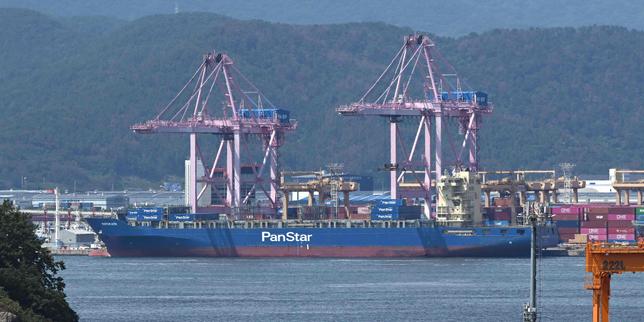
A standard mega-container vessel moving twenty-four thousand TEUs cannot sniff the Arctic. Draft restrictions, shifting underwater bathymetry, and the absolute scarcity of deep-water port infrastructure along the Siberian coastline mean you are capped at much smaller, specialized tonnage—such as the roughly 2,700-TEU vessel deployed for this latest high-profile test. Splitting a massive cargo haul into a fleet of smaller, reinforced ships instantly destroys economies of scale.
Furthermore, you cannot run a reliable, just-in-time global supply chain on a seasonal window. The Northern Sea Route remains choked by multi-year ice pack for the vast majority of the year. Even during the peak thaw in late summer, navigation demands mandatory Russian icebreaker escorts, specialized hull classifications, and crew certifications that turn standard operations into a bureaucratic and financial nightmare.
The Insurance Trap And Sanctions Reality
Let us talk about risk. I have watched risk-management teams lose sleep over far less than what a polar transit demands.
Marine underwriters are not romantic explorers; they are actuarial cold-blooded realists. Operating a commercial fleet through Russian Arctic waters right now introduces a compliance and liability matrix that most major Western corporations refuse to touch. If a vessel loses power or takes hull damage off the coast of Siberia, relying on local rescue assets involves navigating severe international sanctions and geopolitical distrust.
Insurance quotes for polar routes reflect this compounding hazard. When you factor in the mandatory ice-class modifications, slower average speeds through ice-strewn channels, and eye-watering hull insurance, any savings on bunker fuel evaporate entirely. The unit transport cost per container on the Arctic route remains stubbornly higher than traditional southern lanes, even with mid-east maritime chokepoints temporarily disrupted.
The Wrong Question Entirely
People ask: Can the Arctic save global trade from Middle Eastern instability?
That question is fundamentally flawed. It assumes the primary bottleneck of modern trade is geographic rather than structural.
The real issue is that global logistics has spent decades optimizing for hyper-efficiency while completely stripping out redundancy. When the Suez or Hormuz acts up, the proven antidote is not pioneering hazardous passages through pristine polar ecosystems to appease political vanity projects. The answer is diversified routing like the Cape of Good Hope, multi-modal transport networks, and maintaining sensible buffer inventories.
South Korea's push to position Busan as an Arctic hub by 2030 is driven by domestic industrial policy and geopolitical posturing, not bottom-line commercial viability. Government-backed demonstration voyages can subsidize risks and award symbolic prizes, but they cannot rewrite the laws of marine engineering or override basic insurance mathematics.
Stop looking north for a quick fix. The future of reliable trade is built on operational resilience, not melting ice.