Every major newsroom just dusted off the exact same headline. Mahmoud Abbas postponed the Palestinian elections until September 2027, and the pundit class is clutching its pearls over another blow to Middle Eastern democracy.
They are reading the autopsy report and calling it a murder. For an alternative look, read: this related article.
The lazy consensus says a 90-year-old autocrat is clinging to power by kicking the democratic can down the road once again. That framing is comforting because it gives Western observers a simple villain and an easy fix. Just hold the vote. Restore legitimacy. Let the people speak.
Except there is no functioning state to govern, no unified electorate to poll, and no legal mechanism on earth that makes a 2027 ballot in Ramallah anything other than a theatrical performance. Focusing on the calendar date misses the entire structural collapse happening underneath it. Similar reporting on this trend has been published by Reuters.
The Myth of the Stolen Mandate
To understand why the September 2027 delay is a distraction, look at what an election actually requires. A legitimate national vote needs three non-negotiable pillars: territorial control, an enforceable legal framework, and a peaceful transfer of power.
Right now, the Palestinian Authority (PA) has none of them.
- Territorial fragmentation: The PA exercises limited administrative control over roughly 18 percent of the West Bank (Area A), shares security jurisdiction in another 22 percent (Area B), and has zero governance in Gaza or East Jerusalem.
- Institutional paralysis: The Palestinian Legislative Council (PLC) has not functioned since 2007 and was formally dissolved by Abbas's own Constitutional Court in 2018.
- Security dependency: The PA's survival relies directly on security coordination with Israel and donor funding from Brussels and Washington, not tax revenue from its citizens.
When journalists write that Abbas "delayed democracy," they imply a working democracy is sitting in a garage waiting for someone to turn the key. I have spent fifteen years analyzing governance structures across post-conflict zones, and I have watched international donors burn billions trying to force electoral cycles onto broken administrative shells. You cannot vote your way out of an institutional vacuum. Holding an election before establishing sovereign jurisdiction does not create legitimacy. It manufactures a proxy war with ballots.
Why September 2027 Is a Diplomatic Smoke Screen
Abbas did not pick September 2027 out of a hat, nor did he pick it to buy himself another ten months in the Muqata. He picked it to satisfy external creditors while avoiding an internal implosion.
European donors and Gulf states have conditioned reconstruction funds and diplomatic backing on "PA revitalization." To them, revitalization is synonymous with a date on a calendar. By announcing a fresh timeline, Ramallah checks the compliance box required to keep the diplomatic lifeline open without actually risking a ballot that would shatter the remaining administrative apparatus.
Consider what happens if Abbas holds that vote tomorrow.
First, Israel has historically refused to allow official PA ballot boxes inside East Jerusalem, citing sovereignty claims under the Jerusalem Law. In 2021, Abbas used that exact refusal as his official pretext to cancel the legislative vote. Nothing about Israel's posture on East Jerusalem has softened. If anything, the political reality on the ground makes East Jerusalem voting even less feasible today than it was five years ago.
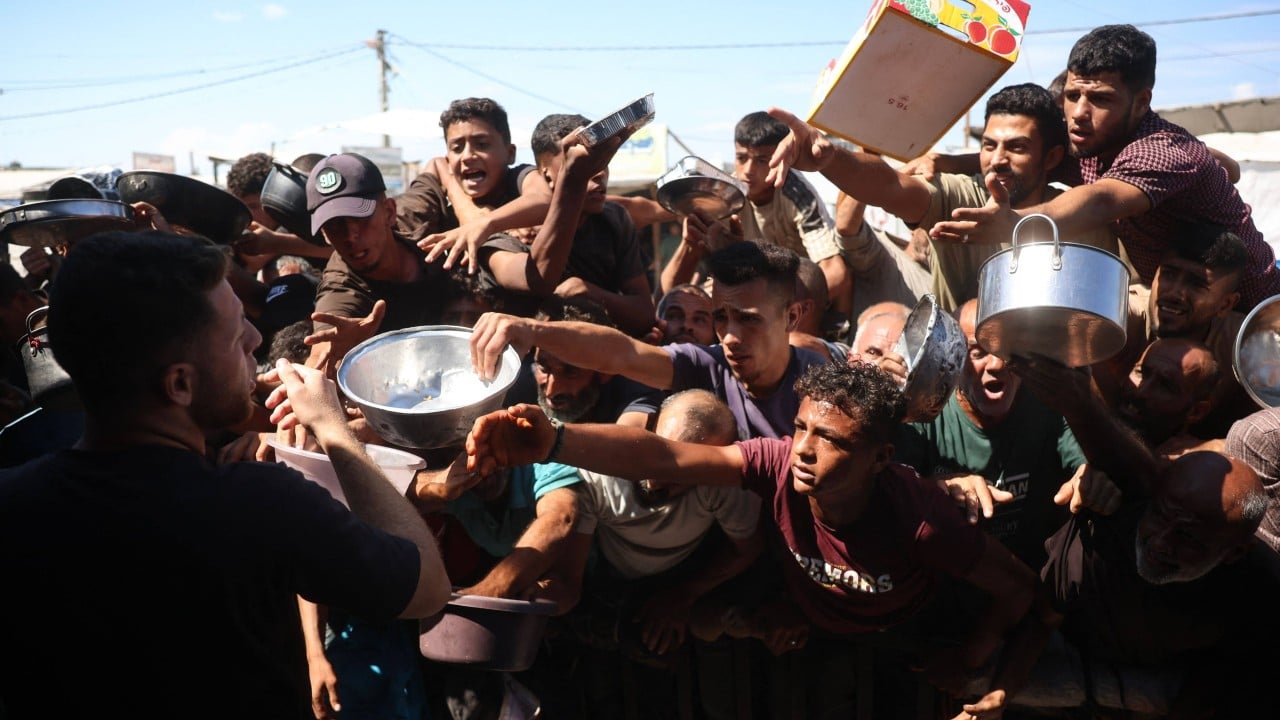
Second, look at Gaza. Two million people live in a territory devastated by war, lacking basic municipal infrastructure, let alone voter registries, polling stations, or independent election monitors. How exactly does the Central Elections Commission conduct a free and fair ballot among a displaced population living in tent cities? They cannot. Any election held without Gaza and East Jerusalem permanently codifies the geographic partition of the Palestinian people.
The mainstream press treats the postponement as an act of cowardice. In reality, holding a partial election under current conditions would legally ratify the permanent loss of East Jerusalem and the permanent separation of Gaza.
The Questions Everybody Asks (And Why They Are Wrong)
When news like this breaks, search engines light up with the same predictable queries. Every single one of them rests on a flawed premise.
"Why doesn't the international community force Abbas to step down?"
Because nobody wants the bill for what comes next. If Abbas resigns tomorrow without an agreed succession mechanism, Article 37 of the Palestinian Basic Law dictates that the Speaker of the Palestinian Legislative Council becomes interim president for 60 days. Since the PLC was dissolved in 2018, that office is legally contested, and the rival claimant sits in the Hamas-aligned camp.
Western diplomats know this. Behind closed doors in Washington and Brussels, officials complain endlessly about Ramallah's corruption and geriatric leadership. Yet when pressed on alternatives, they go silent. They prefer a predictable, unpopular caretaker over a constitutional crisis that triggers immediate collapse of the West Bank security apparatus.
"Would a new election actually bring fresh, moderate leadership to power?"
Unlikely. Political scientists like Nathan Brown and Khalil Shikaki have documented this dynamic for two decades: in non-sovereign environments under prolonged occupation, elections do not reward technocratic reformers. They reward resistance movements or entrenched patronage networks.
Imagine a scenario where a progressive, anti-corruption technocrat wins a majority in Ramallah on a platform of municipal reform and economic transparency. On day one in office, that leader still cannot control borders, cannot issue currency, cannot build a road in Area C without an Israeli permit, and cannot pay civil servants if tax clearances are withheld. Voters quickly realize the ballot changed the face behind the desk without changing a single constraint on their daily lives. The result is deeper cynicism, not democratic renewal.
"Does delaying the vote until 2027 violate Palestinian law?"
Strictly speaking, the constitutional clock ran out in 2009 when Abbas’s original four-year presidential term expired. Everything since then has operated on presidential decrees and emergency legal interpretations. Arguing over whether a 2027 decree violates a constitutional timeline that has been suspended for seventeen years is like arguing about speeding tickets during an earthquake. The legal baseline ceased to exist long ago.
The Structural Trap Nobody Wants to Admit
Let us be brutally honest about the trade-off here. There is a massive downside to endless postponements, and pretending otherwise would be dishonest.
Every year without a ballot widens the generational chasm. Over 60 percent of Palestinians in the West Bank and Gaza are under the age of 30. None of them have ever voted in a national presidential or legislative election. To an entire generation, the Palestinian Authority does not look like a liberation movement or a nascent state. It looks like a closed corporate board managing municipal services and policing its own population on behalf of outside powers.
That legitimacy deficit is real, and it is terminal over a long enough timeline. You cannot run a society indefinitely by decree without breeding total alienation.
Yet rushing to the polls in 2027 will not cure that alienation. When elections are held in fractured territories without sovereign authority, they become zero-sum battles over shrinking spoils. Look at the 2006 legislative election. International observers praised it as a model of procedural transparency. Eighteen months later, Fatah and Hamas were fighting a bloody civil war in the streets of Gaza, splitting the territory in two for twenty years. Procedural perfection at the ballot box cannot survive structural dysfunction in the street.
What Actually Needs to Happen Before a Single Ballot Is Printed
If Western policymakers, journalists, and regional brokers actually care about Palestinian self-determination rather than checking a procedural box, they need to stop obsessing over September 2027 and focus on institutional reconstruction first.
- Rebuild bottom-up municipal legitimacy. Local council elections carry real stakes over water, zoning, waste management, and local commerce without triggering geopolitical vetoes over East Jerusalem or Gaza. Strong mayors create accountable governance faster than a paralyzed parliament ever will.
- Reconstitute a unified legal framework. Before asking voters to choose representatives, factions and legal scholars must establish a clear succession law and an independent judiciary that is not subject to executive dissolution.
- Separate administrative governance from national liberation. The Palestine Liberation Organization (PLO) and the Palestinian Authority were designed for different jobs. Merging them turned a national movement into a municipal contractor. Reforming the PLO's representative bodies gives the diaspora and fragmented territories a political voice without pretending a local authority possesses state sovereignty.
The September 2027 date is a mirage designed to buy diplomatic breathing room for leaders who have run out of answers. Stop watching the calendar in Ramallah, because democracy does not start when someone drops a piece of paper into a plastic box—it starts when the people winning those boxes actually have the power to govern.


