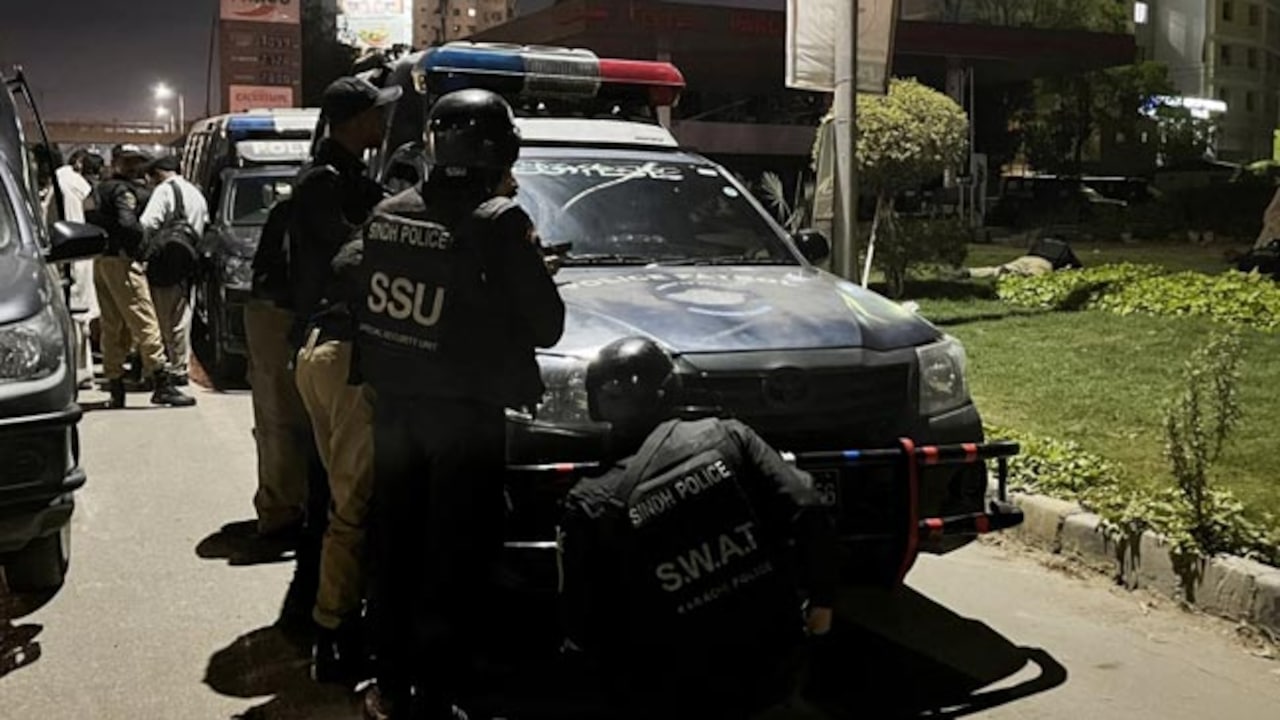
Eleven dead. A senior officer gone. Another "tragic ambush" in Khyber Pakhtunkhwa (KP), and the mainstream press immediately reaches for the same tired, mournful template.
They count the bodies. They quote a weeping relative or a boilerplate condemnation from Islamabad. They imply that brave men simply walked into a patch of bad luck in a lawless frontier.
That framing is not just lazy. It is complicit.
When a senior police official—someone like a Deputy Superintendent of Police (DSP)—dies alongside ten subordinates in an ambush in districts like Lakki Marwat, Tank, or Bannu, you are not looking at a random act of terror. You are looking at an institutional failure of basic counter-insurgency doctrine. Calling it a tragedy absolves the architects of a strategy that sends civilian law enforcement into a conventional warzone with soft-skinned vehicles, predictable patrol routes, and zero aerial reconnaissance.
The Lie of the Civilian Policing Model
Mainstream coverage treats the Khyber Pakhtunkhwa Police like a standard municipal force dealing with an unusually violent crime wave.
That is a fatal misreading of the battlefield. In the merged districts (formerly the Federally Administered Tribal Areas, or FATA) and the southern belt of KP, militants—predominantly the Tehrik-i-Taliban Pakistan (TTP) and its splinter factions—do not operate as street criminals. They operate as light infantry. They carry thermal scopes, M4 carbines left behind in Afghanistan, armor-piercing rounds, and rocket-propelled grenades (RPGs).
Yet, state policy continues to use civilian police as the primary tripwire.
I have spent years analyzing security breakdowns across South Asia, and the pattern is always identical. Politicians want the optics of "normalcy." Deploying the regular army looks like martial law; deploying the police looks like civil governance. So, decision-makers push under-equipped constables to the front lines to maintain an illusion of state control.
The result is predictable. A senior officer moves in a standard single-cabin pickup or an unarmored sedan. A militant spotter on a ridge—often using nothing more than a cheap commercial drone or a basic mobile network—tracks the convoy. By the time the police enter a choke point, the kill zone is already set.
Why Senior Officers Keep Dying on the Front Lines
Notice the headline pattern: "Senior Cop Among 11 Killed."
Why was a senior officer in the kill zone in the first place? In functional tactical doctrines, senior commanders do not ride in the lead or center vehicles of a routine road movement through contested territory unless it is a specialized strike operation.
In KP, two cultural and structural flaws force senior officers into lethal exposure:
- The Performative Leadership Trap: After an initial attack on a checkpoint or a remote station, senior officers rush to the scene to demonstrate bravery and boost morale. Militants know this. They routinely execute a minor strike—a grenade toss or harassing fire—specifically to bait a senior commander into rushing down a single, un-swept road. The main ambush is waiting for the relief column.
- Broken Command-and-Control: Poor encrypted communications force officers to physically travel to forward posts to inspect readiness and coordinate local operations. When your radio network is compromised or dead, your senior leadership becomes your courier service.
Dismantling the "Intelligence Failure" Excuse
Every time a double-digit casualty event hits KP, anonymous security sources whisper the same phrase to compliant reporters: "It was an intelligence failure."
Stop buying that excuse. You do not need human intelligence (HUMINT) or signals interception to know that moving eleven men in thin-skinned trucks down a predictable highway in Dera Ismail Khan or Kurram after dark is suicidal.
That is not an intelligence failure. That is an operational discipline failure.
| Standard Media Narrative | Tactical Reality on the Ground |
|---|---|
| "Surprise ambush" | Predictable movement along un-cleared, recurring transit routes. |
| "Outnumbered by terrorists" | Outgunned due to lack of mine-resistant ambush-protected (MRAP) vehicles and counter-drone tech. |
| "Intelligence failure" | Refusal to enforce basic convoy spacing, advance scouting, and operational security (OPSEC). |
| "Cowardly attack" | Calculated asymmetric warfare designed to decapitate local police leadership and collapse morale. |
Counter-insurgency theorists from David Galula to David Kilcullen have hammered home a singular rule for decades: you cannot hold territory with forces that cannot survive contact. If your police force has to lock itself inside fortified stations at sunset because the roads belong to insurgents, the state does not hold the territory. Pretending otherwise by running daytime administrative convoys simply feeds men into a meat grinder.
The Questions Nobody Asks After an Ambush
When readers search for news on these attacks, they usually ask: Why are attacks increasing in Khyber Pakhtunkhwa? or How many militants were killed in retaliation?
Both questions miss the structural rot entirely.
1. Why are attacks surging?
Everyone points to the 2021 Taliban takeover in Kabul and the subsequent collapse of Islamabad's disastrous "peace talks" with the TTP. While true, that is only half the story. The real accelerator is the 2018 merger of FATA into Khyber Pakhtunkhwa.
The merger abolished the colonial-era Frontier Crimes Regulation (FCR) and extended regular policing and judicial systems into tribal regions—on paper. In reality, the state dismantled the old tribal levy and khassadar intelligence networks without funding, training, or arming the regular KP Police to fill the vacuum. You cannot slap a police uniform on a legacy levy officer, hand him a decades-old Kalashnikov, and expect him to defeat battle-hardened insurgents.
2. Does retaliation work?
Following the burial of the eleven policemen, the state inevitably announces "intelligence-based operations" (IBOs) and claims several militants were neutralized.
Does it stop the next ambush? Never. Retaliatory sweeps after an ambush are reactive theater. Militants disperse into mountainous terrain or across porous borders within hours of a strike. Bombing an empty compound or arresting low-level facilitators three days later does nothing to fix the vulnerability of the next police convoy driving down the Indus Highway.
The Uncomfortable Truth About Fixing This
If Islamabad and Peshawar actually wanted to stop burying senior police officers, they would have to make three deeply unpopular decisions tomorrow.
First, suspend routine civilian policing in high-threat zones. Acknowledge reality. Districts experiencing daily RPG and sniper attacks are active combat zones, not municipal precincts. Pull regular police back to fortified urban centers and hand rural perimeter security exclusively to mechanized paramilitary units (like the Frontier Corps) equipped with armored personnel carriers and heavy suppressive firepower.
Second, ban senior officers from administrative road travel in red zones. Use aerial transport, hardened armored vehicles with electronic jamming suites, or decentralized command. Stop letting bravado dictate tactical movement.
Third, audit the Counter-Terrorism Department (CTD) budget transparently. Billions of rupees have been allocated to counter-terrorism over the last decade. Yet, front-line constables in KP still crowd into unarmored pickups with zero night-vision capability and inadequate body armor. Follow the procurement money before buying another headline about "modernizing the force."
Admittedly, pulling regular police back from rural checkpoints carries a severe political cost. Critics will scream that the state is ceding territory to extremists. Local populations will feel abandoned. It looks like a retreat.
Let them scream. Optics do not stop 7.62mm armor-piercing rounds.
Every time a newspaper prints an obituary for eleven dead policemen and calls it a "tragedy," they validate a broken doctrine. A hurricane is a tragedy. A structural collapse you were warned about for five years is negligence. Until the people ordering those convoys onto the road are held as accountable as the militants pulling the triggers, keep space open on the front page for the next eleven names.