The headlines practically write themselves whenever someone gets bonked on the head at a modern entertainment venue. Headline writers get easy clicks, personal injury lawyers salivate at deep corporate pockets, and the public nods along with a cozy consensus: big corporate venue fails to protect innocent patrons.
That consensus is lazy. Worse than lazy, it is wrong.
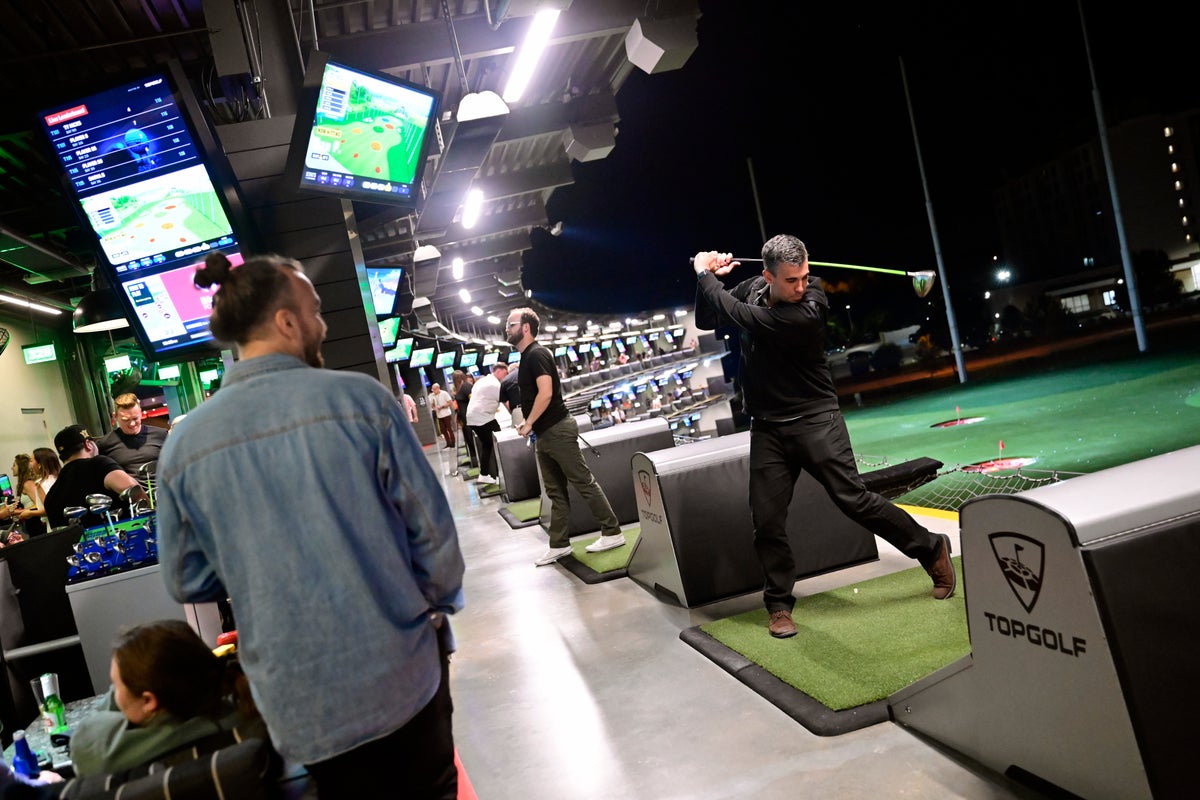
When reports surfaced about Topgolf facing lawsuits over patrons struck by errant golf clubs, the mainstream reaction was immediate. Critics demanded stricter rules, higher netting, wider bays, and more aggressive employee monitoring. They framed the issue as a failure of facility safety and corporate oversight.
Here is the truth nobody in liability law or corporate PR wants to say out loud: no amount of architectural redesign can engineer away sheer human incompetence, alcohol-fueled overconfidence, and reckless disregard for basic physical space.
Topgolf does not have a safety problem. It has an audience problem.
The Illusion Of Absolute Corporate Responsibility
Personal injury litigation relies on a simple emotional trap: find a large company, find a damaged plaintiff, and convince a jury that the entity with the money should have magically prevented the injury.
In standard sports venues, the legal doctrine of primary assumption of risk—often referred to in tort law as "The Baseball Rule"—has protected stadium operators for generations. If you sit behind third base and get hit by a foul ball, you generally cannot sue the stadium unless the operator breached standard safety measures (like failing to provide netting behind home plate). You chose to attend an inherently risky event.
Entertainment venues like Topgolf sit in a gray zone that plaintiff attorneys love to exploit. They are not pure athletic arenas, nor are they traditional bars. They are hybrid entertainment spaces where high-velocity physical activity meets bottomless pitchers of beer.
When an amateur golfer takes a wildly uncoordinated, full-speed swing and sends a driver spinning out of their grease-slicked, booze-soaked hands into the skull of the person standing behind them, who is actually at fault?
The mainstream media wants to blame the bay design. They want to blame the floor staff for not intervening before the swing occurred.
That is absurd.
A standard golf club weighs roughly one pound. Swung by an adult with terrible technique, the clubhead moves at anywhere from 60 to 100 miles per hour. The mechanical energy generated during a golf swing makes a flying club an unpredictable projectile. Expecting a minimum-wage bay host to spot the subtle body mechanics of a drunk guest five seconds before they lose grip on a 3-iron is an impossible expectation.
The Structural Mechanics Of Bay Safety
Let us dismantle the physical arguments surrounding these lawsuits with basic physics and geometry.
Critics argue that venue bays are built too close together or that safety zones are poorly marked. Yet, every single bay in these modern high-tech driving ranges is engineered around a specific swing radius. A standard driver measures approximately 45 inches. Even with an extended arm reach, the total physical radius of a swing envelope rarely exceeds six feet from the center of the mat.
The safety lines painted on the floor of these facilities are not decorative. They delineate clear physical boundaries.
- The Active Zone: The rubber mat where the player stands. Exactly one person belongs here at a time.
- The Buffer Zone: The space between the mat and the seating area, designed to absorb slight shifts in positioning.
- The Social Zone: The couch and table area set well behind the swing plane.
People do not get hit in the head because the bay is too small. People get hit in the head because they consciously step across marked red lines into a swinging physics hazard while holding a cocktail, or because the person swinging ignored basic spatial awareness.
Imagine a scenario where a person walks directly behind someone swinging an axe at a lumberyard, gets struck, and then sues the lumberyard for not building a glass cage around the chopping block. The court would throw the case out for gross comparative negligence. Yet, because golf is played on manicured turf with flashy lights and microchipped balls, we pretend the fundamental rules of human spatial awareness no longer apply.
The Danger Of Over-Regulating Social Entertainment
What happens if the critics get their way?
If courts force venues to eliminate every conceivable risk, the entire model breaks down. To guarantee zero club-throwing incidents, facilities would have to implement absurd measures:
- Physical Enclosures: Enclosing every bay in heavy netting or Plexiglas, turning a social group outing into isolation cubicles.
- Breathalyzer Requirements: Mandating sobriety tests before handing over a club, killing the hospitality revenue model that makes these venues profitable.
- Mandatory Helmet Directives: Turning a night out with friends into an industrial construction site experience.
If you make an entertainment venue completely idiot-proof, you destroy the exact atmosphere that makes people want to go there in the first place.
I have watched operators across the leisure and sports-tech sectors burn through millions of dollars trying to hedge against every edge-case liability scenario. The result is always the same: higher ticket prices, worse customer experience, degraded atmosphere, and zero drop in actual accidents. Why? Because reckless people always find new, creative ways to bypass safeguards.
Risk is a features-not-bugs reality of active entertainment. You cannot combine alcohol, sports equipment, and social gatherings without accepting a baseline risk of human failure.
The Strategic Shift Operators Must Actually Make
Instead of apologizing, cowering in court, or ruining the customer experience with oppressive safety cages, venue operators need to change their defensive strategy.
First, double down on explicit, unassailable comparative fault documentation. Digital waivers signed at check-in should not just be buried terms of service; they should explicitly highlight the kinetic danger of a golf club. When a guest steps onto the mat, they accept the physical reality of the sport.
Second, reframe the public narrative surrounding guest safety. When an injury happens, corporate leadership typically releases a sterile PR statement: "Safety is our top priority, and we are investigating the incident." This is defensive posture at its worst. It implies guilt. It implies a flaw in the system.
The correct, unapologetic response should be direct: "Our facilities meet or exceed all structural engineering standards. We provide clear safety boundaries and instructions. When guests ignore explicit safety lines, bypass clearly marked zones, or act recklessly with equipment, they place themselves and others at risk."
Shift the accountability back to the individual where it belongs.
Stop treating adult consumers like helpless toddlers who cannot comprehend that a metal pole swung at high speeds will hurt if it hits someone. Stop blaming the venue for the total absence of common sense.
If you stand behind someone taking a full swing with a steel rod, get hit, and expect a multi-million-dollar payout because you refused to look up from your phone, the fault is not in the facility's architecture. The fault is entirely yours.