Blaming Tehran for France’s spoiled yogurt and melted cheese is the ultimate geopolitical cop-out.
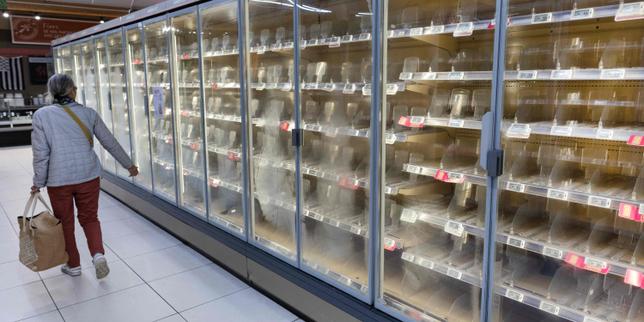
On the night of October 11, 2026, roughly 700 French retail locations—including Intermarché, Carrefour, Monoprix, and Coopérative U—watched their refrigeration units turn into ovens. Temperatures spiked to 50°C. In Normandy, some units hit 80°C. Tens of millions of euros in perishable inventory rotted overnight, equipment melted, and at least fifteen stores suffered literal fires. A month later, French Foreign Minister Jean-Noël Barrot summoned the Iranian ambassador, pointed the finger at the Islamic Revolutionary Guard Corps (IRGC) cyber unit Shahid Kaveh, and demanded European Union sanctions. Tehran, predictably, dismissed the charges as baseless. For a closer look into this area, we recommend: this related article.
And the mainstream press swallowed the diplomatic theater whole.
Every major outlet framed this as a terrifying leap in asymmetric warfare—a shadowy foreign adversary weaponizing the cold chain to starve Europe. That narrative is convenient for politicians in Paris who want cover for diplomatic escalation, and it is comforting for retail executives who want to play the victim. It is also completely missing the point. For broader information on this development, detailed reporting is available at MIT Technology Review.
Iran didn't break into France's critical food infrastructure. France left the front door wide open, taped the keys to the frame, and walked away.
The Myth of the Mastermind Nation-State
When a nation-state launches a sophisticated cyberattack, it burns zero-day exploits, deploys custom-compiled malware, and moves laterally through hardened enterprise networks. Look at Stuxnet. Look at Industroyer. Those operations required months of reconnaissance and millions of dollars in research and development to bypass air-gapped industrial environments.
Now look at what happened in France on October 11.
According to technical advisories from France’s own national cybersecurity response team, CERT-FR, the attackers didn't need zero-days. They didn't need state-sponsored genius. They simply accessed internet-facing web interfaces for Danfoss, Copeland, and Dixell industrial refrigeration controllers—many running outdated firmware with default administrative credentials—and toggled the defrost cycles to run indefinitely while disabling temperature alarms.
Let that sink in. Hundreds of commercial grocery stores connected high-voltage thermal equipment directly to the public internet without a Virtual Private Network (VPN), without network segmentation, and without changing the factory passwords.
I have spent fifteen years auditing operational technology (OT) networks, and I have watched billion-dollar retail chains blow millions on flashy endpoint detection software for their corporate laptops while leaving their store-level programmable logic controllers (PLCs) exposed on Shodan like a neon sign in an empty desert. Calling the October 11 incident a triumph of Iranian cyberwarfare is like calling a burglar a master safecracker because you left your cash register on the sidewalk.
Saher Naumaan, a senior threat researcher at Proofpoint, nailed the actual takeaway when she noted that this sabotage measures far less about Iran's cyber capabilities than it does about how recklessly exposed these systems are. If Shahid Kaveh hadn't flipped those switches, a bored teenager in a basement or a low-tier ransomware affiliate would have done it by Christmas.
Why Diplomatic Sanctions Will Not Cool a Single Freezer
Paris is currently lobbying Brussels to slap fresh sanctions on Tehran by December 14. The Paris Public Prosecutor’s Office has requested international arrest warrants for two Shahid Kaveh officials.
Good luck with that.
Sanctioning IRGC officers who never travel to Europe and hold no Western assets does precisely nothing to secure a single supermarket in Montreuil or Alsace. It is political theater designed to project strength while leaving the underlying attack surface completely untouched. Worse, it creates a dangerous illusion of action. When governments treat basic industrial negligence as an act of foreign espionage, corporate boards stop treating it as an operational failure.
Consider what happened just weeks after the French incident. On November 2, identical temperature spikes hit grocery stores across Belgium, Sweden, Ireland, Luxembourg, and Estonia. Even a major French blood bank had to scramble to relocate lifesaving blood supplies when its refrigeration controllers were tampered with. Why did the attack spread so effortlessly across borders? Because European facility managers use the exact same off-the-shelf controllers, installed by the exact same third-party HVAC contractors, using the exact same lazy network configurations.
The Real Villain Is the Third-Party HVAC Contractor
If you want to understand why modern retail infrastructure is so fragile, stop looking at Tehran and start looking at how a supermarket gets built.
Retail chains do not configure their own refrigeration networks. They outsource installation and maintenance to regional heating, ventilation, and air conditioning (HVAC) contractors. Those contractors hate driving two hours in the middle of the night to check a compressor fault. So, to save on truck rolls and maintenance costs, they hook the Danfoss or Dixell controller up to a cellular modem or the store's commercial broadband router, forward a port to the public internet, and leave the default password intact so any technician on call can log in from an iPad.
Nobody tells the corporate Chief Information Security Officer (CISO). The IT department doesn't even know the refrigeration system is on the network because it sits on a separate vendor-managed connection.
Until October 11, that setup saved retail chains a fortune in maintenance overhead. On October 12, it cost them tens of millions of euros in spoiled meat, dairy, and fire-damaged aisles.
The Hard Truth About Operational Technology Security
To fix this, you have to abandon the comforting lie that cybersecurity is an IT problem. It is a physical engineering and procurement problem.
Here is what happens when you actually try to lock down distributed retail infrastructure—and why most companies refuse to do it:
- Air-gapping is dead, and VPNs are a crutch. CERT-FR immediately ordered operators to pull these controllers off the public internet and put them behind secure VPNs. That is a necessary triage step, not a cure. If a third-party contractor gets phished, a flat VPN just gives the attacker a cleaner tunnel straight into every store in the country. True security requires zero-trust network access (ZTNA) with hardware-enforced micro-segmentation, isolating every single store's OT environment from both the public web and the corporate back office.
- Firmware patching breaks physical machines. In corporate IT, you push a Windows update on Tuesday and reboot. In operational technology, pushing a firmware patch to a twenty-year-old Dixell controller can brick the device, shutting down the freezers anyway. Many of the systems hit in France were running obsolete software because replacing them requires tearing out physical wiring and shutting down aisles during business hours.
- Physical fail-safes were engineered out to save pennies. Why was software able to force a refrigeration unit to heat up to 80°C until it caught fire? Because manufacturers and installers replaced independent mechanical thermal cutoffs with software-defined limits. A $12 bimetallic thermostat wired directly into the defrost heater circuit would have physically broken the electrical connection at 15°C, regardless of what commands an Iranian hacker sent over TCP/IP.
Admit the Downside of Doing It Right
Let’s be brutally honest about the cost of fixing this. Hardening distributed physical infrastructure is slow, expensive, and deeply unpopular with operations teams.
If a supermarket chain strips away remote contractor access, enforces hardware-level multi-factor authentication on every store gateway, and retrofits mechanical thermal kill-switches onto thousands of display cases, maintenance costs will spike. Store managers will wait longer for repairs. Capital expenditure budgets will bleed millions of euros on upgrades that generate zero additional foot traffic or margin.
Executives hate spending money on invisible risk—until the sprinklers go off in the frozen food aisle.
France’s intelligence services, ANSSI and the DGSI, likely got their attribution right. Between the digital infrastructure trails, links to front groups like "CyberAveng3rs" and "Cyber Isnaad Front," and Farsi artifacts in the intrusion logs, Tehran’s fingerprints are all over this campaign. Iran has every motive to test asymmetric pressure points across Europe following the broader geopolitical escalations of 2026.
Recognizing that Tehran pulled the trigger does not absolve Paris or Europe's retail giants of handing them the loaded gun.
What Happens When The Next Target Isn't Yogurt
The October supermarket hacks were a gift. Nobody died. No hospitals lost power. A few hundred grocery stores threw away spoiled milk and filed insurance claims.
Next time, those exact same internet-exposed industrial controllers won't be sitting in a Carrefour in Normandy. They are already sitting in pharmaceutical cold-storage warehouses, municipal water treatment plants, and hospital blood banks—as France narrowly learned during the November 2 wave. Those facilities rely on the exact same brand of controllers, installed by the exact same contractors, protected by the exact same non-existent security hygiene.
Stop waiting for European foreign ministers to draft another round of toothless sanctions in Brussels. Rip the cellular modems out of the utility closets, change the factory passwords, and put physical thermal breakers back on the hardware—before the next defrost cycle melts something you cannot replace.