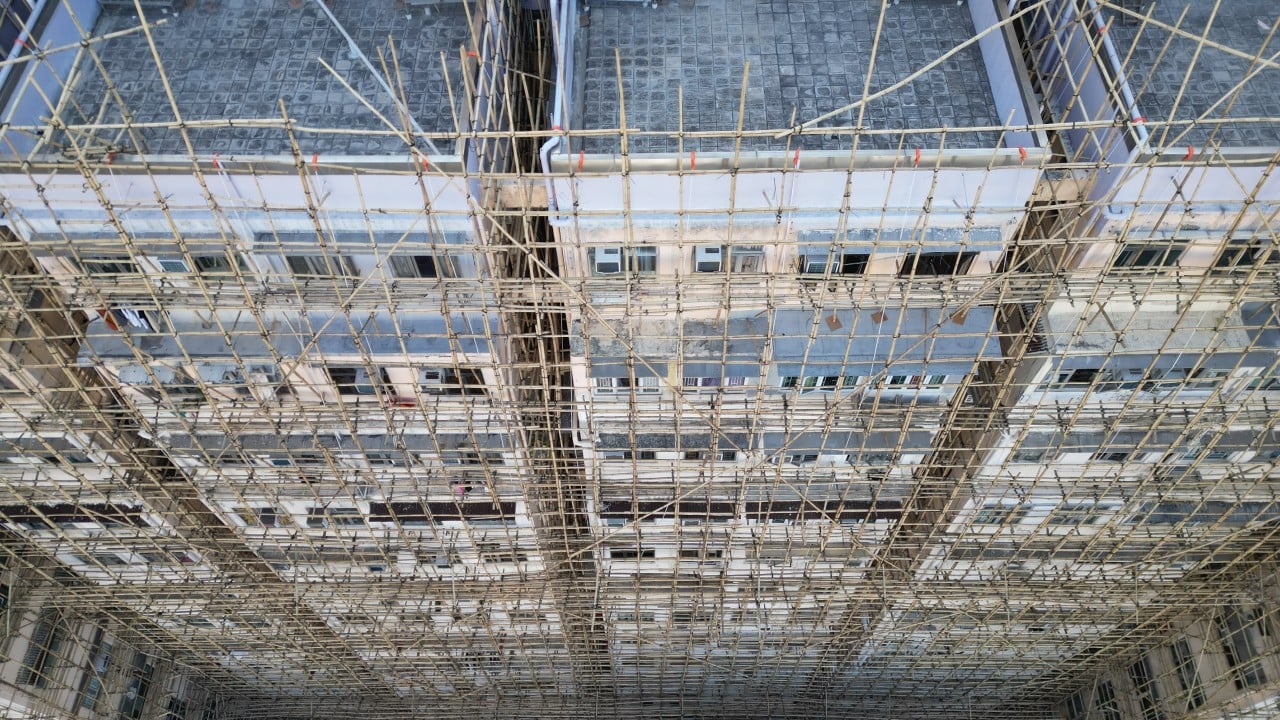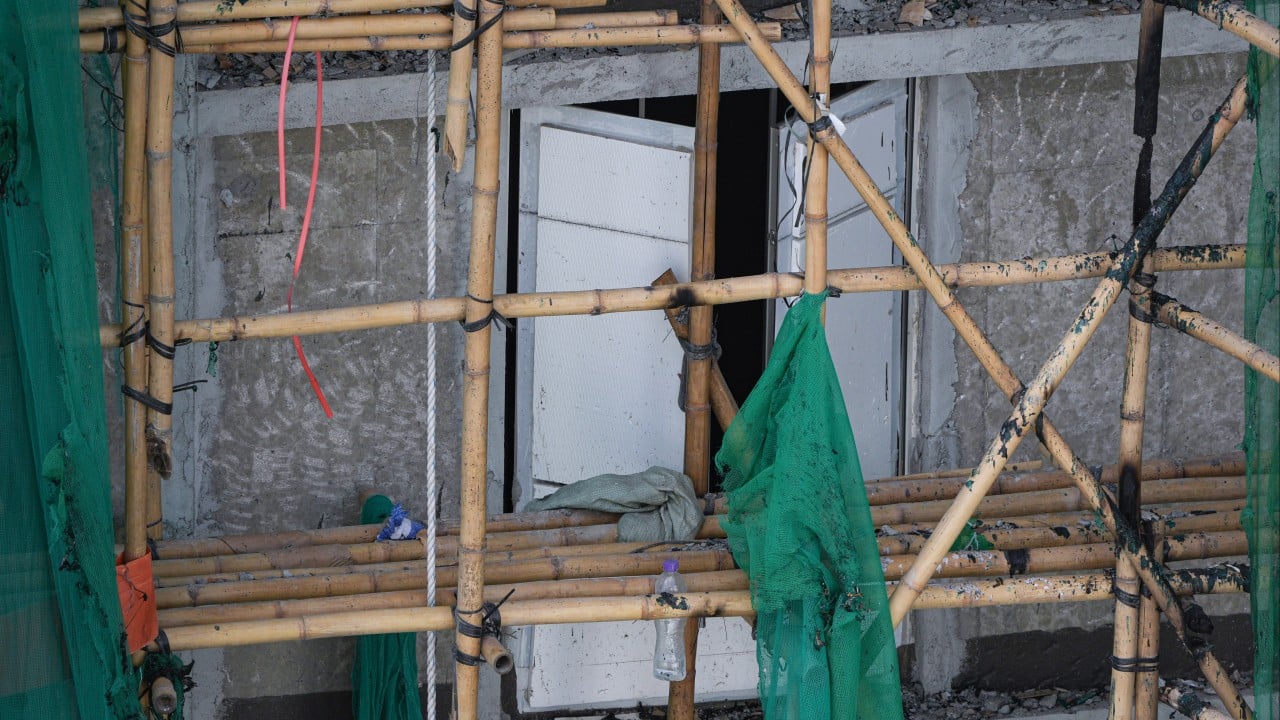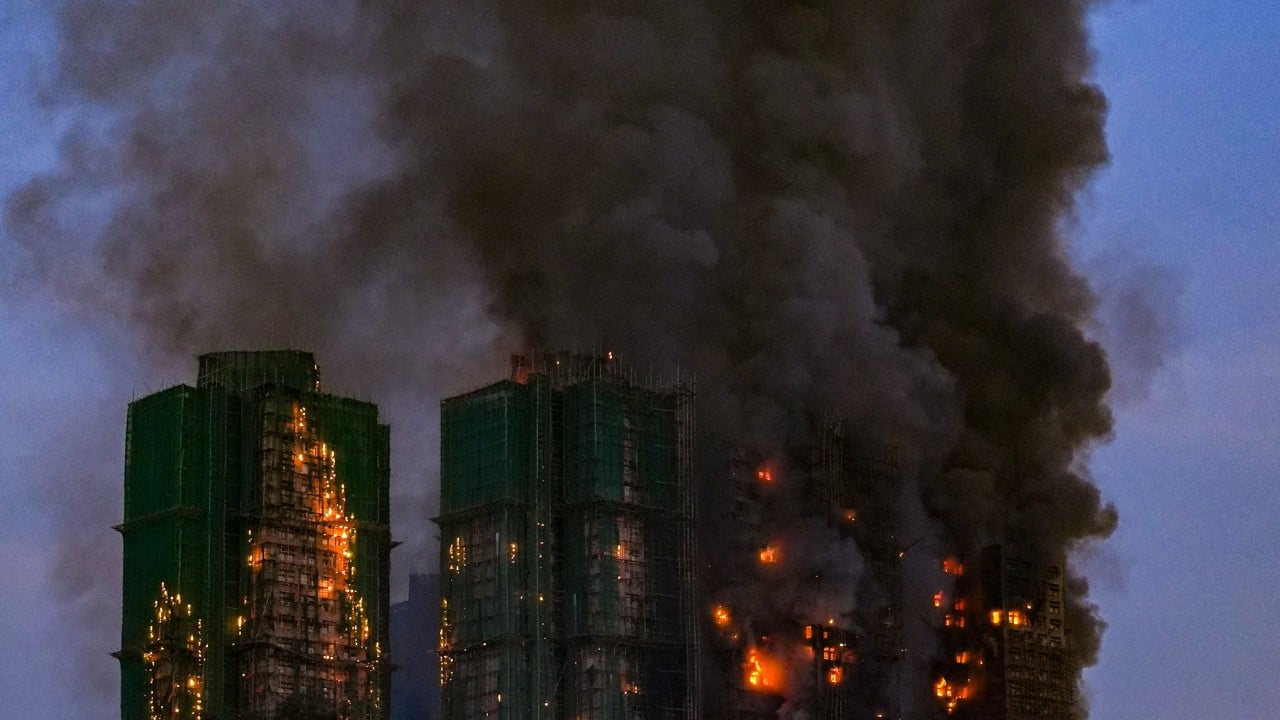
Blaming an "honour system" for building safety failures in Tai Po is the laziest journalistic take of the decade.
When a fire hazard report drops, the conventional media playbook is painfully predictable. Find a regulatory gap. Call it a broken trust mechanism. Demand more inspectors, thicker rulebooks, and heavier fines. Everyone nods, feels morally superior, and waits three years for the exact same violations to reappear under a slightly different bureaucratic acronym.
If you actually work in property management, fire engineering, or urban compliance, you know the truth. The "honour system" didn't fail in Tai Po. The economics of urban maintenance did. Calling self-declaration a naive trust exercise completely misses why landlords, incorporated owners, and contractors cut corners in the first place.
The Myth of the Naive Regulator
Let's dismantle the primary premise of the mainstream narrative right now. Regulators in Hong Kong—specifically the Fire Services Department (FSD) and the Buildings Department (BD)—are not wide-eyed optimists who genuinely believe every building owner is a saint.
In fire safety engineering, self-certification and third-party declaration models exist for one mathematically undeniable reason: inspection bottlenecks.
Hong Kong possesses tens of thousands of aging composite and industrial buildings, many concentrated in older New Territories hubs like Tai Po. If the government banned self-declaration tomorrow and mandated direct, physical state inspection for every fire damper, hose reel, emergency light, and fire-rated door before a certificate could be issued, the city's property market would freeze overnight. You cannot hire enough qualified government surveyors to inspect every square meter of aging concrete on an annual cycle without bankrupting the municipal budget.
Therefore, "honour systems"—formally known as statutory self-certification or Registered Fire Service Installation Contractor (RFSIC) endorsements—are not acts of blind faith. They are risk-triage mechanisms. They shift the legal liability from the state onto licensed professionals and property owners.
When a report says these systems were "exploited," it frames the issue as a moral failing of bad actors taking advantage of nice bureaucrats. Wrong. It is a predictable market response to asymmetric penalties and cash-flow constraints.
Why Building Owners Actually Ignore Fire Orders
I have sat in countless Incorporated Owners (IO) meetings in aging districts. If you want to understand why fire risks go unchecked in Tai Po, stop reading press releases and look at a building's reserve fund balance sheet.
Most older residential and mixed-use blocks in Tai Po suffer from a lethal combination of factors:
- Fragmented Ownership: When a single building has 300 individual flat owners, getting a quorum to approve a multi-million-dollar fire services upgrade is harder than passing legislation in a hung parliament.
- Aging Infrastructure: Retrofitting 1970s and 1980s buildings to meet modern code—such as installing pressurized staircases, upgraded sprinkler tanks, or fire-resisting enclosures—often runs into structural impossibilities. You cannot magically conjure space for a massive water tank on a roof that wasn't engineered to bear the dead load.
- The Sticker Shock of Compliance: When an IO receives a Fire Safety Direction, the initial reaction isn't malicious disregard. It is financial panic. Retirees on fixed incomes suddenly face a mandatory levy of HK$50,000 to HK$100,000 per household just to bring common areas up to code.
So what happens? They stall. They hire the cheapest contractor who promises to sign off on the paperwork without tearing up the lobby. They treat statutory compliance as a box-ticking exercise because the immediate pain of paying for real engineering outweighs the abstract statistical probability of a catastrophic fire.
The Real Mechanics of "Paper Compliance"
To understand how fire risks fester under a declaration regime, you have to understand the difference between prescriptive compliance and functional fire safety.
- The FS 251 Trap: Under Hong Kong's Fire Service (Installations and Equipment) Regulations, owners must have their installations inspected at least once every 12 months by a Registered Fire Service Installation Contractor, who then issues a Certificate of Fire Service Installations and Equipment (Form FS 251).
- The Contractor Squeeze: Because owners shop strictly on price for annual renewals, RFSICs operate on razor-thin margins. A contractor who flags every minor defect and demands expensive remedial work gets fired next year. A contractor who overlooks a jammed fire door or a painted-over sprinkler head keeps the contract.
- The Enforcement Lag: Even when defects are reported to the authorities, the legal machinery moves at a glacial pace. Issuing warning letters, granting extensions for "genuine hardship," and prosecuting non-compliant owners in Magistrates' Courts takes years.
Think about the incentive structure here. If delaying a HK$3 million fire upgrade saves a building's owners money today, and the eventual court fine for non-compliance is HK$20,000—less than the legal fees to fight it—rational economic actors will choose the fine every single time.
That isn't an "honour system" being exploited. That is a broken pricing model for risk.
People Also Ask: Dismantling the Public's Questions
Whenever a report like the Tai Po fire risk audit hits the headlines, the public asks the exact same three questions. Every single one of them is built on a flawed assumption.
Why doesn't the government just shut down buildings that fail fire inspections?
Because evicting thousands of working-class residents or shutting down hundreds of small ground-floor businesses in Tai Po creates an immediate housing and economic crisis. Politicians and bureaucrats will never trigger mass homelessness to enforce a technical fire code violation unless a building is actively on the verge of structural collapse. Evacuation is a nuclear option that regulators cannot realistically deploy at scale.
Why don't we impose massive jail sentences on negligent landlords?
Criminalizing bureaucratic delays sounds great in a newspaper editorial, but it fails in court. In multi-owner buildings, who goes to jail? The 82-year-old volunteer chairman of the Incorporated Owners who works for free and couldn't get his neighbors to pay their management fees? If you start throwing volunteer IO committee members in prison, nobody will ever serve on a building committee again, leaving thousands of buildings completely unmanaged.
Can't smart technology and IoT sensors solve the inspection gap?
Tech evangelists love pitching cloud-connected smoke detectors and automated pressure gauges as the cure for human corruption. Imagine a scenario where every building in Tai Po is wired with real-time IoT fire sensors reporting directly to the Fire Services Department. Sounds brilliant—until you realize that the exact same owners who refuse to pay HK$500 to fix a broken door closer will certainly refuse to pay monthly SaaS subscriptions, sensor battery replacements, and network maintenance fees. Technology cannot fix a governance and funding deficit.
The Uncomfortable Truth About Risk Tolerance
Here is the part that civil engineers know and politicians refuse to say out loud: Zero risk is economically impossible.
Every urban environment operates on an unspoken social contract regarding acceptable risk. In ultra-dense cities like Hong Kong, older districts like Tai Po were built under historical codes that prioritized rapid housing construction over modern compartmentation standards.
When commentators scream that "fire risks went unchecked," they imply that an omniscient state apparatus could—and should—eliminate every blocked corridor, wedged-open fire door, and expired extinguisher across thousands of private properties simultaneously.
It cannot. Even if you doubled the size of the Fire Services Department tomorrow, an inspector can walk out of a building at 2:00 PM after certifying a pristine, unobstructed escape route, and by 2:15 PM a shopkeeper will stack cardboard boxes in front of the exit.
The Downside of My Own Argument
Before you accuse me of defending negligent landlords, let's be brutally honest about the flaw in dismantling self-certification critiques: deregulation and economic pragmatism do not put out fires.
When you accept that enforcement will always lag behind reality, and when you acknowledge that older buildings cannot easily afford retrofits, you are inherently accepting a higher baseline of physical danger. In dense vertical living, a single unchecked electrical fault in a subdivided flat or a bridged-open smoke door in a stairwell turns a minor kitchen fire into a mass-casualty chimney effect within four minutes.
Relying purely on market incentives fails miserably in low-income or aging buildings because the people bearing the physical risk (tenants and elderly residents) often have zero control over the capital expenditure decisions made by absentee landlords or deadlocked committees. If we abandon strict regulatory pressure just because it is economically inconvenient, people die.
How to Actually Fix Building Fire Safety
If we want to stop reading the exact same shock-horror headlines about Tai Po in 2028, we have to stop treating fire safety as a policing problem and start treating it as a financial engineering and insurance problem.
1. Tie Fire Compliance Directly to Property Insurance and Mortgages
The government is terrible at collecting fines, but banks and insurers are ruthless. Make a clean, verified Form FS 251—backed by random, high-penalty state audits of the signing contractors—a mandatory condition for valid building fire insurance and mortgage refinancing. If a building's management lets its fire systems rot, the insurer voids coverage, triggering an immediate technical default on mortgages. Watch how fast an Incorporated Owners committee finds the money for sprinklers when the banks threaten to call in their loans.
2. Strip Licenses, Not Fines, From Rubber-Stamping Contractors
Stop fining property owners pennies and start executing the professional livelihoods of the contractors who falsify reports. If a Registered Fire Service Installation Contractor signs off on a building that is subsequently found to have blatant, pre-existing structural fire defects, revoke their license permanently on the first offense. When the penalty is total career destruction rather than a minor fine, the market for cheap, fake inspections disappears overnight.
3. Replace Blanket Retrofits with Performance-Based Engineering
Stop forcing 45-year-old Tai Po buildings to comply with rigid, modern prescriptive codes that require impossible structural alterations. Adopt aggressive performance-based fire engineering standards. Allow engineers to use targeted, cost-effective mitigations—like localized misting systems, upgraded addressable alarms, and self-closing magnetic door holders—that achieve equivalent life-safety outcomes at 30% of the construction cost.
4. Create a Revolving State Infrastructure Loan Fund
Grants take too long to approve and encourage owners to wait for government handouts. Instead, establish a rapid-deployment state credit facility that automatically funds mandatory fire upgrades for deadlocked buildings, placing a senior statutory lien directly onto the property titles. The government gets paid back with interest when the flats are sold or transferred, bypassing the IO committee paralysis entirely.
Stop Chasing Ghosts
The Tai Po report did not uncover a conspiracy of rule-breakers exploiting a naive honor system. It exposed the predictable collision between 21st-century safety standards, 20th-century concrete, and broken financial incentives.
You can hire a thousand more inspectors and write ten thousand new regulations, and buildings will still burn if the cost of compliance exceeds the penalty for negligence. Fix the money, weaponize the insurance market, and hold the certifying engineers' licenses to the fire—or get ready to print the exact same outrage story all over again.