Every conventional commentary on South Asia's recurring energy crunches points an exhausted finger at the Persian Gulf. When maritime choke points narrow or regional tensions flare, analysts rush to publish identical diagnoses: Islamabad and Dhaka are helpless victims of geographic misfortune, starved of liquefied natural gas by forces entirely outside their control.
It is a comfortable narrative. It absolves local planners of decades of institutional neglect and structural economic failure. It is also fundamentally wrong.
The energy crunches gripping Pakistan and Bangladesh are not imported anomalies manufactured in Middle Eastern boardrooms. They are the predictable, mathematical outcome of chronic policy evasion. For years, energy ministries in both capitals chose to ignore domestic structural imbalances, treating imported fossil fuels as an infinite safety net while systematically dismantling local gas exploration incentives and ignoring grid modernization. When spot prices spike past twenty dollars per million British thermal units or bids hit thirty-one dollars, crying foul over geopolitical friction is a convenient way to mask administrative bankruptcy.
The Myth Of The Imported Shock
To understand why blaming the Gulf is a lazy intellectual cop-out, look past the headlines about shipping lanes and examine the balance sheets.
Pakistan sits on massive domestic hydrocarbon reserves in its southern and western basins, yet chronic regulatory paralysis, low investor confidence, and crushing circular debt have choked off local exploration. Instead of fixing upstream pricing mechanisms that make domestic extraction economically viable, state-owned entities doubled down on long-term LNG commitments that assumed perpetual cheap supply. When those assumptions broke, the system buckled. Islamabad’s recent scrambles to reject spot cargo bids or renegotiate quotas with suppliers like QatarEnergy reveal an acute structural rigidity, not just a temporary supply squeeze.
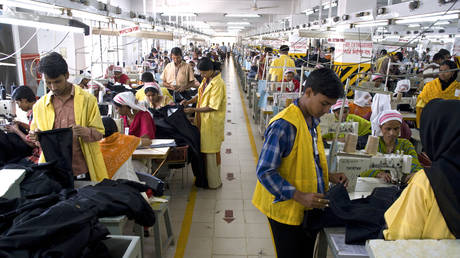
Bangladesh tells a parallel story of avoidable vulnerability. Petrobangla and state planners tied the country's industrial productivity directly to volatile spot markets without building domestic buffer stocks or adequate regasification redundancy. When regional instability pinched supplies, the textile sector—the backbone of the national export economy—was left gasping for power. Rolling blackouts and factory shutdowns are treated as sudden acts of god, but they are actually the bill coming due for a decade of prioritizing short-term import fixes over long-term indigenous resource management.
The Real Price Of Rigid Contracts
The standard commentary treats long-term supply agreements as sacred shields. In practice, they are often economic straitjackets.
Pakistan’s historical agreements with providers like Qatar and ENI locked the nation into fixed off-take volumes that failed to align with actual domestic demand or seasonal consumption shifts. When renewable generation from solar began expanding organically across the region, state planners failed to integrate distributed generation into their demand forecasts. The result? Absurd paradoxes where rigid fossil-fuel obligations created artificial gluts during certain months, only to leave the grid dangerously exposed when peak winter or summer loads arrived.
Bangladesh faces an identical trap. By failing to diversify primary energy inputs aggressively, policymakers chained national GDP growth to the spot pricing whims of international commodity traders. When international LNG availability drops by twenty percent due to broader Middle Eastern conflicts, countries with diversified energy mixes absorb the blow through demand-side management and flexible grid architectures. Countries that hitched their entire industrial policy to imported methane tank their foreign exchange reserves instead.
Breaking The Cycle
Fixing South Asia’s energy insecurity requires abandoning the fiction that the next geopolitical accord in the Gulf will save either nation. The solutions require institutional surgery that neither Islamabad nor Dhaka has shown the political courage to execute.
First, dismantle the centralized distribution monopolies that bleed capital through theft and technical inefficiencies—such as Pakistan’s staggering unaccounted-for-gas losses that hover well into double digits. You cannot import your way out of a distribution network that leaks a tenth of its product before it reaches a meter.
Second, pivot aggressively toward localized, decentralized renewable assets. The rapid grassroots expansion of rooftop solar across both nations proves that commercial and residential consumers are already building their own resilience while state utilities sleep at the wheel. Instead of penalizing or ignoring distributed generation, energy ministries must redesign grids to handle two-way power flows, freeing industrial bases from total dependence on piped hydrocarbons.
Third, redefine energy security away from massive, centralized import terminals and toward agile, multi-source procurement frameworks that can pivot overnight when supply chains fracture.
Stop blaming the Strait of Hormuz for failures written into domestic balance sheets years ago. Until South Asian policymakers stop treating structural incompetence as an external geopolitical crisis, every winter will bring the exact same panic, the exact same factory closures, and the exact same excuses.