Every time a multinational arena tour touches down in Kuala Lumpur and vacuums up twenty million ringgit in a single weekend, local indie musicians crawl out of their Bandcamp holes to weep about the missing middle. They point fingers at stadium headliners, greedy promoters, and apathetic festival bookers. They publish manifestos on Instagram demanding state grants, mandatory local support slots, and public subsidies for original music. It is a comforting narrative. It positions every struggling singer-songwriter as an artistic martyr crushed by global capitalism.
It is also complete nonsense.
I have spent the last decade watching independent acts burn through seed capital, blow through every available cultural grant, and wonder why nobody cares when they play a room above a Bangsar cafe to an audience of three friends and the sound engineer. The problem in the Malaysian live music ecosystem is not a missing middle. The problem is an epidemic of artistic entitlement mixed with total operational illiteracy.
Let us dispense with the fairy tales immediately.
The local music scene is not suffering because international pop stars are sucking the oxygen out of the room. Stadium tours do not cannibalize indie gigs; they operate in an entirely different financial universe. The person dropping four hundred ringgit to scream along to an arena-filling spectacle is not deciding between that ticket and a twenty-ringgit door charge at an underground gig in Damansara. They are different buyers with entirely distinct entertainment budgets and consumption habits. Pretending that Coldplay stole your audience is like a local kopitiam crying foul because Starbucks opened down the street. You are not losing customers; you are failing to compete for attention in a marketplace that demands excellence, discipline, and ferocious execution.
To understand why the local middle tier is hollowed out, you have to look at how music actually makes money today. The old playbook is dead. The romantic notion that you write a moody track, upload it to Spotify, wait for a booking agent to discover you, and coast into a sustainable touring career is a fairy tale from 1998. Streaming pays fractions of a cent per play. Physical merch is expensive to manufacture and harder to move. That leaves live performance as the primary engine of artist revenue. Yet, most local acts treat live shows like a rehearsal they happen to charge admission for.
Here is what actually happens in a typical Malaysian indie booking cycle. A band forms. They write seven decent songs. They practice twice a month in a damp studio in Section 13. They land a slot at an indie showcase because they know the promoter's cousin. They play a twenty-minute set with terrible stage mix, zero audience interaction, and lighting that makes them look like criminal suspects interrogated in a basement. Then, they spend the next three weeks on social media complaining that the crowd was dead and the sound guy ruined their vibe.
And then they demand government intervention.
Let us be brutally clear about what government arts funding actually does. It creates dependency. When your primary business model relies on cultural agency grants or corporate CSR sponsorships rather than paying fans, your incentive structure breaks. You stop making music that people actually want to consume and start making music that satisfies bureaucratic committee checkboxes. You optimize for grant applications instead of audience retention. I have seen talented young artists turn into professional grant-writers, spending half their year crafting PDF proposals filled with pretentious academic jargon about cultural identity while their musicianship stagnates.
Real artist development is messy, brutal, and entirely market-driven. If you want people to pay to watch you play live, you have to offer an experience worth more than the cost of a movie ticket and a Grab ride home.
Let us break down the economics of the live circuit. A mid-tier band needs to cover transport, gear rental, rehearsal space, mixing, mastering, and promotional costs. If you are playing to fifty people at thirty ringgit a ticket, gross revenue is fifteen hundred ringgit. After venue splits, sound engineers, and platform fees, your band is walking away with enough cash to buy dinner at a mamak stall. How do you fix that math? You do not fix it by whining that the ticket price should be higher. You fix it by stopping the amateur hour approach to your live show.
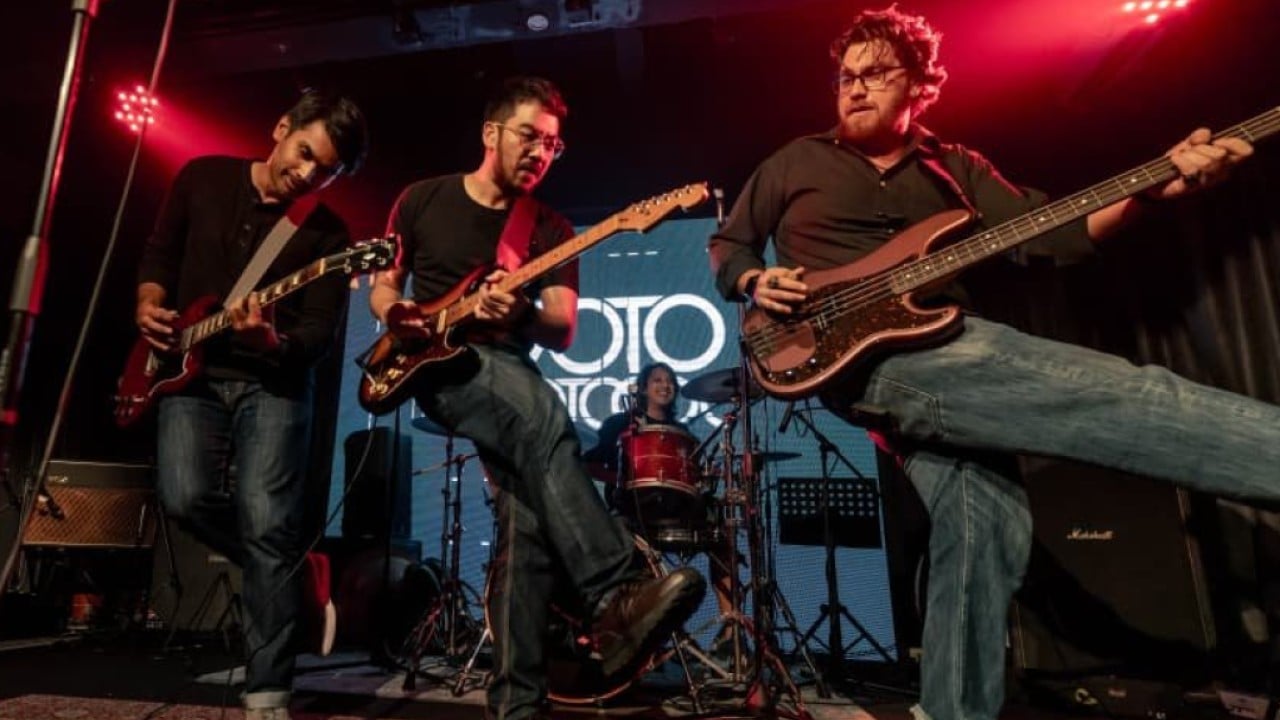
Most local acts treat stage performance as an afterthought. They stand motionless behind their microphones, staring at their pedalboards, whispering hesitant thank-yous between songs, terrified of looking arrogant. That is not an aesthetic choice; it is stage fright masquerading as authenticity. When a consumer pays to see live music, they are paying for energy, spectacle, and emotional release. If I wanted to watch someone stare at their shoes, I would stay home and scroll TikTok.
International touring acts understand showmanship down to the microsecond. They know that every second of a two-hour set has to justify the price of admission. They understand lighting design, set pacing, narrative arc, and crowd dynamics. When you put an amateur local band on the same bill as a seasoned professional act, the contrast is so violent that it actively hurts the local band. The audience immediately registers the gulf in quality. That is why forced support slots mandated by promoters or cultural ministries rarely work. You cannot legislate taste or competence. If an indie band cannot hold the attention of three hundred strangers for twenty minutes, putting them on a stadium stage is an act of public cruelty, not charity.
Now, let us address the counter-argument that every indie purist loves to throw around: the financial gatekeeping of venue spaces in major urban centers like Kuala Lumpur and Penang.
The complaint goes like this: rent is too high, independent music venues are closing down because of rising commercial real estate costs, and landlords prefer chain restaurants or hipster coffee shops over gritty live music dives.
There is some truth here, but it misses the deeper reality of modern consumer behavior. Commercial rents in urban centers are expensive because space is scarce and valuable. If your business model requires a physical venue in Bukit Bintang or Bangsar to survive on a twenty-ringgit cover charge, your business model is mathematically broken.
Look at how underground music scenes are thriving elsewhere in the world without relying on traditional brick-and-mortar indie clubs. They are operating in pop-up warehouses, art collectives, unconventional outdoor spaces, and digital-first hybrid environments. They are building communities online before they ever book a physical room. They treat their mailing list and direct fan channels as their primary venue.
Malaysian indie acts, by contrast, are fiercely addicted to the conventional club circuit. They wait for existing promoters to book them into established rooms, take whatever miserable percentage is offered, and wonder why they have no financial runway. They treat audience acquisition as someone else's job. Booking agents, Spotify playlist curators, music journalists—they expect the ecosystem to beat a path to their rehearsal studio door because their music is "real."
Realness does not pay rent. Strategy pays rent.
Let us look at how an artist actually builds a sustainable live audience from scratch. It starts with ruthless self-assessment. Record your live set on a phone from the back of the room. Watch it without muting the audio. If you look bored, your audience is asleep. If your guitar tone sounds like a swarm of angry bees trapped in a biscuit tin, fix your gear before you book another gig. If your setlist drags in the middle with three slow, self-indulgent tracks in a row, cut two of them.
Next, treat your music project like a micro-media company. You are not just a songwriter; you are a content producer, a community manager, and a live event director. The bands winning right now in Southeast Asia are the ones treating their social media presence as a daily broadcast of their creative process, not a digital graveyard of tour posters. They share the failures, the gear teardowns, the mixing debates, and the raw acoustic demos. They build an intimate connection with listeners long before the ticket link goes live.
When you build that direct line of communication, you stop depending on fickle venue bookers or lazy festival curators. You can announce an intimate pop-up show in a warehouse space in PJ, drop the ticket link to your subscriber base, and sell out fifty seats in twenty minutes. That is how you bypass the missing middle. You stop waiting for a middle to be built for you and construct your own bridge.
Admittedly, this approach has a dark side. It is exhausting. It forces creative people to spend hours every day wrestling with algorithms, marketing funnels, logistics, and financial spreadsheets instead of writing poetry or tuning guitar amps. It rewards hustle over pure artistic purity, and it burns out plenty of brilliant musicians who just want to make art in peace.
That is the unvarnished trade-off of the modern attention economy. You can lament it, write academic essays about the commodification of culture, and demand government bailouts while playing to empty rooms. Or you can accept the rules of the arena, master the operational mechanics, and build an audience that actually gives a damn.
The choice belongs entirely to you. Stop blaming Coldplay. Stop crying about the missing middle. Fix your product, own your distribution, and give people a reason to leave their houses.