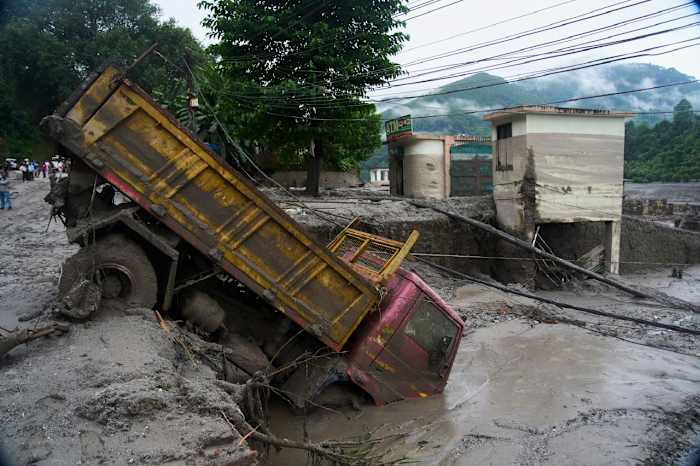
Every monsoon season, the headlines write themselves. A cloudburst hits the Hindu Kush Himalaya, rivers overflow their banks, mud buries villages, and the international commentariat reaches for the exact same script. Rising global temperatures melt glaciers. Glacial lakes swell. Glacial Lake Outburst Floods wipe out downstream communities. The story is neat, tidy, and completely divorced from physical reality for the vast majority of these disasters.
Blaming distant carbon emissions for every cubic foot of muddy water tearing through Nepali valleys provides a comforting moral shield. It lets policymakers in Kathmandu and international donors off the hook. If the weather is an act of God fueled by industrialized nations, local authorities bear zero liability for handing out building permits on active alluvial fans.
I have walked those debris flows. I have stood on the banks of rivers choked not by monolithic ice blocks, but by unmitigated sand mining and reckless road cuts. The lazy consensus dominating environmental journalism treats the Himalayas as a fragile, pristine museum piece uniformly melting under a greenhouse glass. The truth is far more uncomfortable. Nepal's worst flood disasters are man-made structural failures disguised as climate tragedies.
The Geography Of Convenience
Let us look at the actual mechanics of high-altitude hydrology. The vast majority of catastrophic flooding events in Nepal during the monsoon do not originate from sudden glacial lake bursts. They originate from sustained, intense rainfall events colliding with heavily degraded terrain.
Standard hydrological data reveals a stark disconnect. While glacial lake outburst floods certainly happen, they account for a minor percentage of total annual flood damage volume. The heavy lifting of destruction is done by ordinary monsoon precipitation dropping thousands of tons of water onto mountain slopes already destabilized by poorly engineered infrastructure.
Consider a scenario where every single glacier in the Himalayas vanished overnight. You would still experience devastating floods every July. Why? Because the valleys are choked with loose debris, and the hillsides are carved up by unregulated bulldozers cutting rural roads with zero geotechnical oversight.
When a monsoon cloud dumps one hundred millimeters of rain in three hours onto a vertical dirt slope freshly sheared by a local contractor looking for a quick payout, gravity takes over. The resulting debris flow looks like a glacial flood, sounds like a glacial flood, and destroys bridges like a glacial flood. But pointing the finger at global warming misses the root cause entirely. The mountain did not fail because the Arctic is warm. The mountain failed because someone built a road where a river belongs.
The Dangerous Myth Of Unstoppable Nature
The prevailing narrative turns local populations into passive victims of planetary physics. This framing is deeply disempowering and factually bankrupt.
When international agencies frame Himalayan risk entirely around retreating ice, local municipal governments stop doing their actual jobs. Why invest in zoning laws? Why enforce building codes? Why map active floodplains and ban concrete construction within twenty meters of a river channel? If the disaster is driven by global carbon concentrations, local zoning is just rearranging deck chairs on the Titanic.
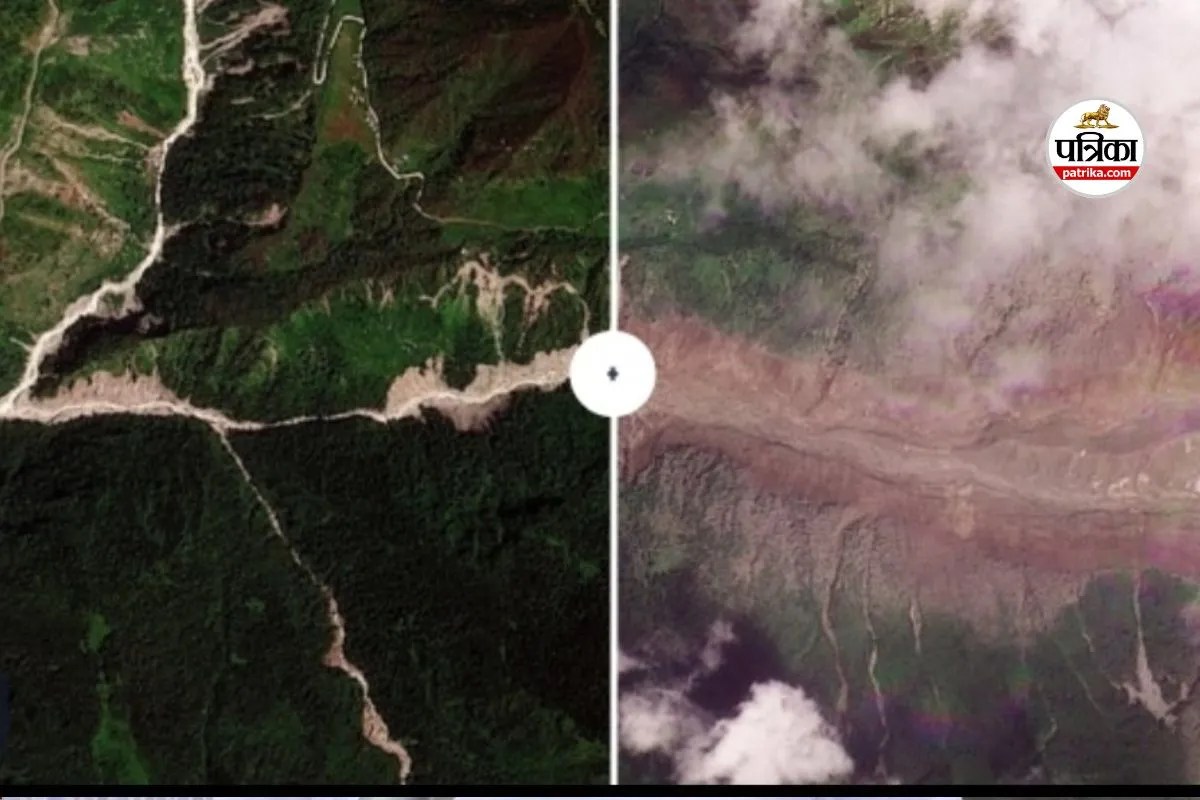
This is where the expertise fails us. Too many remote researchers rely on satellite imagery and macro-level climate models, ignoring ground-level realities. They see a melting terminus and assume direct causation down to the nearest village. Meanwhile, on the ground, the local district development committee authorized a massive sand-extraction operation right beneath a major bridge pylon, weakening the entire structural integrity of the crossing before the first monsoon drop even fell.
I have watched local officials wave away environmental impact assessments because a project brought short-term political capital. When the inevitable slide occurs, the cameras roll, the climate crisis takes the blame, and the cycle of impunity continues untouched.
Unconventional Engineering Over Eco-Nostalgia
If we want to stop burying people under mud every monsoon, we have to abandon the comforting fiction that we can fix this by planting trees or lobbying at international climate summits. Nepal does not need more hand-wringing declarations from overseas conferences. It needs aggressive, localized operational reform.
First, stop treating rivers like garbage disposals and sediment storage units. Unregulated aggregate mining from riverbeds deepens channels in some places while creating artificial bottlenecks in others, amplifying flood heights unpredictably. Municipalities need to treat gravel extraction as a heavy industrial engineering challenge, not an informal cash crop for local syndicates.
Second, infrastructure alignment must change. The current obsession with connecting every remote hamlet via cheap, dozer-cut dirt roads is a public safety catastrophe. Every unlined cut slope acts as a firehose for debris during heavy downpours. Until local engineering standards mandate proper retaining walls, bio-engineering, and drainage management before a single blade touches a hillside, road expansion remains the single largest driver of localized landslides.
Third, we need radical transparency in municipal land use enforcement. Property rights in high-risk flood zones must be curtailed, regardless of political patronage. If a structure sits in a historical debris track, insurance must be unavailable, and public utilities must not be extended there.
The glaciers are changing, yes. But pretending that retreating ice is the primary executioner in Nepali valleys lets the real culprits off the hook. The danger is not falling from the sky or melting from the peaks. It is staring us right in the face from the local municipal office.
Stop blaming the ice for human failure.