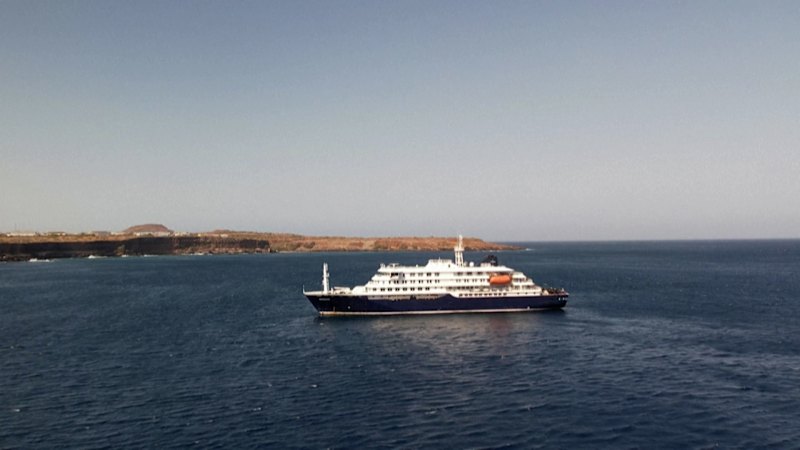
Media outlets are currently salivating over the "suspected virus" that claimed three lives on a recent cruise. They want you to envision a floating petri dish, a localized apocalypse of norovirus or some exotic respiratory strain that turned a vacation into a morgue. This narrative is easy. It sells ads. It’s also fundamentally wrong.
The tragedy isn't the virus. The tragedy is the collective refusal to look at the actuarial reality of 3,000 seniors living in a high-density environment. We treat every death at sea as a failure of sanitation or a breach of protocol. In reality, we are watching the inevitable collision of aging demographics and the logistics of luxury transit. Meanwhile, you can explore other stories here: The Cape Verde Illness Crisis and the Legal Storm Breaking Over TUI.
The Myth of the Floating Petri Dish
The "petri dish" analogy is the laziest trope in travel journalism. If you look at the actual data from the Centers for Disease Control and Prevention (CDC) Vessel Sanitation Program, the rate of gastrointestinal illness on cruise ships is lower than it is in schools, nursing homes, or even your local office building.
When a "suspected virus" breaks out, the public assumes a failure in hygiene. I have spent years auditing operations in high-traffic hospitality environments. I’ve seen the back-of-house reality that most passengers never touch. The sanitation protocols on a modern vessel—ranging from electrostatic sprayers to hospital-grade air filtration—dwarf the standards of the restaurants you eat in every Friday night. To understand the complete picture, check out the detailed article by Condé Nast Traveler.
If three people die on a ship, the headlines scream "Outbreak." If three people die in a 4,000-unit apartment complex on the same day, nobody notices. That is because the apartment complex isn't an enclosed narrative. We are pathologizing the location, not the event.
The Actuarial Inevitability
Cruise lines have a target demographic: the "Sliver Tsunami." People with disposable income and time are, by definition, older. When you pack several thousand individuals with an average age over 65 into a single vessel for two weeks, the statistical probability of a death occurring is high.
- Natural Attrition: On a 14-day cruise with 3,000 passengers, the laws of probability suggest that someone will suffer a cardiac event or a stroke.
- The Viral Trigger: A virus that might cause a healthy 30-year-old to spend a day in bed can be a death sentence for someone with underlying pulmonary or cardiovascular issues.
The competitor's article focuses on the "outbreak" as a singular cause. It ignores the reality of comorbid conditions. A virus doesn't "kill" three people; it accelerates the inevitable for three vulnerable individuals. To suggest otherwise is to ignore the basic biological reality of human aging.
The False Security of Modern Medicine at Sea
Passengers board these ships with the assumption that they are in a floating city with world-class medical facilities. This is a dangerous misunderstanding of maritime law and logistics.
A cruise ship medical center is an urgent care clinic with better branding. They have ventilators, x-ray machines, and a small pharmacy. They do not have an ICU. They do not have a cardiology wing. They do not have the capacity to manage a mass-casualty event or a severe infectious surge over a sustained period.
I’ve seen families demand the impossible from shipboard doctors. When a respiratory virus enters the system, the medical staff is immediately overwhelmed. Not because the virus is uniquely "deadly," but because the infrastructure is designed for stabilization, not long-term care.
Stop Testing Everything
The obsession with identifying the specific "virus" is a bureaucratic waste of time that fuels public panic. If it’s norovirus, the protocol is bleach and isolation. If it’s a variant of influenza, the protocol is isolation and hydration.
The "Suspected Virus" headline is a placeholder for "We don't know yet, but we want you to be scared."
Testing on ships is notoriously difficult. Labs are small. Swabs often have to be sent to shore-side facilities, leading to a 48-to-72-hour lag. By the time the "deadly virus" is identified, the news cycle has moved on, and the ship has already been scrubbed three times over. The panic is manufactured in the interim.
The Real Danger is the Response, Not the Pathogen
The moment a ship reports an uptick in illness, the "quarantine" protocols kick in. This is where the real damage happens.
- Mental Health Degradation: Seniors are locked in small, windowless interior cabins. The stress levels spike.
- Delayed Care: Patients with non-viral issues—chest pains, dizzy spells—hesitate to call medical for fear of being tagged as "infected" and isolated.
- Cross-Contamination: Rapidly pivoting staff to cleaning duties often leads to lapses in other safety areas.
We are sacrificing the well-being of the majority to satisfy a PR need to "contain" something that has likely already circulated through the air filtration system hours before the first symptom appeared.
Follow the Logic, Not the Fear
If you want to survive a cruise, stop worrying about the handrails. Worry about your own baseline health.
- Vaccination Status: If you are over 70 and haven't had a current flu or pneumonia shot, you are the hazard.
- Hand Washing: Purell is not a substitute for mechanical scrubbing with soap and water. Norovirus laughs at your hand sanitizer.
- Crowd Management: The buffet isn't the problem; the enclosed theater with 1,000 people coughing is the problem.
The industry doesn't want to tell you this because it suggests that the "dream vacation" has inherent risks. It does. Every time you leave your house, you enter a risk-reward calculation. On a cruise, that calculation is magnified by the density of the population.
The Hard Truth About Maritime Deaths
We need to stop treating deaths at sea as a scandal. They are a data point.
Imagine a scenario where a ship of 5,000 people has zero deaths over a month-long voyage. That would be the statistical anomaly. Three deaths in an "outbreak" scenario isn't a failure of the cruise line; it's a testament to how fragile the human body becomes when it’s removed from its primary care network and placed in a high-stress, high-sodium, high-activity environment.
The media wants a villain. They want to point at a dirty spoon or a negligent captain. They won't point at the calendar. They won't point at the reality that cruise ships have become de facto assisted living facilities without the necessary medical oversight.
Stop reading the headlines and start looking at the demographics. If you are terrified of a "suspected virus," you shouldn't be on a ship with 3,000 strangers. If you are healthy, the virus isn't what will kill you—it's the panic-driven protocols that will ruin your trip.
The next time you see a headline about a "deadly cruise virus," ask yourself how many of those passengers were already one bad cold away from the end. The answer is higher than the cruise lines or the news stations will ever admit.
Travel is not a sterile experience. It is a biological exchange. If you can't handle the exchange, stay on land.