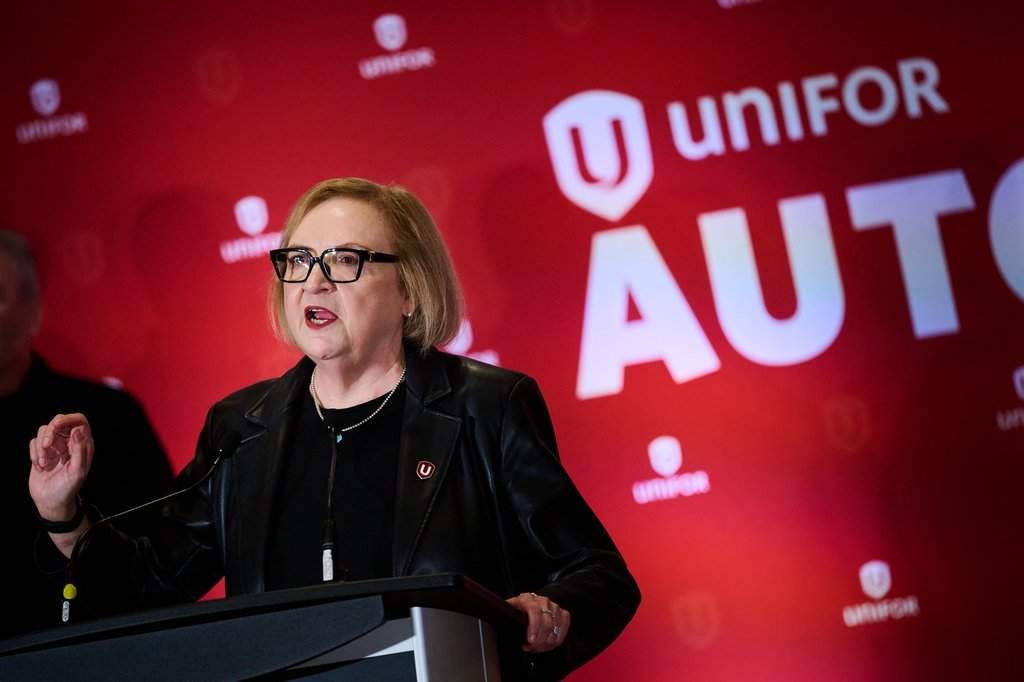
A strike mandate vote passes. Union halls celebrate. Headlines scream solidarity.
Then reality walks onto the shop floor. Recently making waves lately: Southern Europe is Bleeding Purchasing Power While the Official Numbers Lie.
Whenever auto workers vote overwhelmingly in favor of a strike mandate against a giant like Stellantis, the standard media script writes itself. A big percentage in favor equals massive leverage. A big percentage in favor means management is cornered. A big percentage in favor signals an imminent showdown where labor twists corporate arms until wages rise and plants stay open.
That script is lazy. Worse, it is dangerous for the people holding the picket signs. Further insights regarding the matter are detailed by Investopedia.
A strike mandate is not a strike. A mandate is permission to walk out, not proof that walking out hurts the company more than it hurts the workers, the suppliers, or the long-term survival of the assembly line itself. In modern automotive manufacturing, especially inside a sprawling multi-brand conglomerate like Stellantis, pulling the lever on a walkout does not always land the punch workers expect. Sometimes it hands executives a gift they would never dare ask for out loud.
I have spent years inside industrial labor negotiations, plant turnarounds, and supply-chain restructurings. I have watched companies blow millions on protracted standoffs over optics while missing the math sitting right on the balance sheet. I have also seen union locals treat a 90-percent-plus mandate vote like a guaranteed victory lap, only to discover that inventory levels, platform shifts, and regional overcapacity turned their biggest weapon into a blunt instrument.
The Lazy Consensus Around Strike Mandates
Read the typical coverage of a Stellantis strike vote and you will see the same three assumptions repeated like gospel.
First, reporters treat a high "yes" vote as proof of unified economic power. If eight or nine out of ten members vote to authorize a walkout, the story frames it as an unstoppable force. Second, commentators assume that halting production automatically starves the automaker of cash and forces rapid concessions. Third, the narrative pits stubborn union demands against greedy corporate headquarters in a zero-sum tug-of-war.
Every one of those assumptions misses how capital-intensive manufacturing actually behaves.
In auto manufacturing, leverage is not measured by anger or turnout at the union hall. Leverage is measured by unit economics, dealer inventory days, fixed versus variable costs, and where else the automaker can build or import the vehicle. A mandate vote measures sentiment. Bargaining power measures pain tolerance and alternative options.
When analysts equate a strike authorization vote with imminent victory, they confuse intent with impact. A union can authorize a strike every single week and still sit on weak bargaining ground if dealer lots are stuffed, if a plant is running below capacity, or if shutting down a specific assembly line relieves margin pressure rather than creating a crisis.
What People Actually Ask When a Mandate Passes
Whenever a vote like this hits the news, readers rush to search the same predictable questions:
- Does a strike mandate mean Stellantis workers are on strike right now?
- How much money does a walkout cost an automaker per day?
- Can a strike force a company to keep a struggling plant open?
Let us take each of those questions head-on without the usual sugarcoating.
Does a mandate mean a strike is underway? No. In labor relations, a strike mandate authorizes union leadership to call a strike if negotiations stall or deadlines pass. Leaders routinely seek mandates to strengthen their hand at the bargaining table, signal resolve to members, and show management that bluffing will fail. Treating the vote itself as the battle is like celebrating a green light before you have even checked the brake lines.
How much does a strike cost the company? That depends entirely on which plants walk out, how much finished inventory sits on dealer lots, and what vehicles are being built. Stopping a high-margin, high-demand truck or SUV line hurts fast. Stopping a low-margin model with ninety or a hundred days of dealer supply on hand can actually reduce cash burn on raw materials and overtime in the short run. Anyone quoting a single flat daily number for a massive automaker is guessing or cherry-picking.
Can a walkout force a company to keep a plant open? A strike can delay a closure or extract short-term promises, but it cannot repeal basic plant economics. If a facility has outdated tooling, high logistics costs, or no high-volume vehicle platform assigned to it, walking out does not magically create profitable demand. At best, a strike buys time. If that time is not paired with a realistic product and investment plan, the clock keeps ticking.
The Hidden Mechanics Inside Stellantis
Stellantis is not a single tidy automaker with one culture and one cost structure. It is a sprawling collection of legacy brands—spanning North America and Europe—born out of mergers between Fiat Chrysler and PSA Group, carrying years of platform consolidation, electrification pivots, price adjustments, and shifting market share.
Because of that structure, labor dynamics at Stellantis operate under constraints that look very different from a single-brand manufacturer.
Inventory and Margin Math Beat Noise
In retail and tech, a customer walks into a store or clicks a button, and an empty shelf means lost revenue that afternoon. In autos, dealers hold buffer stock. When dealer inventories are elevated on certain models, a temporary pause in factory output does not immediately empty showrooms.
Even more importantly, automakers watch contribution margin—the revenue left from each vehicle after paying direct variable costs like parts, shipping, and direct labor. When pricing pressure and incentives squeeze margins on slower-moving models, running extra shifts can actually look less attractive to finance chiefs than pacing output carefully.
Economists and industrial strategists who study manufacturing cycles—think of the empirical work on plant utilization and fixed-cost absorption by scholars like Robert Gordon or classic industrial organization frameworks—have shown for decades that heavy fixed assets punish idle capacity over the long haul, yet short-term cash flow reacts sharply to inventory and working capital. A strike hits working capital and delivery schedules, yes, but its bite depends on timing and product mix.
The Multi-Plant Trap
Imagine a scenario where workers at one assembly plant vote overwhelmingly to strike over job security and wage parity. On paper, that plant looks indispensable because thousands of skilled people build vehicles there every day. Now trace what happens if the company has excess capacity across other facilities, can flex volumes on shared architectures, or relies heavily on imported or cross-platform components. A localized stoppage can create bottlenecks in one place while relieving pressure in another.
That is the multi-plant trap. When a corporate footprint spans multiple regions and shared platforms, a single local walkout rarely paralyzes the entire enterprise the way it might have in an older era of single-plant monopolies. Management looks at the whole map, not just one gate.
Job Security vs. Wage Increases
One of the sharpest tensions in modern auto bargaining is the trade-off between higher hourly wages and guaranteed plant investment. Every dollar added to base pay, benefits, or profit-sharing raises the cost of keeping a line running. If a plant is already competing internally for future vehicle allocations, higher labor costs without matching productivity or volume commitments can make winning the next model harder, not easier.
Workers hear "we deserve more" and rightly feel the squeeze of inflation and cost of living. Executives hear "our cost per unit just went up" and run sensitivity models on capital allocation. Both sides can be telling the truth about their own reality while talking past each other on the math.
Where My Contrarian Take Has Real Flaws
Being contrarian is easy when you sit on the sidelines and poke holes in headlines. Being honest means admitting where skepticism goes too far.
First, underestimating union discipline is a classic management mistake. Even when inventory looks comfortable on paper, coordinated strikes can disrupt just-in-time supply chains faster than executives expect. Tier-one and tier-two suppliers run lean; a stoppage at one link can ripple outward and create ugly logistics headaches across multiple lines.
Second, morale and trust are real economic variables. You cannot put a neat line item on a spreadsheet for a poisoned shop-floor culture, high turnover, or bitter grievances that linger for years after a contract is signed. Quality suffers when people feel disrespected or burned by broken promises, and warranty or recall costs in the auto industry are brutal.
Third, political and public pressure still matters. Large industrial employers operate under intense scrutiny from governments, local communities, and consumers. A prolonged, high-profile clash can damage brand reputation and complicate regulatory or incentive negotiations in ways that do not show up in a simple margin calculation.
So no, a strike mandate is not meaningless theater. It is a real lever. It just is not a magic wand.
How Workers and Leaders Can Actually Win
If the lazy consensus misses how leverage works, what should union negotiators, workers, and managers actually focus on instead of chasing big mandate percentages?
1. Tie Demands to Product and Volume, Not Just Headlines
Wage headlines feel good on day one and mean less if hours get cut or a plant loses its core vehicle two years later. Serious bargaining pairs fair compensation with binding product commitments, tooling investments, and clear volume timelines. A paycheck only protects you if the line stays busy.
2. Time Leverage Around Real Bottlenecks, Not Emotion
A mandate gives leaders optionality, not an obligation to pull the trigger immediately. Smart negotiators look at actual dealer stock days, upcoming model launches, seasonal demand, and parts bottlenecks. Pressure works best when it hits a genuine constraint—not when it hits a model dealers are already trying to discount off the lot.
3. Demand Transparency on Unit Economics and Capex
Instead of fighting purely over slogans, push for hard numbers on plant conversion costs, automation plans, and platform assignments. Knowing where management plans to spend capital—and where it plans to cut—gives bargaining committees real targets rather than shadows.
4. Build Cross-Site Alignment Before Walking Out
Fragmented leverage gets picked apart. Real power comes when workers across connected facilities and supply links understand how each node affects the others, so nobody walks into a fight isolated while another site quietly absorbs the slack.
A vote in favor of a strike mandate proves workers are fed up. Turning that frustration into lasting security takes strategy, timing, and cold-eyed math—because anger alone never built a single profitable car.


