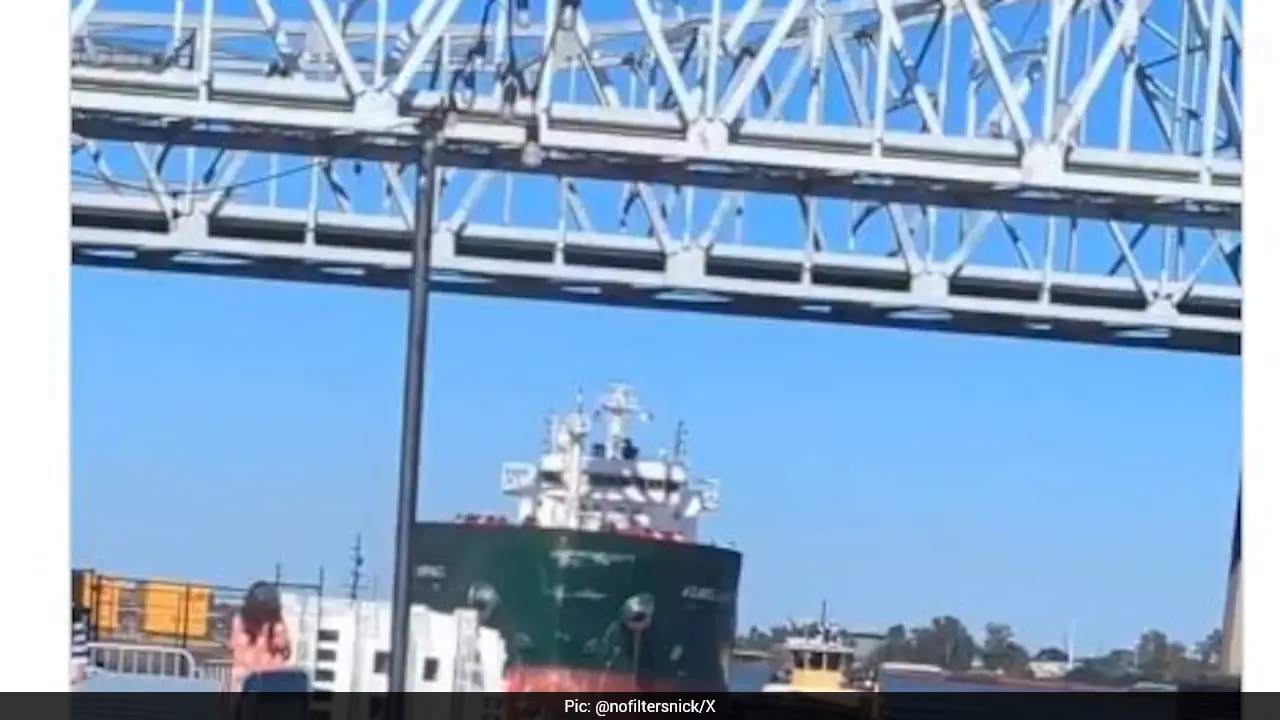
When a commercial tanker collides with a cruise ship on the Mississippi River, emergency rescue operations immediately activate through U.S. Coast Guard Sector New Orleans, local parish marine units, and nearby commercial tugboats. The primary cause almost always traces back to a brutal combination of swift river currents, blind bends, and shared navigation channels where massive ocean-going freight vessels cross paths with shallow-draft passenger boats. Because the lower river moves millions of tons of cargo alongside growing domestic river cruise traffic, any lapse in bridge communication or mechanical steering failure turns a routine transit into a mass-casualty emergency within seconds.
News headlines love the immediate spectacle of flashing blue lights on dark water, twisted railings, and passengers huddled in orange life jackets on a muddy levee. Those initial wire reports give you the chaos. They rarely explain the physics, the regulatory friction, or the sheer mechanical vulnerability of putting boutique hotel vessels inside one of the busiest industrial shipping corridors on Earth. If you enjoyed this article, you should read: this related article.
The Physics of a Moving Wall of Water
To understand why a tanker and a cruise ship end up occupying the same patch of river, you have to stop thinking of the Mississippi as a lake or a calm canal. Between Baton Rouge and the Gulf of Mexico, the river is an untamed hydraulic engine.
During high-water seasons, the current regularly pushes past five or six knots. That speed changes everything about how a vessel handles. A deep-draft chemical or crude oil tanker heading upriver against that current needs substantial engine power just to maintain steerageway. Conversely, a vessel heading downriver rides on top of a massive conveyor belt of water. To turn or slow down, the pilot has to fight the momentum of both the ship and the river pushing its stern. For another angle on this story, check out the recent update from NBC News.
Now introduce the squat effect and bank suction. When a massive hull moves through confined, silty channels, water accelerates beneath the keel and between the ship and the riverbank. Pressure drops. The vessel literally sinks deeper into the water and gets pulled toward the nearest mudbank or passing hull.
Consider a hypothetical scenario at a sharp turn like Nine Mile Point or Algiers Point near New Orleans. A loaded product tanker—weighing upward of 50,000 deadweight tons—begins swinging wide to negotiate the bend. Its rudder needs water flowing past it to bite. If the ship slows down too much to avoid traffic, it loses steering control. If it maintains speed to keep control, its stopping distance stretches to over a mile. A river cruise boat, built with a high superstructure to maximize passenger balcony views and a flat, shallow hull to clear sandbars, catches the wind like a giant sail while lacking the deep keel needed to resist cross-currents. When those two hydrodynamic profiles meet in a narrow channel, the margin for error shrinks to feet.
Why Rescue Operations on the Lower Mississippi Are Uniquely Complex
When a collision call hits VHF Channel 16, the rescue response does not look like a neat Hollywood coastguard operation. It is an improvised, high-stakes scramble across jurisdictions.
The lower Mississippi cuts through a patchwork of industrial parishes—St. Bernard, Plaquemines, Jefferson, Orleans, St. Charles, and St. John the Baptist. Deep-draft vessels cannot simply pull over to the shoulder. The riverbanks are lined with concrete revetments, submerged pilings, fleeting areas packed with lashed-together grain barges, and volatile petrochemical docks.
First responders face three immediate nightmares during a passenger vessel strike:
- Rapid Drift and Secondary Strikes: A disabled cruise ship loses propulsion or steering and immediately becomes a 300-foot piece of driftwood. Before fireboats can even reach the hull, the current can slam the damaged passenger vessel into moored fuel barges or refinery piers.
- Hull Breach vs. Shallow Draft: Modern overnight riverboats typically feature compartmented hulls, yet a glancing blow from the flared bow of an ocean-going tanker slices far above the waterline. While the ship may not sink outright, crushed staterooms, ruptured fuel lines, and severed electrical conduits trap passengers in dark, listing corridors.
- Extraction Logistics: Getting 150 to 400 elderly or mobility-limited cruise passengers off a listing vessel in a six-knot current is treacherous. Small response boats bounce violently against the larger hull. Transferring frightened civilians down pilot ladders or onto push-boat decks requires extreme seamanship from tug crews who normally spend their days moving coal and soybeans, not evacuating retirees.
The unsung heroes of almost every major Mississippi River rescue are not government agencies. They are the commercial harbor tugs and fleeting boats working within earshot of the distress call. Because Coast Guard stations may be thirty minutes away by water, nearby towboat captains routinely nose their vessels directly against a damaged ship's hull, using their engines to pin the drifting passenger boat against a soft mudbank until evacuation gangways can be rigged.
The Structural Friction Between Heavy Industry and River Tourism
For decades, the lower Mississippi belonged almost exclusively to heavy industry. Grain elevators, oil refineries, chemical plants, and bulk terminals dictated the rhythm of the water. Overnight river cruising was a niche curiosity.
That balance has shifted dramatically over the past fifteen years. Domestic cruise operators recognized massive consumer demand for American heritage itineraries—trips running from New Orleans up to Memphis, St. Louis, and St. Paul. New paddlewheelers and modern coastal-style riverboats entered service, bringing thousands of high-paying tourists into waterways designed for industrial freight.
Here is the uncomfortable truth that maritime regulators and tourism boards prefer to gloss over. A river cruise ship is fundamentally a floating boutique hotel operating inside an active heavy-industrial zone.
Look at the numbers and operational realities:
| Operational Factor | Ocean-Going Tanker | Overnight River Cruise Vessel |
|---|---|---|
| Primary Design Goal | Maximum cargo capacity and deep-water structural strength | Shallow draft, maximum passenger cabins, and panoramic views |
| Typical Draft | 35 to 45 feet | 8 to 12 feet |
| Maneuvering Profile | High momentum, slow rudder response, long stopping distance | High windage (tall profile), sensitive to surface currents |
| Crew Composition | Professional merchant mariners focused entirely on shiphandling | Small bridge team paired with a large hospitality and service staff |
| Regulatory Oversight | Strict international SOLAS and flag-state tanker vetting | U.S. Coast Guard Subchapter H or K passenger vessel rules |
Tanker operators despise navigating near passenger vessels. A tanker captain answers to oil majors whose vetting inspectors will blacklist a shipping company over a single near-miss. Meanwhile, cruise captains face intense commercial pressure to keep strict schedules so passengers make their flight connections and shore excursions.
The Human Element on the Bridge
Whenever metal bends on the Mississippi, investigators from the National Transportation Safety Board (NTSB) and the Coast Guard eventually board both vessels to pull the Voyage Data Recorders (VDR)—the maritime equivalent of black boxes. Across decades of marine casualty reports on the Western Rivers, the same human failure points appear over and over again.
Radio Saturation and Passing Agreements
On the Mississippi, vessels do not simply follow fixed traffic lanes like cars on an interstate. Instead, pilots constantly negotiate passing arrangements over VHF radio. A captain calls an approaching ship to propose a "one-whistle" (port-to-port) or "two-whistle" (starboard-to-starboard) pass.
During peak traffic hours, VHF Channels 13 and 67 become a wall of overlapping Southern drawls, international accents from foreign tanker crews, and static. Misunderstanding a single ship's name or assuming a passing agreement applies to your vessel when the pilot was actually speaking to a towboat half a mile astern has triggered catastrophic collisions.
Pilot Fatigue and Distraction
Every foreign-flagged tanker entering the Mississippi must take aboard a local, state-commissioned river pilot—such as a member of the Crescent River Port Pilots' Association or the New Orleans-Baton Rouge Steamship Pilots Association. These pilots possess encyclopedic knowledge of every shifting sandbar and eddy in the river.
Yet the job demands grueling, irregular hours. Climbing a swaying rope ladder up the side of a steel hull at 3:00 AM in driving rain, then standing on a dimly lit bridge for six hours making split-second hydrodynamic calculations takes a toll. On the cruise ship side, domestic vessels often operate under pilotage exemptions where the ship's own licensed master or mate handles navigation. When a cruise ship's bridge team gets distracted by a non-navigational issue—a passenger medical emergency, an engine alarm, or an itinerary update—situational awareness evaporates.
Reliance on Electronic Charting Over Visual Watch
Modern bridges glow with AIS (Automatic Identification System) displays and electronic chart systems. AIS transmits a vessel's position, speed, and heading to every other ship nearby. It is a brilliant tool, right up until it creates overconfidence.
AIS data lags by several seconds. A vessel making a rapid swing around a bend may show a heading on an electronic screen that is already five degrees behind reality. Veteran river mariners know you look out the pilothouse window first and check the radar second. Relying solely on a digital icon to judge clearance in a narrow bend invites disaster.
What Happens After the Towlines Are Secured
Once rescue boats clear the scene and passengers are accounted for at local parish community centers or hotels, a entirely different machinery grinds into motion. The financial and legal fallout from a tanker-cruise collision dwarfs the physical damage to the steel.
First comes the Captain of the Port (COTP) order. The Coast Guard immediately establishes a safety zone, halting all vessel traffic in that stretch of the river. Every hour the lower Mississippi stays closed costs the American economy millions of dollars in delayed grain exports, stalled refinery feedstocks, and demurrage fees for anchored ships waiting at Southwest Pass.
Next comes environmental containment. Even if a double-hulled tanker survives a collision without spilling its cargo, both vessels carry hundreds of thousands of gallons of heavy fuel oil or marine diesel in their own bunker tanks. Oil spill response organizations deploy containment booms around both hulls immediately, whether a sheen is visible or not.
Then the maritime lawyers descend. Under centuries-old admiralty law, vessel owners routinely file petitions under the Limitation of Liability Act of 1851—the exact same statute invoked after the Titanic disaster—attempting to cap their financial exposure to the post-accident value of the ship and its pending freight. For injured or traumatized cruise passengers, navigating maritime injury claims involves fighting through fine-print ticket contracts that dictate strict filing deadlines and specific federal court venues.
The Unspoken Vulnerability of Modern River Cruising
The maritime industry loves to boast about safety records, and statistically, commercial shipping moves astronomical volumes of cargo with remarkably few fatal accidents. Yet the fundamental mismatch on the lower Mississippi remains unresolved.
As river cruise lines build larger vessels with more passenger decks, and as global energy exports push bigger liquefied natural gas carriers and product tankers up the same narrow, twisting channel, the margin between routine transit and catastrophe continues to narrow. Mandatory AIS, upgraded radar, and strict pilotage rules reduce the odds of a crash, but they cannot repeal physics. When 60,000 tons of moving steel meets a shallow-draft passenger boat in a six-knot current, rescue operations will always be a desperate race against the river itself.