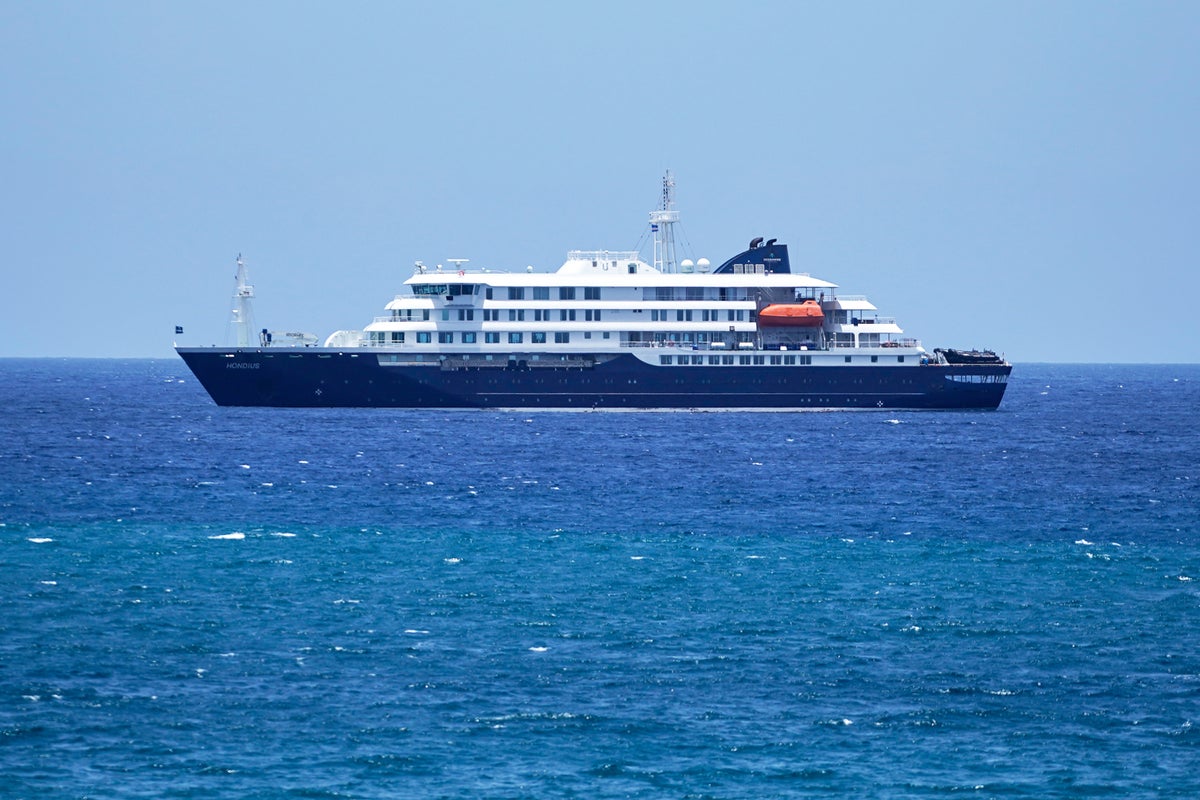
The air inside the Grand Azure didn't smell like the ocean anymore. It smelled like bleach and anxiety.
Five days ago, the lobby was a cathedral of glass and gold, vibrating with the sounds of cocktail shakers and the easy laughter of three thousand people escaping their lives. Now, the music has stopped. The buffet lines are cordoned off with yellow tape. In Cabin 4012, a man named Elias—hypothetically, though his story is being mirrored in a thousand rooms right now—watches the sunset through a circular porthole. He isn't thinking about the itinerary or the lost deposit. He is listening to the wet, heavy cough of his wife in the twin bed three feet away.
Out there, beyond the railing, the world looks the same. The water is a bruised purple. The horizon is sharp. But the ship has become a sovereign nation of the sick, a floating laboratory that no port wants to touch. This is the reality of a maritime viral outbreak. It is not a logistical puzzle for the cruise line. It is a slow-motion hostage crisis where the captor is microscopic and the walls are made of steel.
The Calculus of the Quarantine
When a highly contagious pathogen—something with a high $R_0$ value, the mathematical term for how many people one sick person infects—takes hold on a vessel, the ship's design works against the human body. Cruise ships are closed loops. They recycle air, they share plumbing, and they funnel thousands of people through narrow corridors.
The immediate reaction is "shelter in place." It sounds orderly. It feels like a plan. In reality, it is a desperate attempt to stop the ship from becoming a giant petri dish. For the passengers, the luxury they paid for evaporates. The balcony becomes a cage. The crew, many of whom are equally terrified and underpaid, become the only bridge to the outside world, delivering lukewarm meals in plastic containers to doors they are afraid to touch.
The math of a lockdown is cold. If you keep everyone on board, the virus eventually runs out of hosts. But the human cost of that "eventuality" is a tally of fever dreams and failing lungs. Governments face a brutal choice: let the ship dock and risk a domestic surge, or leave it at sea and watch the death toll climb on the evening news.
The Logistics of Mercy
An evacuation is not a simple gangway walk. It is a military-grade operation that begins long before the first passenger touches land.
First, the triage. Doctors in full-body pressurized suits—the kind that makes them look like deep-sea divers—move through the decks. They aren't just checking pulses; they are categorizing lives. Red tags for the respiratory failures. Yellow for the symptomatic but stable. Green for the lucky ones who haven't started shivering yet.
Consider the physical movement of a "Red" patient. You cannot simply wheel a stretcher through a crowded terminal. You need a negative-pressure corridor. You need "bubbles"—portable biocontainment units that look like plastic coffins. Each one is a self-contained ecosystem with its own air filtration. Moving a hundred people this way is a grueling, twelve-hour marathon of sweat and precision.
The Hidden Infrastructure
- The Pier-Side Tent City: A makeshift hospital must bloom on the concrete of the pier within hours. It requires specialized HVAC systems that pull air inward, ensuring not a single viral load escapes into the local breeze.
- The Specialized Transport: Standard ambulances aren't enough. You need buses stripped of their fabric seats—which can trap viral particles—and lined with heavy-duty plastic.
- The Waste Management: Every suit, every glove, every half-eaten meal from the ship is now biohazardous waste. It must be incinerated at specific temperatures to ensure the pathogen is truly dead.
The Silence of the Port
The most haunting part of an evacuation is the silence. Normally, a ship's arrival is a cacophony. Taxis honk. Families wave. Luggage carts clatter. During a viral extraction, the port is cleared for miles. The only sound is the rhythmic hum of the generators and the crinkle of Tyvek suits.
Elias watches from his porthole as the first group is taken off. He sees the plastic bubbles moving under the floodlights. It looks like a sci-fi movie, but the fear in his chest is ancient. He wonders if the people on the shore see him as a human being or as a biological threat.
The psychological weight of being "unclean" is a burden the brochures never mention. When you are on that ship, you are no longer a traveler; you are a statistic. You are a risk factor to be mitigated. This creates a secondary infection of the spirit. Passengers report a profound sense of abandonment. They watch the lights of the city and realize that to the people living there, the ship is a ghost, a pariah, something to be kept at a distance with flashlights and fences.
The Invisible Failure Points
We like to think our systems are "robust." We believe in the plan. But plans are made of paper, and viruses are made of relentless, mindless intent.
The weakest link isn't the air filter or the plastic sheeting. It is the human element. It is the crew member who hides a cough because they need the paycheck. It is the passenger who sneaks out of their room for a "quick breath of air" because the walls are closing in. It is the politician who delays the docking because an election is two months away and "the optics are bad."
A successful evacuation requires a rare alignment of science, empathy, and courage. It requires a country to say, "We will take the risk to save our own," and a ship's captain to maintain order while their own lungs might be filling with fluid.
The Long Walk to the Tarmac
Once off the ship, the journey isn't over. It is merely a transition from a floating cage to a grounded one. Repatriation flights are the final act of the drama.
Imagine a Boeing 747 with no carpet, no movies, and no smiling flight attendants. Instead, the cabin is divided by heavy plastic curtains. The air is scrubbed by HEPA filters every two minutes. You sit in your seat, masked and gloved, for ten hours, forbidden from moving. You are flying home, but you are not going home. You are going to a military base or a converted hotel for another fourteen days of solitude.
Elias finally gets his call. His wife is placed in a bubble. He is given a mask that smells of chemicals and told to keep his hands visible. As he walks down the gangway, the transition from the humid, recycled air of the ship to the sharp, salty breeze of the pier is a shock. He takes a breath. It is the first time in a week he hasn't felt like he was breathing through a wet cloth.
He looks back at the Grand Azure. It sits there, dark and hulking, a monument to a vacation that turned into a siege.
The ship will eventually be scrubbed. The surfaces will be sprayed with hydrogen peroxide mist. The linens will be burned. In six months, it will be painted and polished, filled once again with people chasing the sun and the horizon. They will walk the same carpets. They will eat at the same tables. They will never know that for two weeks in May, these halls were the front lines of a quiet, desperate war.
The ocean has a short memory. The people who were trapped there do not.
Elias boards the bus. He presses his hand against the cold glass of the window, watching the ship shrink into a tiny, glittering dot of light against the black water. He is safe, or as safe as one can be in a world that can be brought to its knees by a speck of protein. He realizes then that the luxury was never the gold leaf or the five-course meals. The luxury was the freedom to walk away from other people without wondering if their breath would be the end of yours.