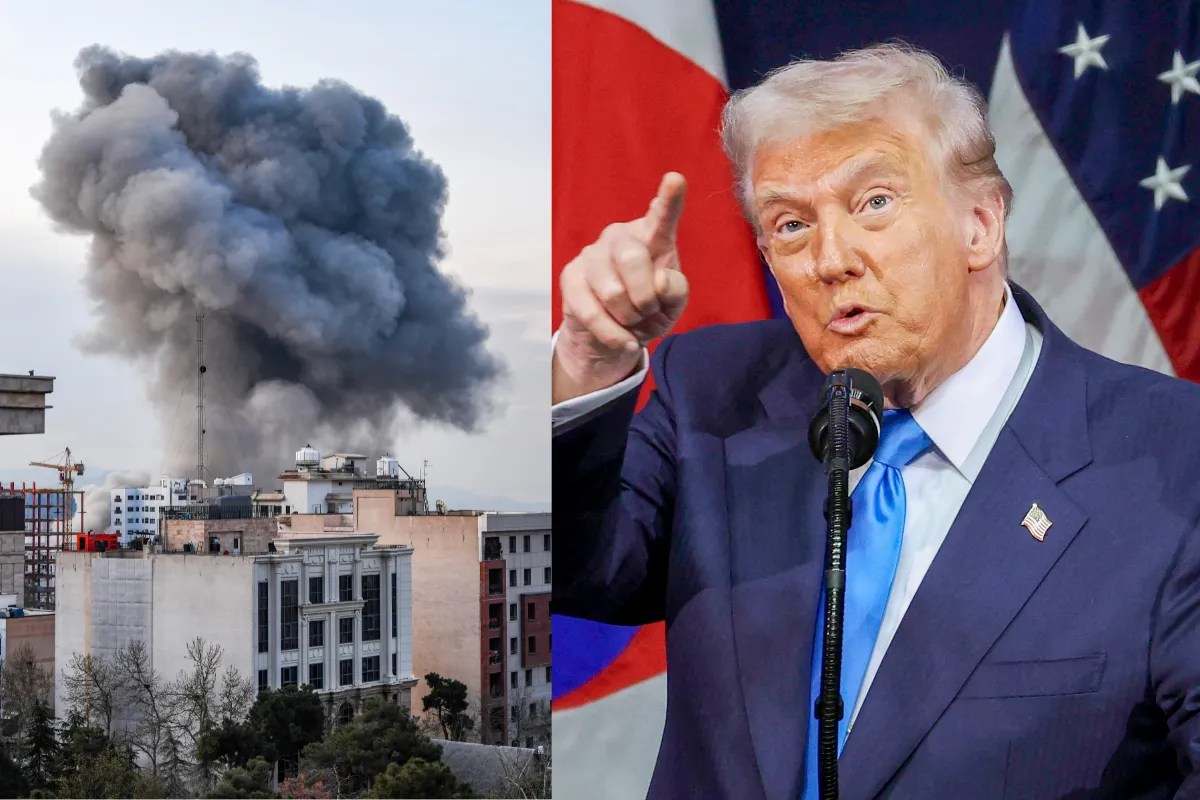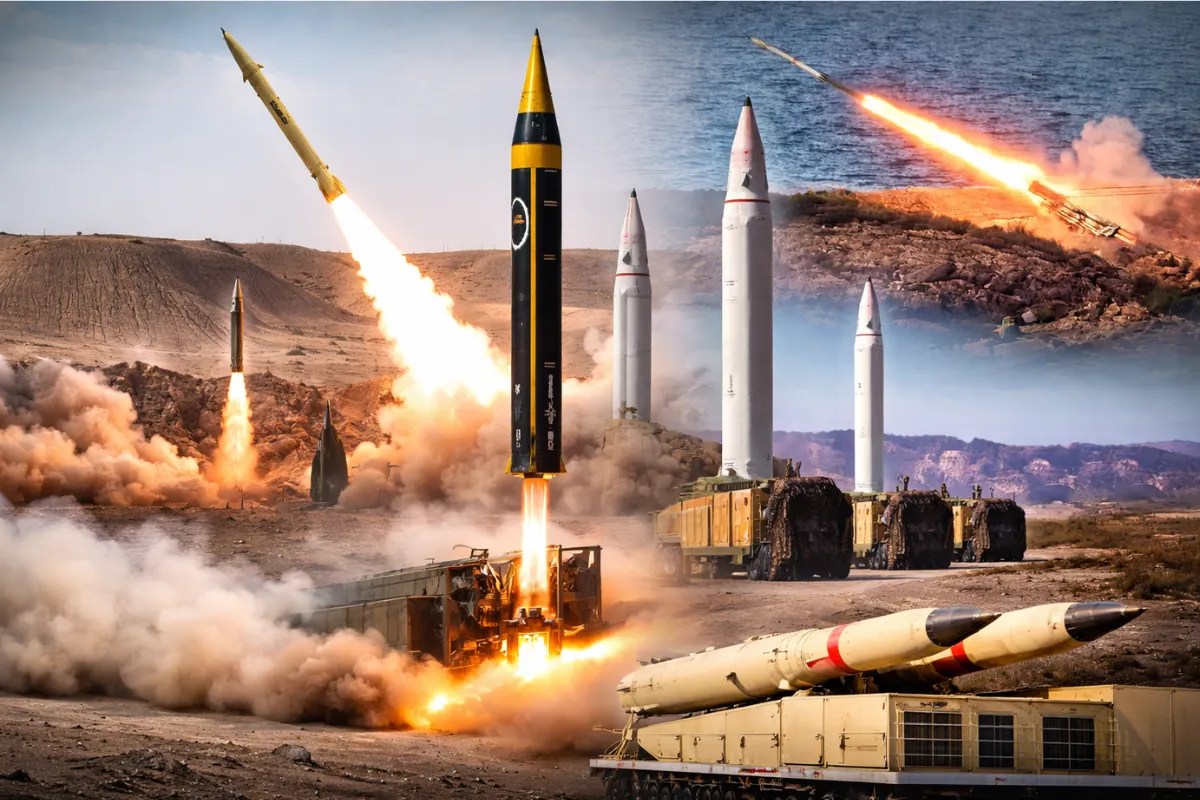
The headlines are screaming about a "massive deployment" of stealthy, long-range missiles as the definitive signal of an impending Iran war. Pundits point to the AGM-158B JASSM-ER (Joint Air-to-Surface Standoff Missile-Extended Range) like it’s a magic wand that will delete Iranian nuclear facilities and air defenses without the U.S. breaking a sweat.
They are wrong.
The obsession with "stealthy bulk deployment" ignores the reality of modern integrated air defense systems (IADS) and the logistical nightmare of a sustained campaign against a nation the size of Iran. If the U.S. is relying on a stockpile of cruise missiles to do the heavy lifting, we aren't preparing for a win; we are preparing for an expensive, high-tech stalemate.
The Low-Observable Illusion
The prevailing narrative suggests that because the JASSM-ER is "stealthy," it is invisible. This is a fundamental misunderstanding of physics. Stealth is not an invisibility cloak; it is a reduction in Radar Cross Section (RCS) designed to delay detection and complicate the "kill chain."
Iran’s air defense is not a relic of the 1970s. They have spent decades studying how to counter U.S. low-observable technology. Between the Russian-made S-300PMU-2 and their domestic Bavar-373, Tehran possesses multi-static radar arrays and VHF/UHF sensors specifically tuned to pick up the "shadows" of stealthy airframes.
When you fire a "bulk" of missiles, you aren't being sneaky. You are creating a massive, noisy electronic signature. A swarm of 50 cruise missiles flying at subsonic speeds—even with low RCS—creates a predictable path. Once the first wave is detected via infrared search and track (IRST) or low-frequency radar, the element of surprise evaporates.
The "lazy consensus" says stealth wins. The reality? Massed subsonic cruise missiles are target practice for a dense, layered defense.
The Math of a Failed Campaign
Let’s talk numbers. The U.S. Air Force and Navy have a finite number of JASSM-ERs. In a high-intensity conflict, a "bulk deployment" sounds impressive until you realize the sheer scale of the target list in Iran. We aren't talking about a few bunkers in a desert. We are talking about thousands of hardened, deeply buried, or mobile targets.
If we assume a 70% success rate—which is generous considering electronic warfare, mechanical failure, and interception—the U.S. burns through its "stealthy" advantage in the first 72 hours.
- Target Saturation: For every one hardened target, you need multiple hits to ensure destruction.
- The Depth Problem: Most JASSM variants carry a 1,000-pound warhead. That is a firecracker against a facility buried 300 feet under a mountain like Fordow.
- The Cost-Curve: Each JASSM-ER costs over $1.2 million. Iran counters with $20,000 Shahed drones and $500,000 interceptors. We are losing the economic war before the first kinetic strike even lands.
Logistics Is the Real Stealth
The competitor article treats these missiles like they exist in a vacuum. They don't. To launch a "bulk" of JASSMs, you need the "trucks." This means B-1Bs, B-52s, and F-15Es.
Look at the regional footprint. To sustain a missile campaign, these platforms need to operate from bases within the reach of Iran’s massive ballistic missile arsenal. If you park a dozen B-1Bs at Al Udeid or Diego Garcia, you aren't conducting a "stealthy" operation. You are announcing your intentions to every satellite and human intelligence asset in the Middle East.
I have seen planners get seduced by the "standoff" capability. They think they can stay 500 miles away and stay safe. But the moment you launch, your position is back-calculated. Standoff is a temporary luxury, not a permanent shield.
The Wrong Question: "Are We Deploying Enough?"
People keep asking if we have enough missiles. That is the wrong question. The right question is: "Does a cruise missile campaign actually achieve a strategic end state?"
History says no.
Operation Desert Fox in 1998 saw hundreds of cruise missiles fired at Iraq. It did nothing to degrade Saddam’s grip on power or significantly halt his programs. It was "perceived" strength.
By prioritizing "bulk" stealth missiles, the U.S. is signaling that it is unwilling to risk the "human" cost of a real air campaign. Iran knows this. They see the JASSM-ER as a political tool, not a military one. It’s a way for Washington to say they "did something" without actually committing to the total destruction of the enemy’s capability—which requires sustained, close-in penetration by manned or unmanned platforms capable of re-targeting in real-time.
The Vulnerability of Subsonic Flight
There is a reason the world is moving toward hypersonics. The JASSM-ER travels at roughly Mach 0.8. That is slow.
Imagine a scenario where the U.S. launches 100 JASSMs toward a high-value target. Even if they are "stealthy," they are in the air for a long time. This gives the defender a massive window for "soft kills"—GPS jamming, spoofing, and high-powered microwave bursts.
If you jam the GPS guidance of a JASSM, it reverts to inertial navigation or its imaging infrared (IIR) seeker. While sophisticated, IIR can be fooled by simple smoke screens or thermal flares. We are betting the entire opening act of a potential war on a subsonic platform that can be confused by a $100 flare or a sophisticated Russian jammer.
The Actionable Truth for the Industry
If we want to actually deter Iran, we need to stop fetishizing the "stealthy cruise" and start investing in attritable mass.
- Ditch the $1M Price Tag: We need 10,000 $100,000 missiles, not 1,000 $1M missiles. Quantity has a quality all its own when you are trying to overwhelm an IADS.
- Hyper-Integration: A missile is only as good as the sensor that feeds it. Currently, our kill chains are too slow. By the time a JASSM reaches a mobile TEL (Transporter Erector Launcher), the target has moved three miles.
- Admit the Limits of Stealth: Stop telling the public that stealth makes us invincible. It makes us "harder to see," but once the shooting starts, the sky is loud.
The U.S. deployment isn't a precursor to a clean, surgical victory. It is a sign of a military-industrial complex that prefers expensive, slow solutions to the messy, high-volume reality of 21st-century near-peer conflict.
The "bulk" deployment of JASSM-ERs is a bluff. And Iran has the cards to call it.
Stop looking at the missiles. Start looking at the reload times, the sensor-to-shooter latency, and the sheer audacity of trying to win a war with subsonic drones that cost as much as a California mansion.
The "long-range stealth" strategy is a comfort blanket for generals who are afraid of the modern battlefield.
The era of the untouchable cruise missile is over.