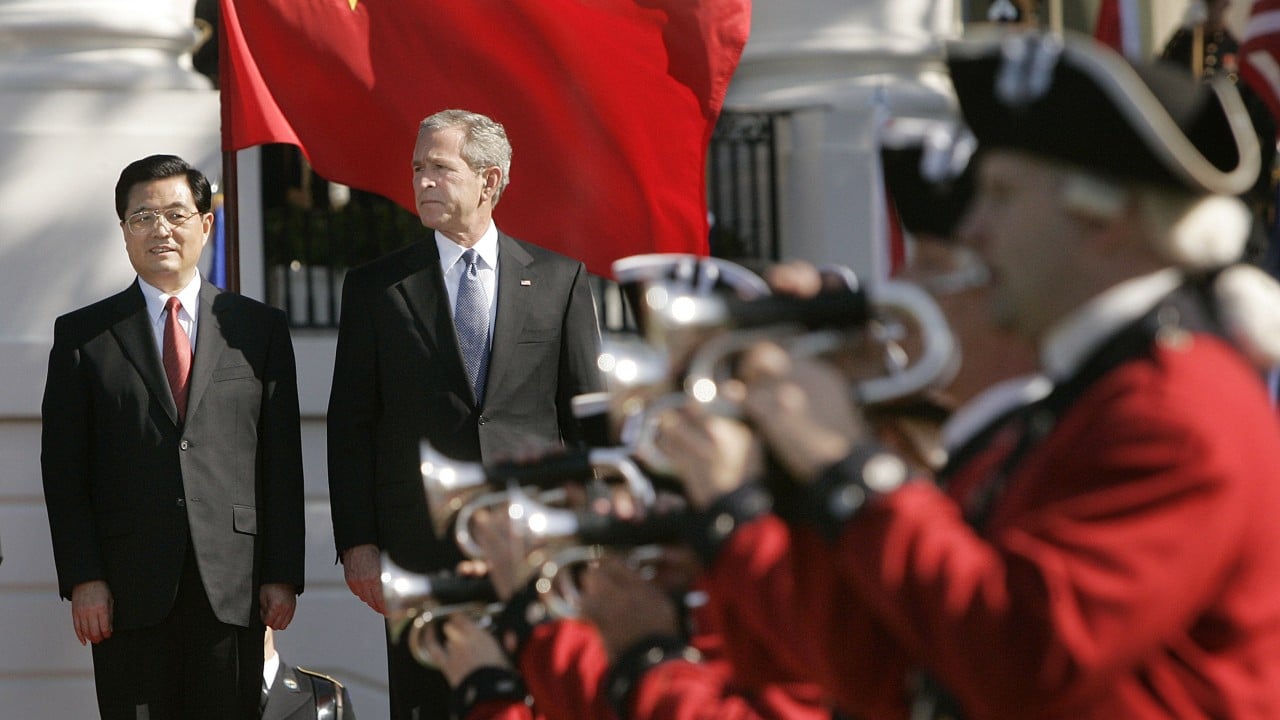
Every time a high-stakes bilateral summit hits the calendar, an army of self-appointed protocol consultants, former ambassadors, and think-tank pundits roll out the exact same tired playbook. They write breathless guides on how to manage a Chinese leader's US visit. They drone on about seating charts at state dinners, the exact placement of flags, the optics of motorcades, and how to balance human rights rhetoric with trade negotiations without ruffling feathers.
It is complete nonsense. For a closer look into similar topics, we recommend: this related article.
The conventional wisdom surrounding these visits is built on a dangerous delusion: the belief that statecraft is a polite theater governed by etiquette, where a well-timed toast or a carefully worded joint statement changes the course of global empires. I have watched corporations and governments waste millions of dollars trying to choreograph these events, obsessing over surface-level optics while missing the structural earthquake happening underneath their feet.
If you are organizing a visit between Washington and Beijing, or studying how these summits actually move markets and policy, you are probably asking the wrong questions entirely. You are asking how to keep protesters out of camera range. You are asking how to satisfy the corporate lobby without angering Capitol Hill hawks. These are administrative chores, not strategic wins. To get more details on this development, comprehensive reporting can be read at BBC News.
Let us dismantle the lazy consensus piece by piece.
The Protocol Fetish and the Illusion of Control
The standard advice insists that meticulous attention to protocol prevents diplomatic incidents. If the red carpet is three inches short or the interpreter uses the wrong inflection, disaster looms according to the pundits.
This is an insult to the intelligence of everyone involved in high-level geopolitics.
State leaders do not care about the seating arrangement at a Silicon Valley CEO dinner because they are distracted by the cutlery. They care about supply chain choke points, semiconductor export controls, capital flow restrictions, and domestic political survival. When Xi Jinping or any top-tier Beijing official travels abroad, the visit is not a social call. It is a high-stakes pressure test of global alignment, resource security, and technological dominance.
Treating a summit like a high-society wedding planner treats a reception guarantees failure. The real negotiations happen months before anyone steps onto an aircraft at Beijing Capital International Airport. The actual work is done in windowless rooms in Geneva or backchannel meetings between corporate titan representatives and ministry officials. The public visit is nothing more than a victory lap or a public accountability ritual. When you obsess over the motorcade route, you are managing the weather while your house is on fire.
The Corporate Proxy War and Boardroom Puppeteers
Another favorite trope of the foreign policy establishment is that these visits are about bilateral diplomacy conducted strictly between two sovereign governments operating in a vacuum.
Wake up.
Modern state visits are corporate proxy wars. When a Chinese delegation arrives in the United States, the invisible hand guiding the entire operation belongs to transnational capital. Wall Street institutions, major tech firms, and industrial giants are not sitting on the sidelines watching from the gallery. They are actively scripting the agenda behind closed doors.
During past high-profile visits, entire itineraries were rewritten because a major multinational CEO threatened to pull multi-billion-dollar investments if a specific policy announcement did not make the cut. The government officials are the actors on stage, but the corporate boardrooms are the directors. If your planning framework ignores the commercial imperatives driving both sides, you are operating blind. You are planning a diplomatic dialogue while ignoring the economic ammunition being traded beneath the table.
Companies spend millions positioning themselves as essential intermediaries. They lobby for inclusion in private roundtables, paying huge sums in sponsorship and advisory fees, believing that proximity to power equals influence. More often than not, they are simply funding the very theater that distracts them from regulatory risks brewing in local jurisdictions.
Dismantling the People Also Ask Fallacy
If you look at what people search for regarding these visits, you find questions like: "What is the purpose of a state visit?" or "How do trade agreements get signed during presidential summits?"
The premise of these questions is flawed. They assume that agreements are born during the summit itself, crafted by tired diplomats burning the midnight oil in hotel suites.
Nothing could be further from the truth.
Trade agreements are rarely signed on the spot during a state visit unless they have already been pre-negotiated down to the comma weeks in advance. A state visit is not a workshop; it is an unveiling ceremony. If a treaty or trade deal is being debated live during the visit, negotiations have already broken down into a public theater of desperation.
The true purpose of a state visit is signaling to internal domestic audiences. For the visiting leader, the trip proves to the domestic political base and the military establishment that they can command the global stage, project strength to Washington, and protect national interests abroad. For the host leader, it is about projecting control, managing inflation pressures by keeping supply lines open, or signaling toughness to domestic voters ahead of an election cycle. If you evaluate the success of the visit by how many contracts were signed in front of the press cameras, you are measuring the wrapper instead of the product.
The Security Theater Complex
Let us talk about the security apparatus, because this is where millions of taxpayer dollars vanish into absolute absurdity.
When a major delegation arrives, local police departments and federal agencies coordinate massive lockdowns, road closures, and exclusion zones. Security consultants bill exorbitant daily rates to assess risks that have already been managed by intelligence agencies months prior.
This is security theater in its purest form.
The primary risk of a state visit is rarely a physical security breach—both superpowers maintain immense counter-intelligence and protective operations that make direct physical threats statistically negligible. The real risk is narrative capture. The real threat is how an unexpected protest, a hot mic incident, or a pointed journalist question can hijack the news cycle and upend weeks of careful diplomatic positioning.
Yet, the standard playbook pours all its energy into barricades and motorcade routes rather than narrative defense and rapid response communication strategies. They prepare for a physical riot while losing the information war completely. If your security plan protects the motorcade but allows a hostile narrative to dominate global headlines unchecked, you have failed at your primary job.
The Battle Scars of Bad Planning
I have seen institutions blow fortunes on public relations campaigns designed to soften the blow of a controversial visit, only to watch their stock price tank because they misread the geopolitical wind.
Years ago, a coalition of trade groups tried to organize a high-level welcome reception for an international delegation, spending a fortune on private consultants and exclusive venues to insulate the guests from public backlash. They wanted absolute control. They wanted zero friction.
What happened? The attempt to sanitize the environment triggered a massive backlash from both local activists and federal security agencies who viewed the private corporate interference as a breach of protocol. The event became a public relations disaster. The lesson is simple: trying to engineer a sterile, controversy-free bubble in a polarized geopolitical climate is a fool's errand. Friction is inevitable. Power dynamics are messy.
If you try to manage every variable, you miss the macro trend. The key is not eliminating friction; it is understanding which friction matters and which is just background noise.
Media Manipulation and the Journalist Trap
Another catastrophic mistake planners make is treating the press corps as an obstacle to be managed rather than a variable to be engineered.
Too many delegation organizers try to starve journalists of access, creating rigid, heavily scripted press pools that ask pre-approved softball questions. This approach guarantees hostility. Modern reporters do not want to be treated like extras in a state propaganda film. When you lock them out or feed them sanitized talking points, you incentivize them to dig deeper into scandals, leaks, and dissent.
The smart operators do the opposite. They flood the zone with transparent access on specific non-sensitive issues while holding the line on core strategic assets. They understand that media narratives are shaped by momentum, not suppression. If you try to control every single headline, you look weak and defensive.
The Unconventional Playbook
If you find yourself tasked with advising or analyzing a major leader's state visit, throw away the standard checklist. Do not start with the guest list. Do not start with the media spin.
Start by mapping the balance sheet dependencies.
Ask yourself: Which specific industries stand to lose billions if this visit results in a diplomatic cold shoulder? Who are the quiet power brokers in private equity and manufacturing who have more influence over the tariff schedule than the Secretary of State? Track the money, not the diplomatic cables.
Next, look at the domestic vulnerabilities of both leaders. A leader facing domestic economic slowdowns or internal political pushback will approach a foreign visit with entirely different risk tolerances than one operating from a position of unchallenged authority. Design your analysis around their political survival metrics, not their polite talking points.
Finally, accept that public theater will always contradict private reality. The speeches given at the podium are meant for the history books and the evening news clips. The real work happens in the silent concessions made on regulatory enforcement, intellectual property enforcement timelines, and export license approvals.
Stop treating international statecraft like a high-end hospitality gig. Stop believing that a well-crafted banquet menu can mend structural trade imbalances or ideological divides. Power does not flow from the crispness of a tuxedo or the execution of a rigid motorcade schedule. Power flows from absolute control over critical resources, technological dominance, and the raw capacity to withstand economic retaliation.
Everything else is just pageantry for the cameras.