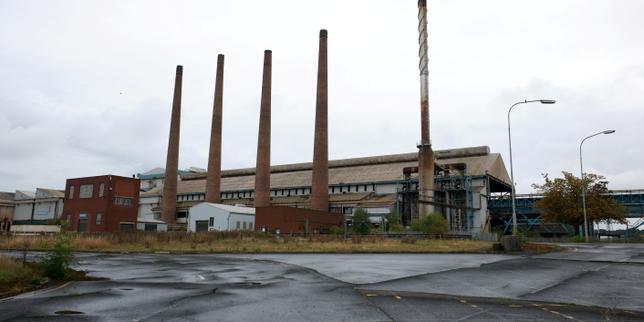
When a sovereign state moves to nationalize core industrial assets, the action is rarely a philosophical endorsement of public ownership. It is an emergency liquidity intervention designed to prevent a catastrophic cascading failure across national supply chains. The UK government preparation to absorb Speciality Steel, historically operated by Liberty Steel, exposes the fragile economics of legacy manufacturing under capital constraints, volatile energy markets, and structural shifts in global trade. Understanding why this intervention is occurring requires moving past political rhetoric and examining the balance sheet reality of specialized metallurgical production.
The Cost Function of Legacy Metallurgy
Speciality Steel operates in a high-barrier, low-margin segment distinct from bulk commercial steelmaking. The facilities in question produce high-alloy grades, aerospace components, and defense-critical materials. The economic model governing these assets relies on continuous thermal processes, heavy capital expenditure cycles, and long-term customer contracts with strict specification tolerances.
When these operations face insolvency or severe liquidity crunches, the market failure is not merely financial; it is structural. The primary cost drivers include:
- Energy Intensity: High-temperature electric arc furnaces and specialized vacuum induction melting require predictable, competitive industrial electricity pricing. Sudden spikes in energy tariffs destroy operating margins overnight, as fixed-price contracts roll over into spot markets.
- CapEx Starvation: Specialized steel plants require continuous reinvestment in refractory linings, pollution abatement technology, and metallurgical testing equipment. Deferred maintenance creates exponential liabilities, turning minor operational hiccups into catastrophic equipment failures.
- Working Capital Velocity: Raw material inputs such as nickel, chromium, and molybdenum are capital-intensive. When credit lines freeze, procurement halts, breaking the production schedule before finished goods can reach high-margin aerospace and defense buyers.
[Energy Price Volatility] + [Deferred CapEx]
       ↓
[Working Capital Freeze]
       ↓
[Insolvency Risk] → [Sovereign Supply Chain Threat] → [State Intervention]
The Strategic Dependency Paradox
The UK government cannot allow domestic production of aerospace and defense-grade alloys to simply vanish. Modern military hardware, civil aviation infrastructure, and critical civil engineering projects depend on domestic metallurgical provenance to mitigate geopolitical supply shocks. This creates a classic regulatory and strategic paradox.
State intervention socializes the downside risk of capital misallocation while private operators retain the upside during expansionary cycles. However, the alternative—total reliance on foreign imports for military-grade alloys—exposes the national industrial base to external coercion and export controls.
The decision to prepare for nationalization is a risk-mitigation calculation. The government is not betting on a turnaround in profitability; it is purchasing time to restructure liabilities, secure defense supply chains, and find a solvent private buyer capable of sustaining long-term asset integrity.
Operational Realities of Public Stewardship
If public administration takes over Speciality Steel, the new management team faces a rigid set of operational constraints that cannot be solved by financial infusions alone.
The first limitation is labor productivity and specialized talent retention. Metallurgical expertise is scarce. During periods of bankruptcy restructuring or nationalization talk, skilled engineers and furnace operators migrate to competitors or adjacent industries. Rebuilding institutional knowledge requires aggressive retention programs that inflate fixed overhead costs just as the plant attempts to stabilize operations.
The second limitation is commercial inertia. Industrial buyers hate supply chain volatility. When a steelmaker enters distress, Tier-1 aerospace and defense contractors immediately dual-source their components to mitigate disruption risk. Re-establishing those commercial relationships post-nationalization requires proving operational reliability over multi-year qualification cycles. Lower capacity utilization rates directly worsen the fixed-cost absorption problem, perpetuating operating losses.
The Structural Exit Strategy
State ownership of industrial assets is inherently unstable as a permanent model. Governments lack the commercial agility required to navigate cyclical commodity markets and compete for global contracts against state-subsidized foreign competitors. Therefore, any nationalization blueprint must incorporate a strict divestment timeline.
To transition the asset back to private hands without repeating the cycle of failure, the restructuring authority must execute three sequential phases:
- Liability Decoupling: Strip away legacy pension deficits and unsustainable debt burdens accumulated under previous private ownership, leaving a clean balance sheet for potential buyers.
- Asset Modernization: Inject targeted capital into energy-efficiency upgrades, specifically shifting toward lower-carbon electric arc processing to satisfy stringent environmental mandates and reduce long-term operational expenditure.
- Contractual Anchoring: Secure long-term off-take agreements with domestic defense primes and critical infrastructure developers to guarantee baseline operational volume before launching the sales process.
The impending absorption of Speciality Steel underscores the limits of laissez-faire industrial policy when strategic national assets collide with macroeconomic shocks. The ultimate success of the intervention will not be measured by whether the state can run a steel mill, but by how efficiently it can restructure the cost base to make the enterprise attractive to disciplined private capital.