The coffee in the corner of the briefing room is always bitter. It sits in a stained glass pot, steaming quietly, smelling faintly of burnt beans and early mornings. Agents call it jet fuel. It keeps the eyes open when the hours blur together from midnight patrols to sun-scorched afternoon shifts.
For years, the men and women who wear the green uniform have understood a fundamental truth about their work. The border is not a television script. It is dust, heat, tired feet, and the relentless hum of radios crackling with coordinates that change by the minute. It is an arena where policy meets human desperation, far away from the polished mahogany tables of Washington or the carefully angled camera lenses of state capitals.
Then came the texts.
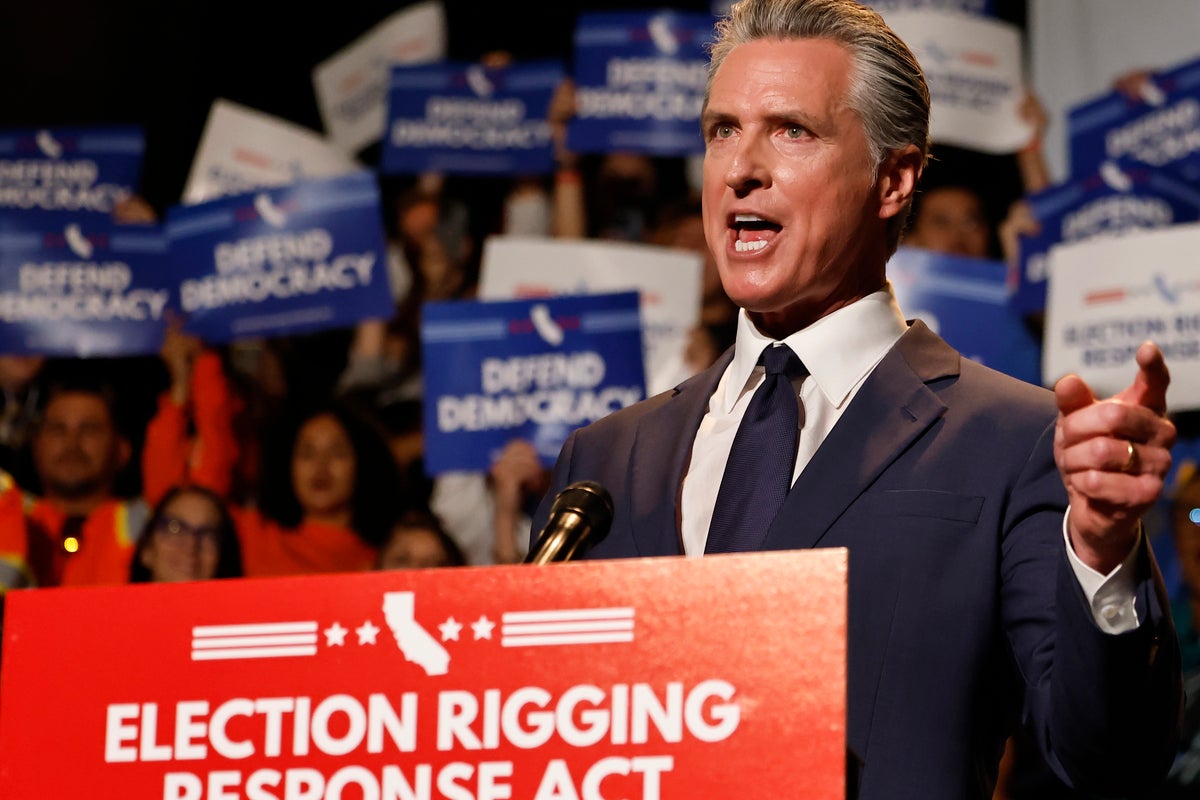
Screens glowed in the dim light of duty stations. Words scrolled across message threads, exposing a reality that many suspected but few could prove with documentary precision. What looked like an organic enforcement surge, a spontaneous demonstration of operational readiness during a high-profile political visit by California Governor Gavin Newsom, was something else entirely. It was a production.
Consider the mechanics of the event. To understand what happened, picture a sprawling outdoor site transformed into a temporary stage. Lights are adjusted. Personnel are shifted like chess pieces across a board, not to meet the chaotic demands of actual cross-border movement, but to fit the aesthetic requirements of a news cycle. A Department of Homeland Security official, caught in the quiet permanence of digital records, admitted the truth in black and white. It was a political stunt.
The public sees the badge. They see the uniform, the cruiser, the stoic posture against a backdrop of chain-link fence and arid earth. Trust is a fragile currency. When citizens look at law enforcement, they assume the mission is pure. They assume every deployment is driven by threat assessments, intelligence briefings, and the quiet calculation of public safety.
When those assumptions shatter, the sound is deafening.
Think about the frontline agent standing in the desert wind, wearing twenty pounds of tactical gear, watching colleagues get repositioned not because a sensor tripped or a group was spotted on thermal imaging, but because a camera crew was pulling up in a black SUV. The humiliation is quiet. It burns low in the chest. It turns the pride of service into something hollow.
Trust requires consistency. It requires the boring, unglamorous execution of duties without an audience.
For the average taxpayer, watching politics bleed into operational security feels like watching a sacred trust get traded for a thirty-second clip on the evening news. The borderlands are complex enough without theatrical interventions. Smugglers do not care about press conferences. Cartels do not pause their operations because a governor is touring a sector. Every hour spent staging a scene is an hour where resources are pulled away from the actual, gritty work of securing a sprawling, unforgiving frontier.
Texts do not lie. They are impulsive, born of the moment, typed with thumbs on cracked screens while sitting in idling patrol vehicles. They capture the private cynicism of public servants who know they are being used as props.
"We are just window dressing today," one message essentially conveyed, wrapped in the shorthand of law enforcement jargon.
Window dressing.
That phrase should linger in the mind of anyone who believes institutions exist to protect rather than perform. When the apparatus of national security is hijacked for optics, the collateral damage is not just political point-scoring. It is the erosion of faith in the people who stand watch while the rest of the country sleeps.
The fallout extends far beyond a single news cycle or a viral social media post. It forces a reckoning within the ranks. Younger agents, fresh out of the academy with idealized notions of duty and honor, learn a bitter lesson about how the machinery actually operates. They learn that headlines sometimes matter more than interdictions, and that perception can be manufactured faster than an intelligence report can be verified.
This is the hidden cost of performative governance.
When everything becomes a campaign asset, nothing remains authentic. The line between reality and television blurs until the public can no longer tell the difference between a genuine crisis response and a carefully choreographed photo opportunity. And in that blur, the real work of governance suffers.
The sun sets fast over the desert horizon. The television crews pack up their expensive lenses, fold their tripods, and drive back to air-conditioned hotels in the city. The politicians board their flights, leaving behind the dust of the valley and the echoes of their own speeches.
Back at the station, the coffee pot is empty. The agents are still there, stepping back into their cruisers, picking up the radio mics, waiting for the next sensor to trip in the dark. They have to clean up the stage, pack away the illusions, and go back to facing a reality that refuses to be scripted.