The roar of eighty thousand screaming football fans is a specific kind of deafening. It bounces off steel rafters, vibrates through concrete concourses, and drowns out everything in its path. In the summer of 2026, that wall of sound will echo across North America as the FIFA World Cup takes over the continent. Billions of eyes will watch a ball move across patches of grass in Vancouver, Seattle, and beyond. Corporate logos will flash. National anthems will play.
But beneath the modern turf of these multi-million-dollar stadiums lies something much older, much quieter, and infinitely more durable. If you found value in this post, you might want to read: this related article.
For centuries, Coast Salish peoples have looked out at the waters of the Pacific Northwest, navigating the complex waterways that connect what we now call Washington State and British Columbia. They were here before the borders. They were here before the sport of soccer was codified in nineteenth-century English public schools. Now, as the world’s biggest sporting event arrives on their ancestral lands, Indigenous nations like the Puyallup Tribe and First Nations in Canada are stepping into the brightest spotlight on earth. They are not asking for permission. They are claiming their space.
This is not a story about sports marketing or corporate social responsibility. It is a story about survival, visibility, and a profound cultural gamble. For another angle on this event, refer to the latest update from The Athletic.
The Erasure in the Echo Chamber
Walk through any major North American city hosting World Cup matches. You see towering glass skyscrapers, bustling transit hubs, and fan zones draped in international flags. It is easy to forget whose ground you are actually walking on. Historically, major sporting events have treated Indigenous populations as a footnote—a colorful opening ceremony dance, a brief land acknowledgment mumbled over a crackling stadium PA system, and then back to business.
True visibility requires more than a token gesture. It requires presence.
Consider the reality of the Puyallup Tribe, whose reservation sits tucked into the shadow of Mount Rainier, mere miles from where World Cup matches will be played in Seattle. For generations, the battle was simply to be seen as a living, breathing people rather than a historical relic. The state tried to fish them out of their rivers. The boarding schools tried to beat the language out of their children. Yet, they remained.
When a global entity like FIFA rolls into town, it brings an economic and cultural tsunami. Usually, local communities are swallowed whole by the spectacle. But this time, a loose coalition of sovereign Indigenous nations looked at the incoming wave and decided to ride it.
The Quiet Diplomacy of the Coast Salish
Behind the scenes of the 2026 tournament, an unprecedented narrative has been unfolding. It did not happen overnight. It began with years of quiet, persistent diplomacy, stretching across an international border that Indigenous people never drew in the first place.
First Nations leaders in British Columbia and tribal council members in Washington began meeting with local organizing committees. The message was simple: You are hosting a party in our backyard, and we are going to be the hosts.
This translated into concrete, legally binding partnerships. In Vancouver, host First Nations became official partners in the planning and execution of the games. In Seattle, the Puyallup Tribe secured a historic agreement to ensure their culture, their business enterprises, and their youth are woven into the very fabric of the tournament.
Imagine a young Indigenous artist, perhaps nineteen years old, sitting in a studio today. For months, they have been working on a design that will be seen by hundreds of millions of people on official merchandise, murals, and stadium graphics. That is not just an art installation. It is a psychological shield against erasure. It tells every Indigenous kid watching the tournament from a rural reservation or an urban apartment that they belong in the future, not just the past.
The Invisible Stakes of the Global Game
Why does a soccer tournament matter so much to sovereign nations with pressing real-world issues like housing, healthcare, and treaty rights? Because cultural awareness is the bedrock upon which political sovereignty is defended.
When the general public views Native nations as invisible or extinct, it becomes terrifyingly easy for governments to infringe on their rights, pollute their waters, and ignore their treaties. Visibility is protection.
The World Cup is a massive megaphone. By partnering with the event, these tribes are hijacking that megaphone to broadcast a vital truth: We are still here, we are thriving, and we are modern economic powerhouses.
The economic engine of the Puyallup Tribe, for instance, has grown exponentially over the last few decades. They operate major casinos, marinas, and cannabis enterprises, employing thousands of non-tribal neighbors and pumping millions of dollars into the regional economy. Their partnership with the World Cup is a sophisticated business move. It places tribal enterprises on a global stage, proving that indigenous sovereignty and modern capitalism can coexist on a massive scale.
Crossing the Border That Failed to Divide
One of the most profound elements of this World Cup mobilization is how it ignores the colonial border between the United States and Canada. The Coast Salish people have always been interconnected by family, trade, and language, long before the 49th parallel was mapped out by politicians in Washington D.C. and London.
The 2026 games have effectively forced the world to recognize this pre-existing geography.
First Nations in Canada and tribes in the Pacific Northwest are collaborating, sharing strategies on how to handle massive international crowds, how to protect intellectual property from counterfeiters selling fake Native art, and how to maximize the long-term tourism benefits for their communities.
Think about the sheer scale of the logistical challenge. Over a million visitors will descend upon the Pacific Northwest. They will buy food, book hotel rooms, and take tours. Through these cultural partnerships, a significant portion of those visitors will interact directly with Indigenous-owned businesses. They will taste traditional foods, listen to oral histories told by hereditary chiefs, and purchase authentic art that supports families from Vancouver Island to the shores of the Puget Sound.
Beyond the Final Whistle
The tournament will eventually end. The teams will fly home, the temporary fan zones will be dismantled, and the world will shift its attention to the next big media circus.
But the legacy of these partnerships is designed to outlast the event itself.
The real victories won't be recorded on the stadium scoreboard. They will be found in the updated school curriculums that resulted from this heightened awareness. They will be found in the permanent cultural centers funded by tournament revenues. They will be found in the minds of a generation of non-Indigenous soccer fans who walked into a stadium expecting only a match, but walked out with a fundamental understanding of whose land they stood upon.
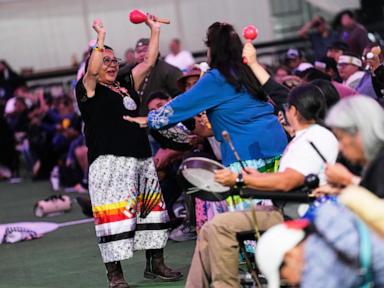
On a warm July night, as the floodlights illuminate the pitch and the crowd erupts into a unified roar, a group of elders will stand in the pavilion. They will wear their cedar bark hats and woven blankets. They will look down at the grass, and then out at the massive crowd.
The world thinks it came to watch a game. The elders know the world came to bear witness.