Every Tuesday night, the high-rise windows of downtown Los Angeles gleam like a spreadsheet made of glass and light. From thirty stories up, the city looks orderly. It looks like a math problem that has already been solved.
But if you drop down to street level, past the concrete bypasses and into the dimming warmth of a neighborhood like Silver Lake or the dense blocks of the San Fernando Valley, the perspective shifts. Here, the city is not a spreadsheet. It is a collection of people sitting at kitchen tables, staring at a stack of paper. Rent notices. Utility bills. Bulletins about the latest zoning meetings.
For years, local politics in this city operated under a reliable, heavy momentum. Decisions were made by established names who understood the levers of power, backed by the kind of institutional support that ensures stability. It was a system built on predictability. If you knew the right people and said the right things, the path to city hall was relatively smooth.
Then came a shift that no one in the traditional corridors of power quite saw coming.
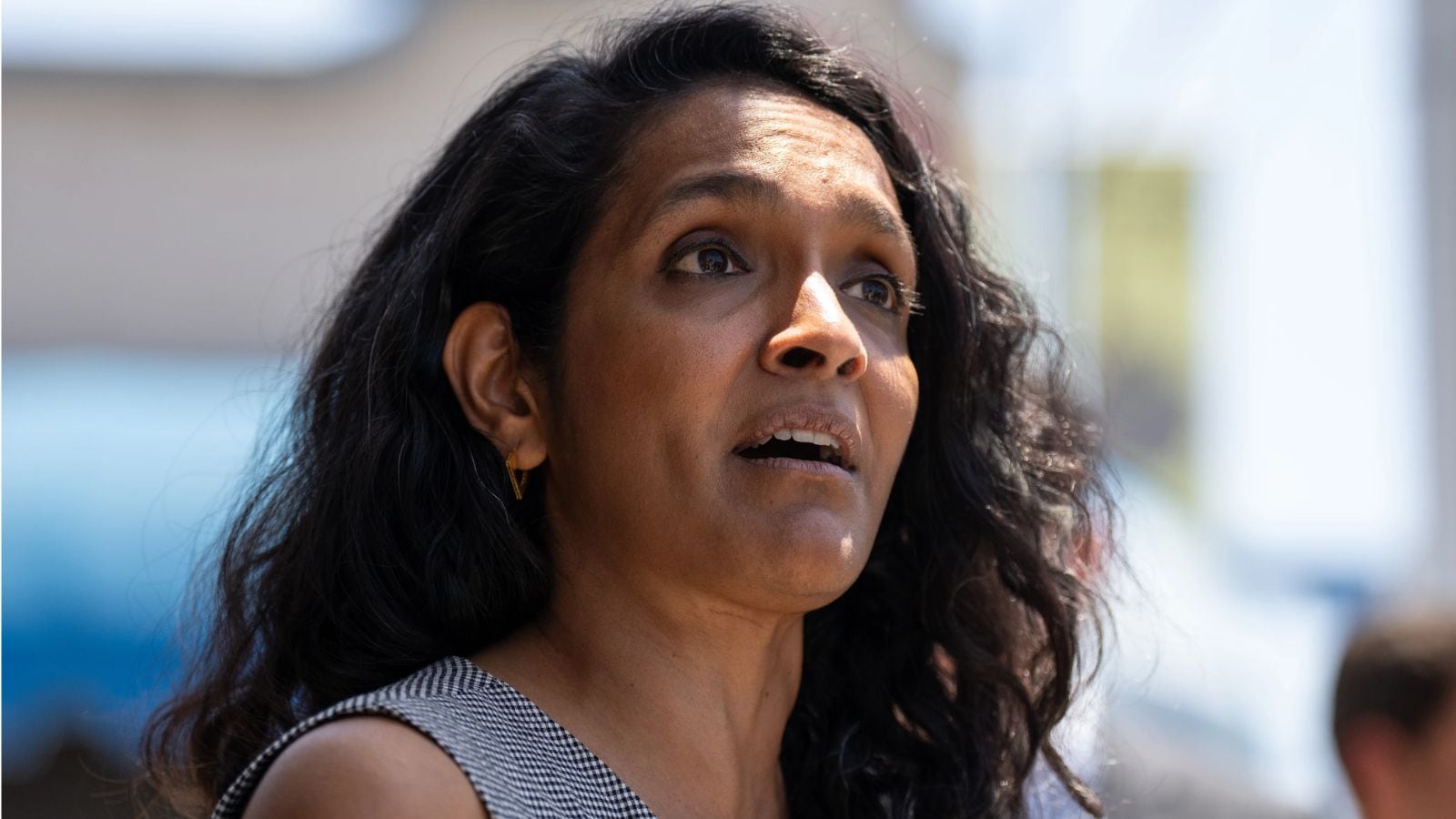
The battle for the future of Los Angeles is currently playing out in the slow, agonizingly meticulous counting of ballots for the city’s second mayoral spot. On one side stands Traci Pratt, a figure representing the seasoned, pragmatic establishment—a candidate who promises a return to balanced budgets, structured governance, and the steady hand that business interests and long-time homeowners find comforting. On the other side is Nithya Raman, an urban planner whose political identity was forged not in backroom committee meetings, but in the grueling, grassroots work of community organizing.
The latest numbers show Raman gaining significant ground, closing the gap with a persistent, quiet momentum that has sent shockwaves through the political establishment.
To understand why this margin matters, you have to look past the percentages and into the daily friction of living in Los Angeles. Consider a hypothetical resident—let’s call her Maria. Maria has lived in an apartment in Echo Park for twelve years. She watches the neighborhood change around her, the coffee shops growing more expensive, the rents climbing by predictable yet painful increments every single year. For Maria, city hall has always felt like a distant planet. The council members were names on lawn signs she walked past on her way to the bus stop.
When a candidate like Raman speaks, Maria hears something different. She doesn't hear standard policy jargon about "reallocating budgetary surpluses." She hears a direct acknowledgement of the mold in her bathroom that the landlord refuses to fix. She hears an understanding of why it takes forty-five minutes for a bus to arrive on a Tuesday evening.
Raman’s surge is not an accident of statistics. It is the result of a deliberate, exhausting ground game. While traditional campaigns rely heavily on expensive television ad buys and glossy mailers that go straight from the mailbox to the recycling bin, Raman’s volunteers have been walking. They have been knocking on doors in the heat, standing on cracked sidewalks, and having long, often difficult conversations with voters who had given up on the idea that local government cared about them.
The establishment view of municipal governance is often technocratic. It treats a city like a machine that needs regular oil changes and parts replaced. If the streets are paved and the trash is collected, the job is done.
But a city is not a machine. It is a living, breathing ecosystem of human anxiety and aspiration.
Pratt’s supporters argue that in a time of economic uncertainty, the city needs a proven administrator. They look at the rising deficit, the complexities of managing a massive municipal workforce, and the need to maintain a business-friendly environment that keeps employers from fleeing to the suburbs or out of state. They see Pratt as a bulwark against radical experimentation that could destabilize the city's financial foundation. Their argument is rooted in a fundamental human desire: the craving for safety and predictability.
Yet, for a growing segment of the population, predictability looks a lot like stagnation.
The tension between these two worldviews is precisely what makes the current ballot count so gripping. Every batch of votes released by the county registrar is a referendum on what kind of city Los Angeles wants to be. Is it a corporate entity to be managed efficiently, or is it a community that needs to be fundamentally restructured to protect its most vulnerable residents?
The numbers tell a story of a deeply divided electorate. In the wealthier hillsides, where the streets are quiet and the canyon breezes cool the afternoon heat, the vote leans heavily toward the established order. Residents there worry about property values, public safety, and the visible reality of homelessness that seems to defy every bureaucratic solution thrown at it. They want results, and they want them through traditional channels.
Down in the flats, in the crowded apartment complexes where multiple generations share a single zip code, the energy swings toward Raman. Here, the status quo isn't something to be protected; it is something to be survived.
This is the invisible stakes of the election. It is a conflict over the soul of urban planning. For decades, Los Angeles was designed around the automobile and the single-family home—a sprawling dream of suburban paradise dropped into a desert basin. But that dream has run out of space. The traffic is at a standstill, the air is thick, and the cost of entry into that suburban paradise has become astronomical.
Raman’s background as an urban planner is central to her appeal. She views the city through the lens of density, public transit, and tenant protections. To her supporters, she represents a modern vision of a sustainable, equitable metropolis. To her detractors, her policies represent an existential threat to the neighborhood character that generations of Angelenos have fought to preserve.
The counting continues in a nondescript warehouse where election workers sit under fluorescent lights, moving sheets of paper into scanners. It is a slow, unglamorous process. There are no soaring speeches here, no campaign rallies, no dramatic music. Just the rhythmic click of machinery and the quiet scratch of pens on tally sheets.
But within those paper ballots lies the friction of two different futures rubbing against each other.
The gap between Pratt and Raman is shrinking because the people who usually stay home on election day decided to show up. They showed up because the pressure inside the pressure cooker of daily life in the city has become too intense to ignore. When rent consumes more than half of a worker's take-home pay, politics stops being an abstract hobby for the wealthy. It becomes a matter of survival.
The establishment is watching this recount with a growing sense of unease. They are realizing that the old playbook—the endorsements from traditional power brokers, the backing of major developers, the appeals to moderate stability—may no longer be enough to guarantee victory. The ground beneath their feet is shifting, moving toward a new kind of politics that is louder, more demanding, and deeply impatient.
Whatever the final tally reveals, the momentum has already sent a clear signal. The city cannot be run from thirty stories up anymore. The people at the kitchen tables are demanding to be heard, and they are using the only tool they have left to force their way into the room.
The sun goes down over the Pacific, casting long, purple shadows across the basin, covering both the mansions in the hills and the tents under the freeway in the exact same twilight.