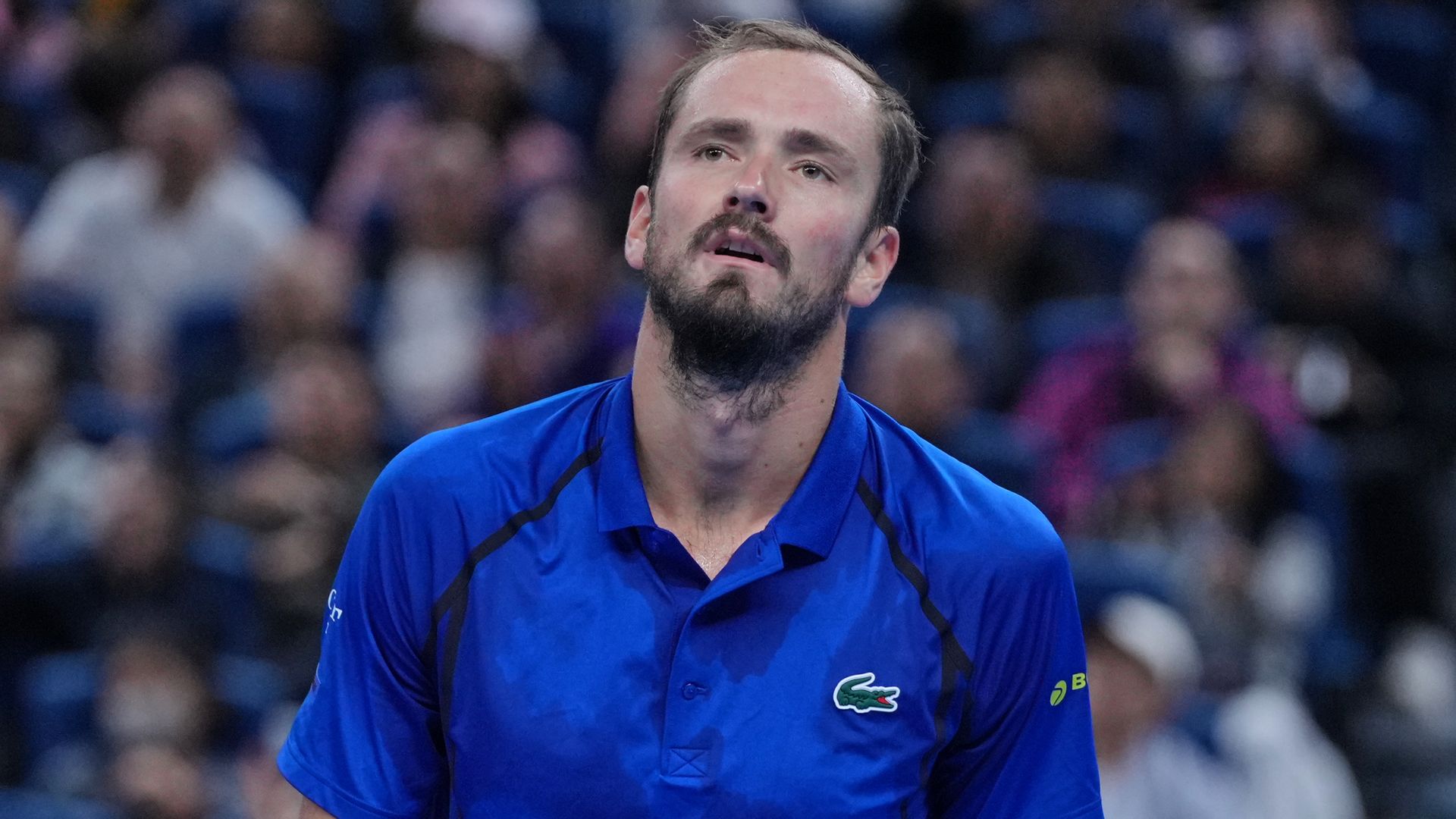
Silence on a tennis court is a heavy thing. It is not the absence of sound, but a collective holding of breath. Thousands of eyes locked onto a yellow sphere humming through the air, a rhythmic thump of rubber against grit, shoes squeaking against the baseline. Then, a sudden, sharp crack.
Not the sound of a winning shot. Not the roar of approval. Meanwhile, you can find related events here: Malaysia is Right to Leave F1 Behind and You Are Foolish to Want Them Back.
Just a gasp.
On a sun-drenched afternoon, a routine motion unspooled into a disaster of milliseconds. A player, frustrated by a point slipping away, swatted a loose ball behind them without looking. It is an instinct almost every athlete recognizes—that flash of annoyance vented into the nearest object. But physics and probability do not care about frustration. The ball flew straight, true, and devastatingly hard into the path of an unsuspecting official. To explore the complete picture, we recommend the excellent article by Sky Sports.
Impact.
Instantly, the ordinary world dissolved. The match stopped. The score ceased to matter. What remained was the human cost of a careless reflex, playing out in agonizing slow motion under the glare of stadium lights and millions of remote screens.
Rules in sports often feel cold until they collide with reality. We read them in rulebooks printed in small font, assuming they exist to govern abstract points and penalties. But rule 3.03 or its equivalent in the Grand Slam rulebook is not written in ink alone. It is written in consequences.
Intent versus impact. It is the eternal debate that follows every human error. The player did not wake up that morning plotting harm. There was no malice in the wrist. Only heat, fatigue, and a momentary lapse of discipline. Yet, the law governing the court makes a stark distinction between what is felt inside the heart and what is felt by the body of another.
Consider the official standing at the edge of the court, doing a job that demands absolute vigilance, trusting that the athletes within the white lines operate within the boundaries of safety. When that trust shatters, the reaction is visceral. Air knocked from lungs. A sharp cry. The vulnerability of being defenseless in an arena built for fierce competition.
We have all been there, in smaller ways. We have spoken a word too sharply in the heat of an argument, thrown a set of keys onto a counter with too much force, or reacted out of blind instinct before the brain could catch up to the potential fallout. Most of us are fortunate enough that our careless moments hit empty air or land harmlessly on a carpet. Professional athletes perform their private flaws on a global stage, where the margin for error is measured in centimeters and the price of a mistake is paid in public view.
As the immediate shock rippled through the stands, the atmosphere shifted from excitement to a heavy, suffocating discomfort. Officials gathered. Whispers turned into urgent consultations. The rules were consulted, interpreted, and applied with unyielding precision. There was no room for negotiation, because allowing exceptions for star power or accidental intent would dismantle the entire foundation of fairness.
Disqualification.
The word sounds clinical, administrative. But on the court, it looked like a slow walk toward a bag, a hurried handshake with a bewildered opponent, and a downward gaze while walking off the court under a storm of conflicting jeers and stunned silence.
The aftermath of such an event is rarely just about the match that was lost. It triggers a wider reckoning across the sport. Fans debate on digital forums, analysts dissect every angle on television screens, and young players watching from home receive an unforgettable lesson in accountability.
Sport is often called a metaphor for life, but moments like this strip away the metaphor entirely. They remind us that pressure is not an excuse; it is a test of character when the stakes are highest. When the cameras stopped rolling and the stadium emptied out, what lingered was not the scoreline or the tournament bracket. It was a stark reminder of how quickly everything can change, and how fragile the boundaries are between a game and reality.


