The rain in the equatorial forest does not fall; it walls you in. In the dense, green canopy of the Democratic Republic of Congo, the humidity hangs so thick it feels like breathing wet wool. For Dr. Matthieu Kabamba, a local epidemiologist, the dampness was a constant companion, but on a Tuesday morning, it was the silence that made him freeze.
In a small village outside Mbandaka, a mother named Marie sat on a wooden stool, her eyes fixed on the dirt floor. Her seven-year-old son, Alphonse, lay under a faded wax-print cloth in the corner of the mud-brick home. He was burning. Not with a normal fever, the kind that flares up with malaria and recedes with bitter pills. This was different. His skin was sensitive to the lightest touch.
When Matthieu knelt beside the boy, he noticed the small, dark bruises blossoming beneath the child’s skin. Petechiae. It is the medical term for tiny hemorrhages, the first quiet announcements that blood vessels are losing their integrity.
Matthieu felt a familiar, cold spike of adrenaline. He had seen this ghost before.
The World Health Organization recently issued a stark warning regarding the "scale and speed" of the latest Ebola outbreak. To the global public reading the headlines on their phones, it sounds like an abstract threat, a repetitive alarm from a distant continent. But on the ground, speed is not a statistic. Speed is the time it takes for a virus to cross a river, jump from a funeral to a marketplace, and slip into a crowded urban center where millions live shoulder to shoulder.
The Ghost in the Blood
To understand why the World Health Organization is sounding an alarm that borders on panic, you have to understand how Ebola operates. It is not an apex predator that hunts out in the open. It is an opportunist that exploits the deepest, most beautiful parts of human nature.
Imagine a microscopic entity shaped like a shepherd's crook. It does not possess a brain, yet it exhibits a terrifying strategy. When Ebola enters a human host, it targets the dendritic cells—the sentinels of our immune system. It effectively blinds the body's defenses. While the immune system gropes in the dark, wondering why the thermostat is rising, the virus replicates at an exponential rate.
http://googleusercontent.com/image_content/193
By the time the body realizes it is under attack, it launches a desperate, chaotic counteroffensive. This is the cytokine storm. It is a scorched-earth policy. The body attacks its own tissues, degrading the lining of the blood vessels.
But the virus’s true brilliance—and its true horror—lies in how it travels from person to person. It does not spread through a casual cough in a grocery store aisle like influenza. It requires direct contact with bodily fluids. It waits for the moments when we are most human.
When a child is burning with fever, a mother holds him close, wiping the sweat from his forehead. When a patriarch dies, the village gathers to wash the body, to kiss the brow, to send the spirit off with dignity. Ebola transforms these acts of love into vectors of destruction.
"We are fighting an enemy that uses our compassion against us," Matthieu said, his voice barely audible over the drone of cicadas. He was pulling on his third layer of personal protective equipment (PPE). The yellow rubber gloves clicked against his wrists.
The physical toll of the virus is catastrophic, but the psychological toll is what breaks a community. In the early days of an outbreak, denial is the first defense mechanism. People whisper about witchcraft. They blame poisoned wells or political conspiracies. Who can blame them? Accepting that an invisible monster is tearing through your family, carried by the very people you love, is a truth too heavy for the mind to hold.
The Geometry of an Outbreak
When the WHO warns of "scale," they are talking about mathematics.
In past decades, Ebola outbreaks were largely self-limiting. They occurred in remote, isolated villages tucked deep inside the rainforest. A virus might devastate a community of a hundred people, but because there were no roads, no cars, and no commerce, the virus would run out of hosts. It burned hot and fast, like a fire in a single, isolated tree.
The world has changed.
Today, the logging roads cut deep into the ancient forests. Motorbikes zip between rural outposts and bustling river ports in hours, not weeks. The geometry of the outbreak has shifted from a isolated point to a web.
Consider the trajectory of a single infected traveler. He feels a slight headache—nothing unusual—and boards a crowded wooden whaleboat heading down the Congo River toward Kinshasa, a mega-city of over fifteen million people. He spends three days in close quarters with hundreds of traders. He touches the handrails, shares a meal, vomits into the river. By the time he reaches his destination, he is a walking biohazard.
This is the nightmare scenario that keeps global health officials awake at night. If Ebola establishes a permanent foothold in a densely populated urban slum, where sanitation is scarce and contact tracing is a logistical impossibility, the containment strategies of the past century become obsolete.
The current outbreak is moving with a velocity that suggests the old timelines no longer apply. The time between the index case—the first patient—and widespread community transmission has shrunk. We are no longer dealing with a slow-burning ember. We are dealing with a firestorm driven by modern mobility.
The Suit and the Stigma
To appreciate the sheer bravery required to stand in the path of this velocity, you must step inside the suit.
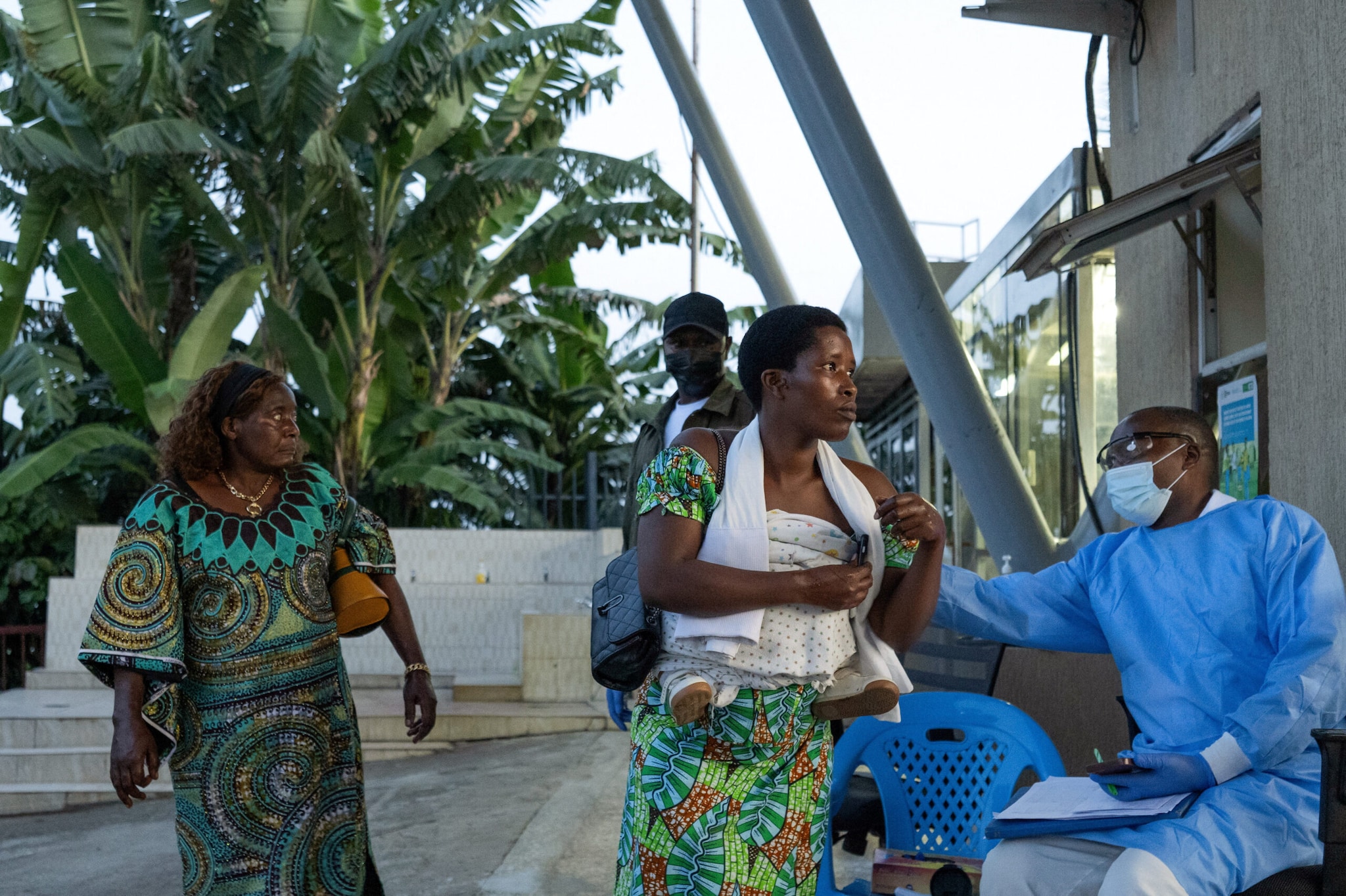
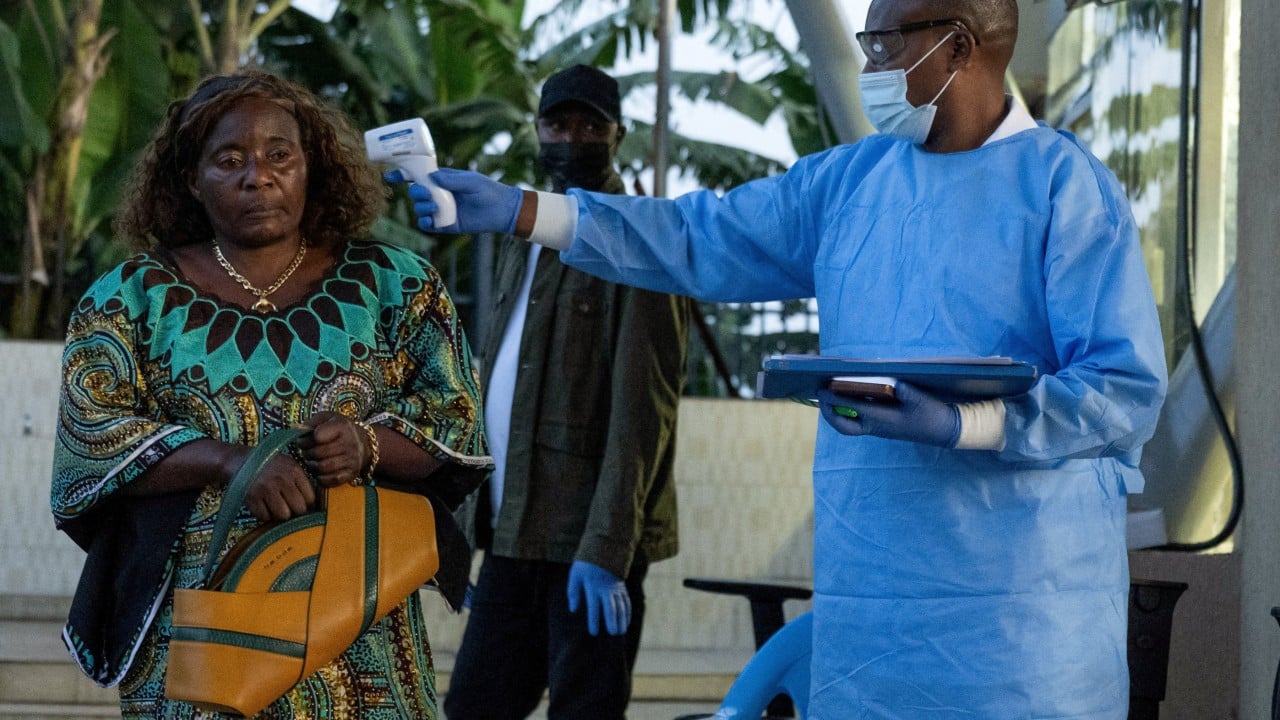
An Ebola treatment center is a place of stark contrasts. On the outside, it is often a converted school or a cluster of white tents surrounded by plastic orange fencing. Inside, it is a high-tech battleground operating under strict, monastic rules.
Entering the red zone—the high-risk area where confirmed patients are kept—is a ritual of survival. You put on a scrub suit. Then rubber boots. Then a waterproof gown, a mask, goggles, a hood, and multiple layers of gloves. Every seam is checked by a colleague.
Inside the suit, the world changes. The temperature rises immediately to over a hundred degrees. Within ten minutes, sweat pools in your boots. Your goggles fog up with every breath. You can hear nothing but the sound of your own respirations, loud and rhythmic, like a diver deep underwater.
You are hyper-aware of everything you touch. If you drop a pen, it stays on the floor. If your nose itches, you must ignore it. You have exactly forty-five minutes before the heat exhaustion begins to impair your judgment, and judgment is the only thing keeping you alive.
For the patients inside, looking up from their cots, the doctors and nurses do not look like saviors. They look like astronauts. They look like apparitions. They have no faces, only eyes peering through fogged plastic. The comfort of human touch—the simple reassurance of a bare hand on a shoulder—is entirely stripped away.
"The hardest part isn't the heat," says Sarah, a nurse who volunteered during the West African epidemic and returned for this response. "The hardest part is looking at a dying child and knowing that if you touch them with affection, you might carry that death home to your own children."
When patients recover—and many do, thanks to new therapeutic treatments—the battle is only half won. The stigma follows them like a shadow. Survivors return to their villages to find their clothes burned, their jobs gone, and their neighbors backing away in terror. The virus leaves scars on the social fabric that take generations to heal.
The Failure of the Horizon
Why does this happen over and over again? Why does the world seem perpetually surprised by the scale and speed of an illness we have known about since 1976?
The answer lies in our collective attention span. Global health funding operates on a cycle of panic and neglect. When an outbreak hits the news, money pours in. International agencies send planes filled with supplies, experts hold press conferences, and the world wrings its hands. But the moment the transmission chains are broken and the headlines fade, the attention moves elsewhere.
The funding dries up. The laboratory infrastructure built during the crisis falls into disrepair. The local community health workers, who risked their lives to track down cases in the mud, are laid off.
We treat these outbreaks as sporadic natural disasters, like earthquakes or hurricanes, rather than predictable consequences of ecological disruption and underfunded health systems. When we clear forests for agriculture, we come into closer contact with the wild reservoirs of the virus—most notably fruit bats. We invite the virus out of the woods, and then we wonder why it walks through our front doors.
The World Health Organization’s current warning is an attempt to break this cycle before the window of opportunity slams shut. It is an acknowledgment that the tools we have—experimental vaccines and monoclonal antibody treatments—are only as good as the logistics used to deploy them. A vaccine sitting in a temperature-controlled freezer in Geneva is useless if there is no cold-chain infrastructure to keep it frozen on a dirt road five hundred miles from the nearest power grid.
The Threshold
Back in the village, the afternoon sun began to cut through the heavy cloud cover, casting long, sharp shadows across the dirt courtyard.
Matthieu finished taking the blood sample from young Alphonse. He placed the vial inside a triple-layered transport container, swabbed the outside with chlorine solution, and handed it to a colleague who would ride it by motorbike to the nearest mobile laboratory.
The boy’s father stood by the door, his hands clasped tightly in front of him. He did not ask if his son would live. He asked if he would be allowed to see him if they took him away to the treatment center.
Matthieu looked at the man through his fogged goggles. He wanted to offer a definitive promise. He wanted to say that the modern medicine the world boasts about would save his boy. But he knew the numbers. He knew the speed at which the virus was moving through the surrounding communities.
The true stakes of the Ebola fight are not measured in global health security indexes or macroeconomic forecasts. They are weighed in the quiet spaces between people. They are decided in the choice of a father to trust a stranger in a yellow suit, and in the willingness of a local doctor to keep walking into the heat, day after day, while the rest of the world looks the other way.
Matthieu walked out into the humid air and began the meticulous process of spraying himself down with bleach. The chemical smell bit into his lungs, sharp and clean, momentarily drowning out the scent of the wet earth and the gathering storm. He took off his outer gloves and tossed them into the waste bin.
Behind him, in the shadow of the doorway, the father waited for the lab results, watching the dirt road that led out of the village and into the unpredictable world beyond.