The rain in Maine does not fall; it hangs. It clings to the pine needles and slickens the asphalt of the rural two-lane highways until the headlights of a passing cruiser look like smeared ink on wet paper. On a night like that, when the air smells of damp earth and rotting leaves, a routine traffic stop ceases to be routine. It becomes a crucible.
Imagine a young deputy. We will call him Miller. Miller is twenty-four, his uniform stiff, his boots still holding the faint scent of factory polish. He is standing by the driver’s side window of a rusted sedan. His flashlight beam shakes, just a fraction, reflecting off the droplets on the glass. Inside the car, a man is reaching slowly into his jacket. Miller’s hand rests on his holster. His heart is a hammer against his ribs. In that split second, Miller is not thinking about federal policy, congressional appropriations, or agency quotas. He is wondering if he will see the sunrise.
He survived that night. But the system that put him there, underprepared and over-accelerated, is failing thousands of others just like him.
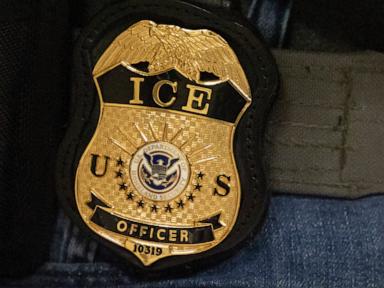
When we look at the colossal machinery of federal law enforcement—specifically Immigration and Customs Enforcement, or ICE—we tend to see it through the lens of statistics. We talk about apprehension numbers, budget deficits, and political chess moves. We view it from thirty thousand feet. But the real crisis is happening on the ground, in the muddy, chaotic reality of rapid hiring initiatives where speed is prioritized over safety, and the human cost is paid in blood.
The Pressure Cooker of the Fast Track
To understand how we arrived at this point, we have to look back at the mandate that reshaped the agency. It was a directive born of political urgency: hire thousands of new officers, and do it now.
When a bureaucracy is told to grow at breakneck speed, something has to give. In a functioning system, background checks are slow, deliberate, and painful. They require investigators to knock on the doors of ex-spouses, to talk to neighbors who remember the candidate's teenage temper, to dig into financial records that might suggest vulnerability to coercion. This takes months. Sometimes years.
But when the clock is ticking and quotas are looming, those thorough investigations become bottlenecks.
The agency began to rely on expedited background checks. They streamlined the polygraph tests. They looked at resumes not with a magnifying glass, but with a checklist. The goal shifted from finding the right people to finding enough people.
Consider the sheer physical reality of training these recruits. Federal law enforcement academies are designed to mold civilian minds into disciplined, analytical instruments. It requires time to teach a human being how to de-escalate a volatile situation when their adrenaline is screaming at them to fight or flee. When you compress that timeline, you do not produce officers; you produce armed civilians in uniform.
The Ghost in the Background
The danger of rapid hiring is not just that we recruit people who are technically unqualified. The danger is that we admit those who are actively dangerous.
A background check is not just a formality. It is a shield. It protects the public from authority figures who abuse power, and it protects the officers themselves from partners who cannot be trusted in a crisis. When we bypass that shield, the consequences are tragic and predictable.
Take the case of an officer whose history was checkered with red flags—minor run-ins with local law enforcement, a pattern of volatile behavior, a trail of quiet warnings that should have triggered a deeper dive. Under normal circumstances, his application would have gathered dust in a rejection pile. But during a hiring surge, he was fast-tracked. He was given a badge. He was given a gun.
Months later, that same officer was involved in a violent, fatal escalation.
It is easy to blame the individual. It is easy to brand them a "bad apple" and move on. But that is a coward's analysis. The truth is far more unsettling: the system built the environment that allowed him to thrive. The system held the door open, ushered him inside, and handed him the keys.
The Anatomy of an Emergency
Law enforcement is a profession of seconds.
When a crisis erupts, an officer does not have time to consult a manual or call a supervisor. They rely on muscle memory and instinct. If their training was rushed, if their psychological evaluation was bypassed to meet a quarterly hiring goal, those instincts will be flawed.
In the high-stakes world of immigration enforcement, these split-second decisions carry immense weight. Officers are operating in communities where trust is already paper-thin. A single misstep, a single act of unwarranted aggression, can shatter decades of community relationship-building. It breeds fear. It silences witnesses. It makes everyone—including the officers—profoundly less safe.
We must ask ourselves what we are actually buying when we demand rapid scaling. We are buying the illusion of security at the expense of actual safety. We are prioritizing headcount over competence.
The Price of the Quick Fix
There is a quiet desperation in the voices of veteran officers who watched this transformation happen. They speak of a shifting culture, one where the old guard’s emphasis on patience and street-sense was replaced by a relentless push for metrics.
One retired investigator described the feeling of watching new recruits arrive at his field office. "They looked like kids playing dress-up," he said, his voice flat. "But the guns were real. And the decisions they had to make were real. I spent half my time trying to keep them from getting themselves, or someone else, killed."
This is the invisible stake. It is the mental health of young men and women pushed into roles they are not equipped to handle. It is the trauma of communities subjected to policing by those who view them through a lens of fear and suspicion rather than duty.
We cannot continue to treat federal law enforcement as a logistics problem that can be solved with a faster conveyor belt.
The rain eventually stops in Maine, leaving the roads damp and the air heavy with fog. Deputy Miller finishes his shift. He drives home in silence, the radio off, the tension slowly draining from his shoulders but leaving a permanent ache in its place. He will go back out tomorrow. He will stand on another dark road, face another wet window, and hope that the partner backing him up was vetted by someone who cared more about character than a hiring deadline.
But hope is a terrible strategy when lives are on the line.