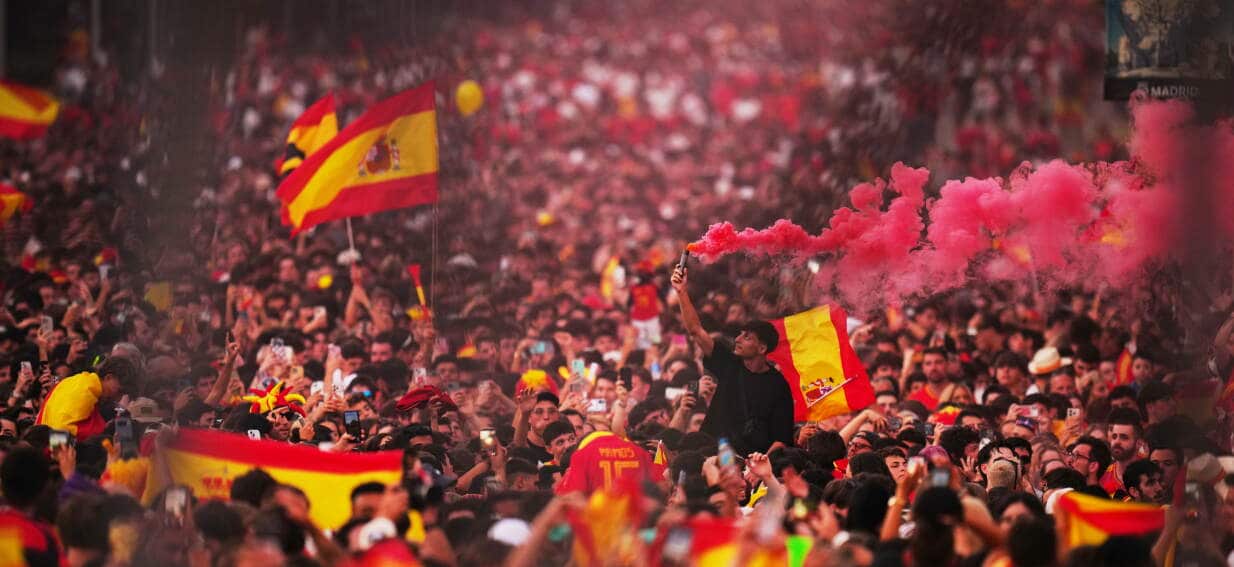
A million football fans flooding the streets of Madrid isn't just a party. It's a statement.
When Ferran Torres struck the winning goal in extra time against a ten-man Argentina in East Rutherford, New Jersey, he didn't just seal a 1-0 final. He crowned a structural shift in global football. As coach Luis de la Fuente’s squad lands at Madrid’s Barajas airport with the golden trophy, the Spanish capital is preparing for a welcome-home spectacle that matches the magnitude of what this squad just accomplished. In similar updates, take a look at: Why Ahmad Hardy's Recovery Is Bigger Than College Football.
If you remember the summer of 2010, you might think you've seen this movie before. Back then, Andrés Iniesta’s historic strike brought Spain its first star, and central Madrid turned into a sea of red and yellow. But 2026 is fundamentally different. This team isn't relying on the hypnotic, endless passing carousels of tiki-taka. They play fast, direct, and merciless football.
More importantly, Spain now holds both the men’s and women’s senior World Cup titles at the exact same time. No other country in football history has ever done that. Sky Sports has analyzed this important subject in extensive detail.
What Spain Actually Proven on the Pitch
The narrative heading into the final centered on whether Argentina could retain their crown. Most casual viewers expected a tactical standoff, but Spain controlled the rhythm almost from the opening whistle.
De la Fuente’s side pressed high, compressed spaces, and forced mistakes. They didn't pass for the sake of possession numbers; they attacked spaces with ruthlessness. Young talents like Lamine Yamal tore through lines, while the defensive unit shut down transition threats before they could start.
When Argentina went down to ten men in extra time, Spain didn't hesitate. Torres found the back of the net, and the match was effectively over.
Why This Victory Outshines 2010
Some purists still claim the 2010 side under Vicente del Bosque was the pinnacle of national team football. I disagree.
The 2010 team was brilliant, but they won every knockout match 1-0. They ground opponents down through attrition and sheer ball control.
- Directness: The 2026 team scores through rapid transitions and deadly wide play rather than 800 sideways passes.
- Dual Dominance: Spain is currently the reigning champion in men's and women's football, confirming an unparalleled national infrastructure.
- Youth Integration: Teenagers and early-20s stars aren't just filling out the squad—they are driving the tactical system.
Inside the Madrid Parade Route and Logistics
If you're anywhere near central Madrid on Monday, expect absolute gridlock and pure ecstasy. Local authorities aren't taking any chances with safety or crowd control.
Central Representative Francisco Martín confirmed that more than 2,000 police officers and 400 Civil Guard personnel are managing the route. The logistics behind moving a million euphoric supporters across a historic capital city require military-level precision.
The Itinerary for the Trophy Tour
- Airport Arrival: The team landed at Madrid Barajas at 12:50 PM local time.
- Royal and Political Reception: Players head straight to receptions with King Felipe VI and Prime Minister Pedro Sánchez at Moncloa Palace.
- Open-Top Bus Route: Beginning around 4:30 PM near Moncloa, the parade cuts through the heart of Madrid.
- Cibeles Square Culmination: The team reaches the iconic Plaza de Cibeles for the primary stage ceremony and trophy presentation.
The choice of Cibeles is fitting. It's the traditional gathering place for Spanish national team celebrations and Real Madrid titles, while Neptune Fountain down the street usually handles Atlético Madrid fans. On days like this, those club rivalries completely dissolve.
The Broader Impact on Spanish Football Culture
Walk down the Castellana avenue on Monday morning and you'll see the aftermath of Sunday night's national street party. Rubbish, empty cans, and discarded flags litter the pavement, but nobody is complaining.
For an entire generation of Spanish fans—kids who were toddlers or not even born when Iniesta scored in Johannesburg—this is their first time experiencing World Cup glory firsthand. Nineteen-year-old fan Víctor Álvarez put it plainly while waiting near the airport after sleeping barely three hours: "For this team, I'll do whatever it takes."
That excitement isn't accidental. The Royal Spanish Football Federation spent years redesigning youth academies across the country to blend physical intensity with technical skill. You can see those results directly in the senior squad.
The Double World Champion Milestone
We need to talk about the significance of holding both World Cups simultaneously.
When the Spanish women's national team won their World Cup in Sydney back in 2023, it showed that Spain's technical dominance wasn't limited to a single gender or generation. Following up that victory with a men's trophy in 2026 creates an unprecedented benchmark for national football federations worldwide.
Brazil, Germany, France, and Argentina have all had dominant eras, but none of them managed to unify both top-tier international trophies at once. Spain set a benchmark that might stand for decades.
How to Follow the Celebrations and What Comes Next
If you want to catch the best moments from the parade, skip the generic TV broadcasts that focus solely on speeches. Look for live street streams around Plaza de Cibeles, where player interactions with the fans always yield the real highlights. Marc Cucurella promises more viral moments, and the team's youngest stars will undoubtedly keep social media buzzing all evening.
For fans looking to understand how this victory changes the international hierarchy heading into the next European Championship cycle:
- Watch how Luis de la Fuente rotates younger prospects into upcoming UEFA Nations League fixtures.
- Keep an eye on domestic talent pipelines in La Liga, where clubs are already doubling down on pressing-oriented youth coaches.
- Expect ticket demand for national team fixtures in Spain to break records throughout the rest of 2026.
Spain didn't just win a tournament in New Jersey. They proved that their footballing model is the most effective blueprint on Earth.