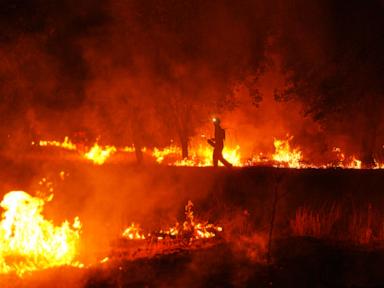
You can't fight a wall of flames when it generates its own weather. Javier García has spent twenty years running into burning forests across Spain, yet he admits today's reality bears no resemblance to his early career.
When a wildfire consumes 500 square kilometers of land in the hills of Ávila west of Madrid—an area five times larger than Barcelona—the standard rulebook goes out the window. Firefighters aren't just putting out blazes anymore. They're acting as a desperate last line of defense for stranded communities.
The Changing Face of Mediterranean Blazes
The numbers coming out of Spain right now are staggering. According to Spain's Ministry for Ecological Transition led by Sara Aagesen, wildfires have scorched over 1,530 square kilometers this year. That is six times the scorched acreage recorded during the exact same period last year.
Think about that scale. It represents a fundamental shift in how the Mediterranean burns.
Veterans like García note that high-risk fire windows used to last about fifteen days a year. Now? Crews stay on high alert for up to forty days straight. Heatwaves lock onto the region, humidity plummets, and dried-out vegetation turns into an absolute powder keg.
When a Fire Becomes Impossible to Extinguish
Talk to younger crew members, and you hear a chilling term: beyond the capacity of extinction.
Raúl Guerrero, a firefighter with a decade of experience in Castilla y León, puts it bluntly. At peak intensity, these fires possess so much raw thermal energy that throwing water or cutting lines becomes entirely pointless. Units have to pull back immediately to avoid being overrun.
"Above all, you feel impotent," Guerrero explained when describing moments where no human intervention could match the sheer fury of the flames.
This power forces a brutal shift in daily objectives. Decades ago, crews prioritized saving the wilderness and timberland. Today, the triage model is ruthless: lives come first, human settlements second, and the forest a distant third.
Why Modern Landscapes Burn Faster
Climate change plays an undeniable role by dialing up summer temperatures and prolonging droughts. But a secondary crisis is happening on the ground.
Rural depopulation has hollowed out traditional farming and forestry. Small-scale orchards, active grazing lands, and managed woodlots used to act as natural firebreaks around rural towns. Now? Unmanaged brush and thick undergrowth creep right up to people's back doors.
Without year-round clearing and active landscape management, rural villages sit surrounded by pure gunpowder.
Protecting communities requires more than just buying bigger airplanes or drafting emergency declarations after the smoke clears. Local authorities and property owners face a hard truth: prevention has to happen during the winter months, or summer will keep bringing scenes like this back to life.


