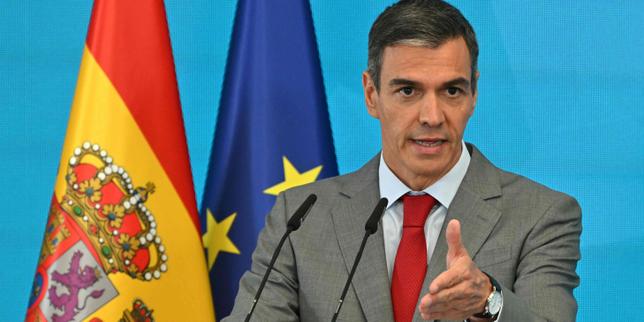
The media wants you to believe that Madrid just committed political suicide. When Pedro Sanchez tried to ram through a sweeping national climate state pact, the right wing slammed the door shut. Standard press coverage treats this gridlock as a tragedy, a failure of political will, and proof that partisan stubbornness will cook the planet.
That narrative is pure garbage.
I have spent decades watching governments sign binding climate agreements that exist solely to make politicians feel virtuous while achieving precisely nothing. Spain did not reject climate action because its politicians hate clean air. They rejected a top-down, central-planning bureaucratic monster designed by committee. The lazy consensus says we need more pacts, more declarations, and more multi-billion-euro centralized mandates. Reality tells a very different story.
Look at the mechanics of what was actually on the table. A sweeping state pact in Spain means bureaucratic capture, massive subsidies funneled to crony capitalist energy firms, and zero accountability at the municipal level where actual emissions happen. When the opposition walked away, they did not halt progress. They stopped a massive waste of taxpayer capital from being funneled into dead-end state projects.
The Myth of the Grand Consensus
We suffer from a collective delusion that if everyone just holds hands and signs a piece of paper in parliament, carbon emissions drop. History proves the exact opposite. Grand political pacts serve as smoke screens for structural failure.
Take a hard look at the numbers coming out of southern Europe. Centralized state directives routinely miss regional targets because Madrid has zero clue how to optimize a grid in Andalusia or upgrade water management in Valencia. When you force a one-size-fits-all legislative framework onto distinct regional economies, you get economic drag, not environmental healing.
I have watched state-level policy drafts blow millions of euros on PR campaigns masquerading as transition infrastructure. The Spanish right balked at the pact not out of climate denialism, but because the fiscal architecture of the deal was an administrative nightmare. It protected legacy players while crushing small-scale entrepreneurial innovation.
We need to stop confusing political theatre with operational efficacy. A signed pact on a parliamentary desk reduces zero parts per million of carbon in the atmosphere.
Decentralized Chaos Beats Centralized Stagnation
Imagine a scenario where Madrid completely abandons the fantasy of a grand national climate pact and leaves the heavy lifting to regional municipalities and private market incentives.
What happens? You stop waiting for politicians to agree on a compromise and let market forces do what they do best: ruthlessly optimize for cost and efficiency.
When solar and wind generation are driven by private capital seeking actual yield rather than political favor, buildout speeds quadruple. Municipalities competing for green tech investments move faster than a divided national congress can debate a single clause. The political gridlock in Madrid is actually clearing the airspace for local, agile adaptation strategies that bypass national bureaucracy entirely.
Critics scream that this creates a fragmented regulatory patchwork. Good. A patchwork allows for rapid trial and error. If a regional government in Spain tests a dynamic grid-pricing model and it fails, only that region suffers. When a massive national climate pact fails, an entire nation's economic output takes the hit.
Bureaucracy loves a crisis because crises justify more bureaucracy.
The Cost of Compliance Theater
Let us address the elephant in the room. Why do mainstream analysts obsess over these pacts? Because compliance theater is easy to report on. A press conference, a signing ceremony, a heated debate in parliament—these make for great television and simple news cycles.
Actual structural transformation is boring. It looks like upgrading localized transformer substations, redesigning municipal zoning laws to permit high-density urban cooling, and rewriting agricultural subsidies to reward soil carbon sequestration instead of sheer acreage. None of these require a grand national state pact. All of them require tedious, granular administrative execution that politicians avoid because there are no ribbon-cutting ceremonies attached.
When the Spanish right rejected the current framework, they exposed the hollow core of modern environmental policymaking. You cannot legislate a climate transition through parliamentary muscle. You engineer it through capital allocation, supply chain security, and local incentives.
Stop Asking the Wrong Questions
People ask: How can Spain achieve its net-zero targets if the major parties refuse to cooperate on a national framework?
That question assumes the framework itself is valid. It is not. Asking how to save a broken bureaucratic process is like asking how to make a typewriter competitive in the age of fiber optics. You do not optimize the typewriter. You throw it out.
The real question we should be asking is: How do we get the government out of the way so private capital and local municipalities can build resilient infrastructure without waiting for permission from Madrid?
The answer requires swallowing a bitter pill. We have to accept that messy, contentious, uncoordinated political friction is the natural state of a free market adjusting to structural shifts. Clean energy transitions are not smooth. They are violent, disruptive, and deeply capital-intensive. They disrupt legacy industries, bankrupt poorly managed utilities, and force old-guard corporations to adapt or die.
If your climate pact tries to cushion every blow and protect every legacy interest through political compromise, you end up with a paralyzed system that spends more money on administrative overhead than actual steel in the ground.
Spain does not need a unified state pact. It needs market clarity, localized execution, and the political courage to let bad ideas die in committee.
Let them argue in Madrid. The builders are already at work elsewhere.


