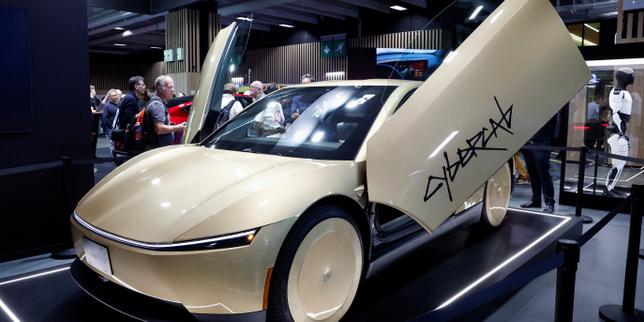
A SpaceX Tesla merger would smash every corporate record in history, easily dwarfing Vodafone's $183 billion takeover of Mannesmann back in 2000. SpaceX—which went public on the Nasdaq in June 2026 under SPCX and now pulls xAI and X under its wing—sits right around a $1.9 trillion valuation. Tesla hovers near $1.5 trillion. Put those together, and you're looking at a roughly $3.4 trillion behemoth on paper, with analysts like Dan Ives suggesting a deal structure could push total value toward $5 trillion.
Yet people treat the tie-up like a formality because Elon Musk runs both shows. That's lazy thinking. Even after Musk called a combination a "good idea" on SpaceX's Q3 earnings call in October 2026 and special board committees started hashing out terms, a SpaceX Tesla merger faces gnarly voting rules, China headaches, and political pushback. Recently making news in this space: Why Normal Is Not Coming Back to the Oil Patch Next Year.
Why Musk Wants Everything Under One Roof
Follow the money and the engineering bottlenecks, not just the headlines. Musk isn't trying to mash rockets and sedans together out of nostalgia. He's building a vertically integrated machine around AI compute, autonomy, and robotics.
SpaceX already swallowed xAI earlier in 2026, bringing Grok and X into the public company alongside Falcon/Starship launch operations and Starlink. Meanwhile, Tesla has been pivoting hard away from legacy auto—phasing out Model S and Model X production earlier in 2026—toward robotaxis, energy storage, and Optimus humanoid robots. Both companies also tie into the Terafab chip manufacturing effort in Texas, which Musk has indicated could produce initial test chips around mid-2027 and volume production by Q3 2028. More information into this topic are detailed by The Economist.
"At the end of the day, the shareholders have to be supportive of this, and particularly on the Tesla side, we will need a 50% vote of all shares, not just those who vote, but of all shareholders." — Elon Musk
Think about how those pieces fit together in practice. Tesla builds high-volume hardware, batteries, and real-world autonomy edge cases. SpaceX brings orbital infrastructure, high-margin connectivity via Starlink, and an AI stack already wired into xAI. Sharing chip supply and AI training pipelines without constant intercompany transfer pricing or boardroom friction sounds great on a whiteboard.
Still, "sounds great on a whiteboard" is where a lot of megadeals go to die.
The Real Hurdles Nobody Wants to Price In
When Bloomberg reported in November 2026 that talks were moving toward terms—potentially setting up SpaceX to absorb Tesla rather than the reverse—Tesla shares popped roughly 1.9%. Traders love a deal premium. Problem is, deal premiums don't magically solve structural friction.
First, there's the math of shareholder approval. Musk himself flagged that Tesla needs a majority vote of all outstanding shares, not just the ones that show up to vote. Retail shareholders in Tesla are famously vocal, emotional, and split. If SpaceX offers a price that feels stingy relative to Tesla's standalone autonomy story, shareholders can torpedo it. Analysts like Dan Ives have argued Tesla holders would likely push for a higher valuation marker—potentially in the $500 to $550 per share zone—to sign off.
Second, look at the geopolitical fault lines. SpaceX relies heavily on U.S. government and defense contracts. Tesla has deep manufacturing and sales ties in China. Ring-fencing sensitive defense and space tech away from Chinese commercial exposure isn't a quick legal clause; regulators and lawmakers in Washington will pick that apart. With a shifting congressional landscape and heightened scrutiny over Musk's business overlaps, regulatory review could drag into 2027 or beyond.
Third, governance and compensation optics are messy. At the DealBook Summit in November 2026, Musk said he shouldn't get an extra Tesla stock payday just for merging with SpaceX—a deal structure that could otherwise trigger millions in equity value depending on terms. Whenever a controlling figure sits on both sides of a massive related-party transaction, minority shareholders and lawyers watch every single number with a magnifying glass.
What Investors Miss About Valuation and Cash Burn
Let's be honest about the numbers behind the hype. A combined headline market cap near $3.4 trillion puts a target company right alongside the biggest names in global markets, though still trailing peak megacaps like Nvidia or Apple. High valuation doesn't mean free cash flow is pouring out of every vent.
SpaceX's IPO prospectus and 2026 filings show massive capital spending—tens of billions of dollars pouring into infrastructure and AI—against heavy ongoing investment needs, even as Starlink provides a major commercial pillar. Meanwhile, "valuation" experts like Aswath Damodaran have publicly argued that SpaceX's sky-high market pricing bakes in aggressive AI and space assumptions that far exceed conservative cash-flow models.
Merging two capital-hungry giants doesn't erase capex. Honestly, it concentrates risk. If AI model training costs spike, robotaxi timelines slip, or launch cadence hits a snag, a combined company feels the shockwave across one single stock ticker instead of two separate hedges.
How to Approach This News Without Getting Burned
If you're watching a potential SpaceX Tesla merger ahead of Tesla's December 3, 2026 annual shareholder meeting or into early 2027, don't trade on rumors of a handshake alone. Rumors move fast; binding terms and shareholder votes move slowly.
Start by separating exploration from execution. Special board committees exploring a deal is a normal governance step once the CEO floats the idea publicly. Watch for actual exchange ratios, governance rules, and China ring-fencing language—those details tell you whether bankers are actually close to a signature.
Next, check your own portfolio exposure. If you already own both SPCX and TSLA, ask yourself why you're holding both: are you betting on two distinct risk/return profiles, or just doubling down on Musk's execution in AI and robotics? A merger would turn two separate bets into one concentrated position.
Finally, keep an eye on the calendar and the vote math. Announcements can slip from December 2026 into early 2027, and even an announced deal still has to survive shareholder votes and regulatory scrutiny. Treat every headline as a data point, size your positions for volatility, and wait for concrete terms before assuming the deal is done.